Case Studies
Basement Mold from Porch Water Intrusion, West Seattle, WA
At a glance
- Loss type: Mold caused by exterior water intrusion
- Location: West Seattle
- Areas affected: Basement storage closet under the front porch, and the basement entry area outside it
- Services: Porch moisture correction, containment, mold remediation, drying, encapsulation, and door replacement
- Standards followed: IICRC S520 mold remediation guidelines
The Challenge
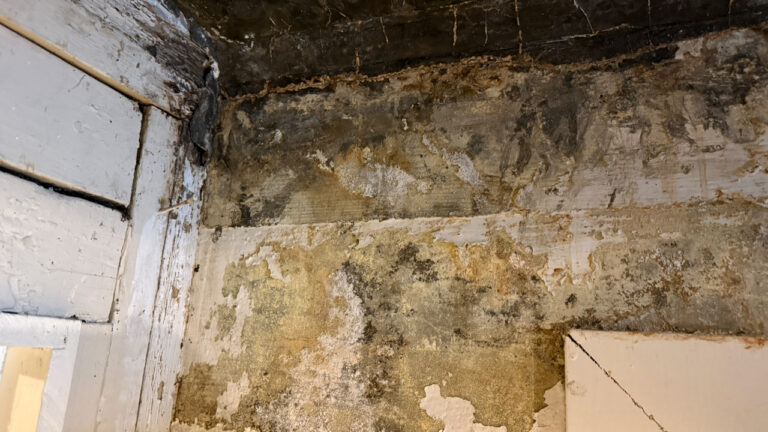
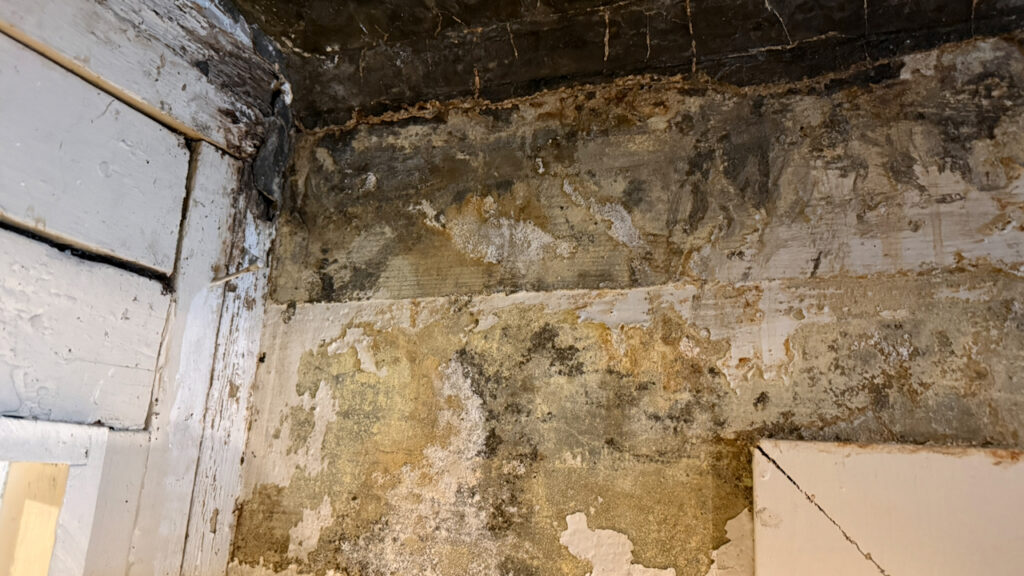
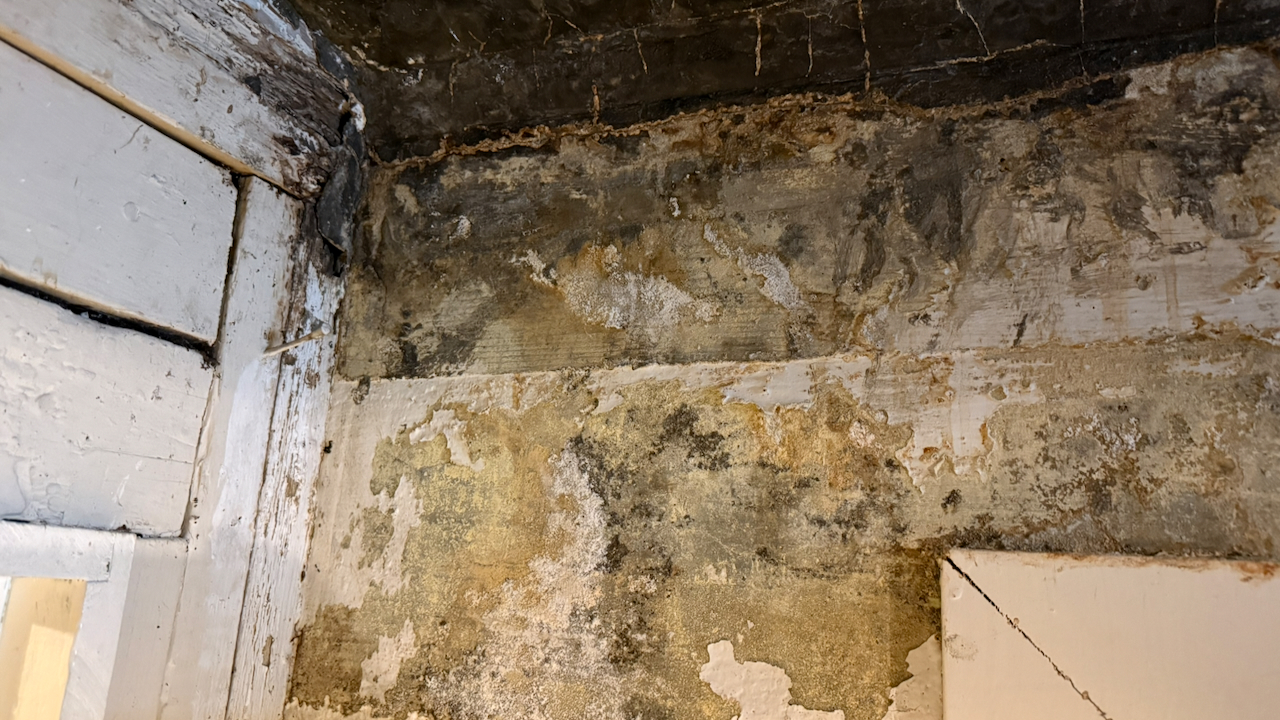
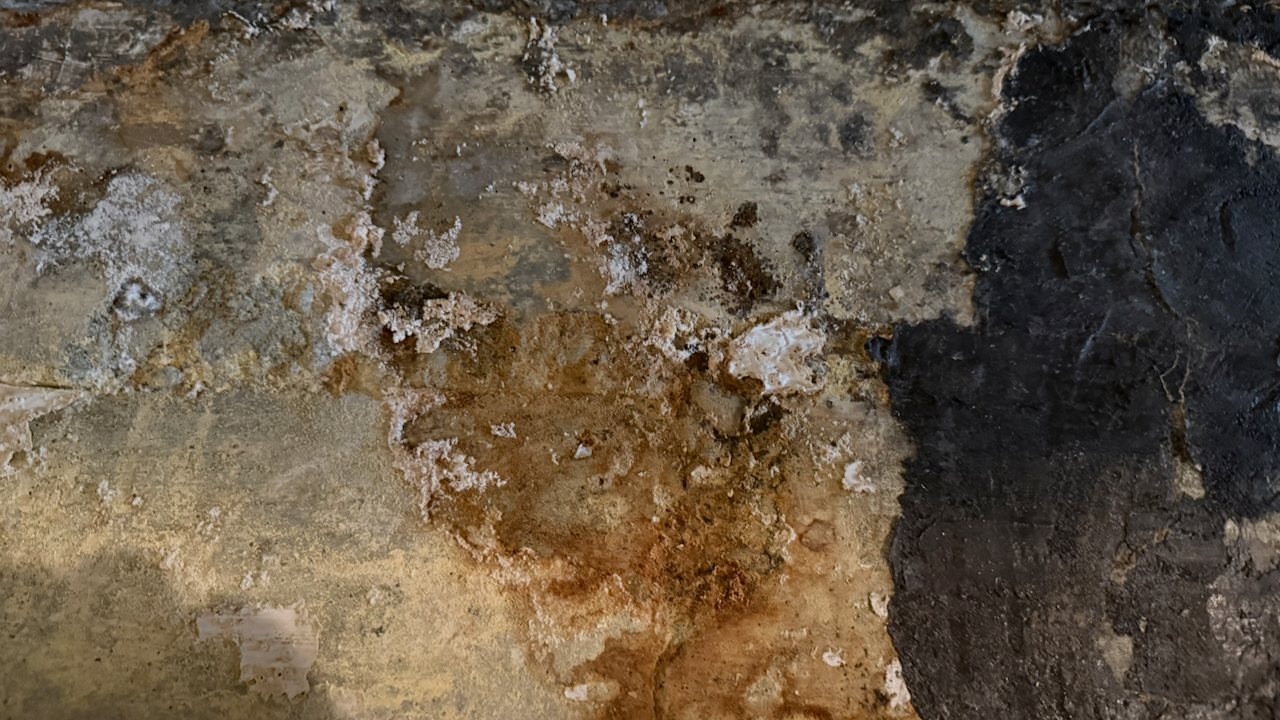
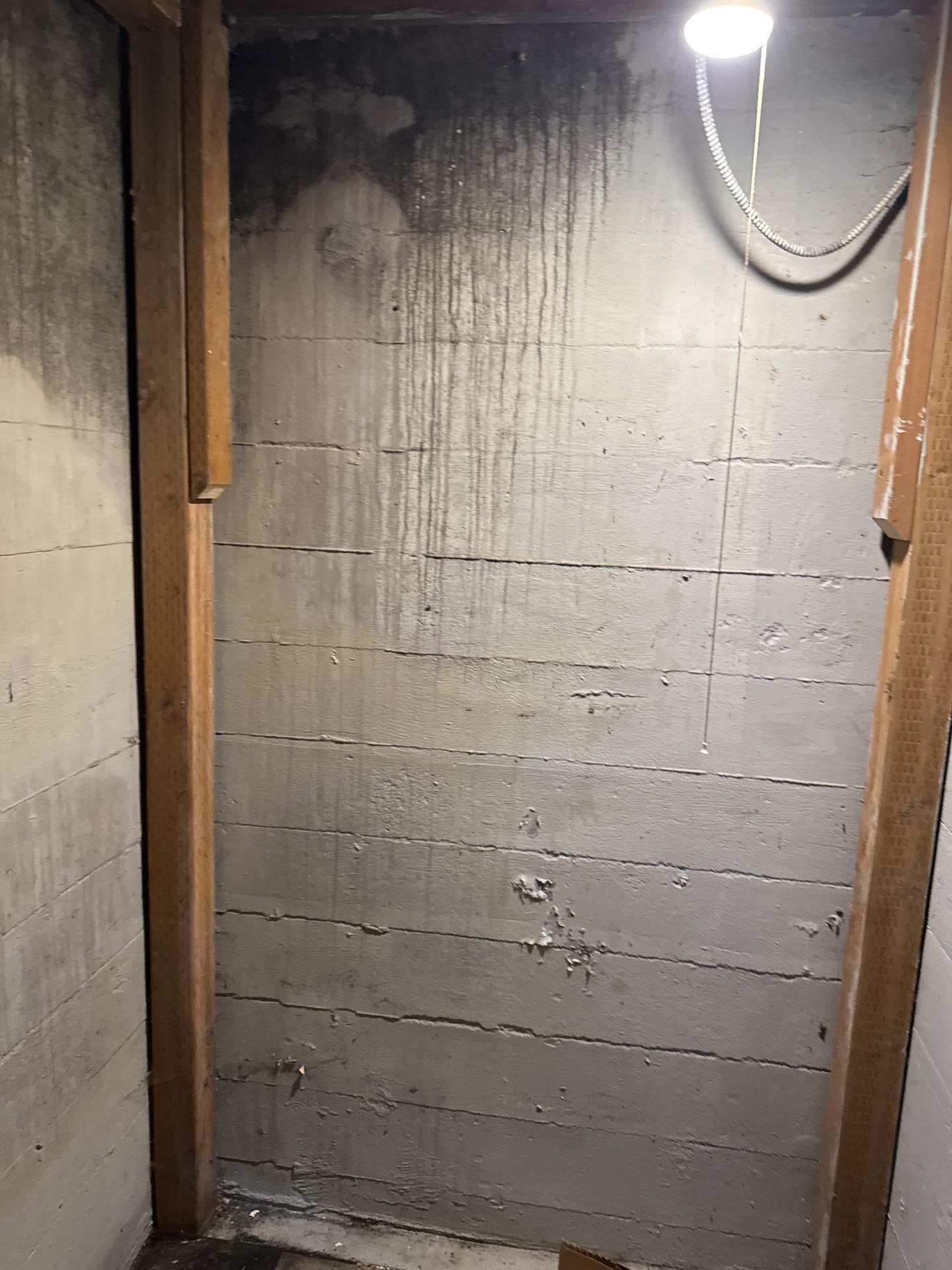
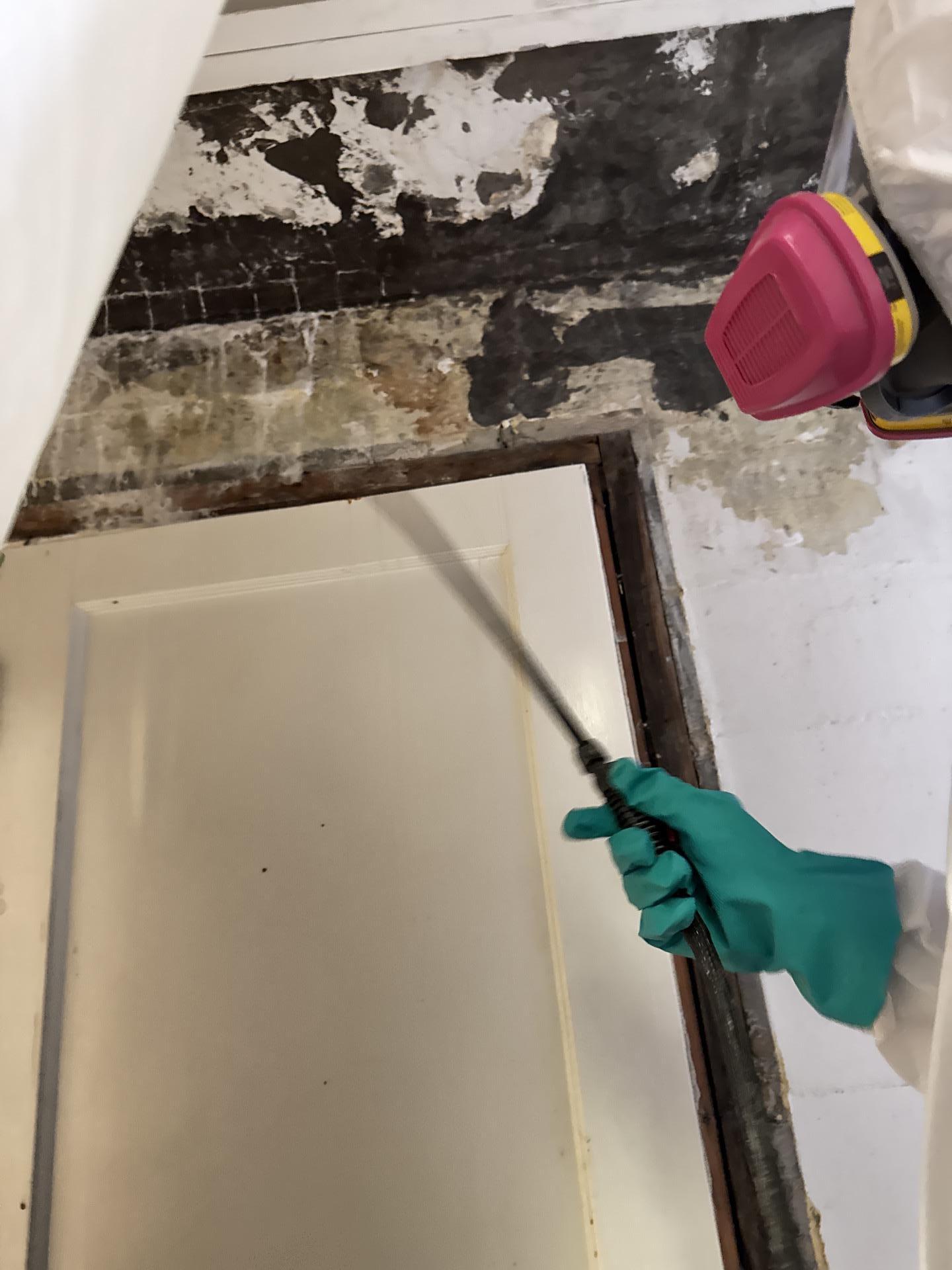
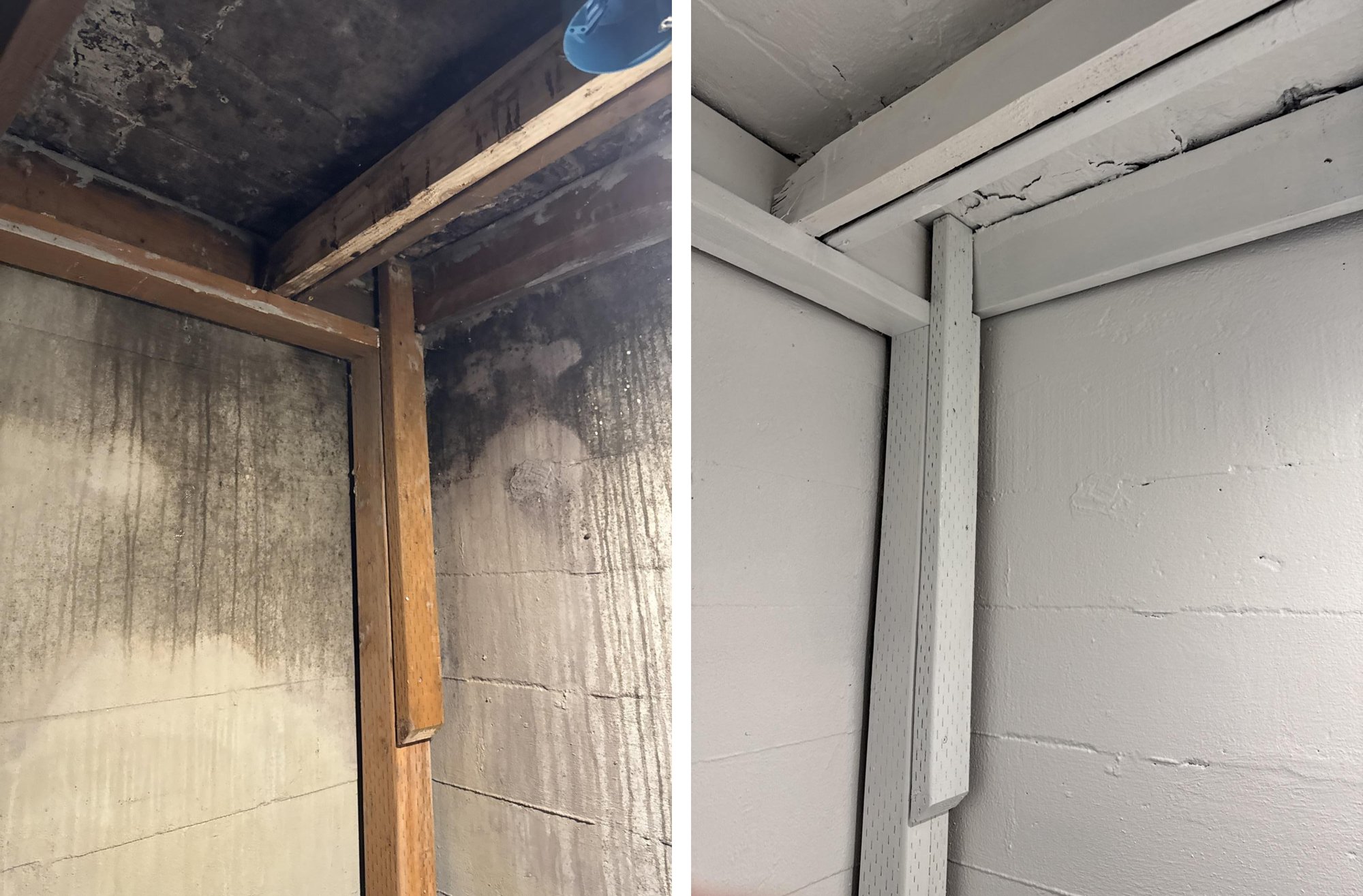
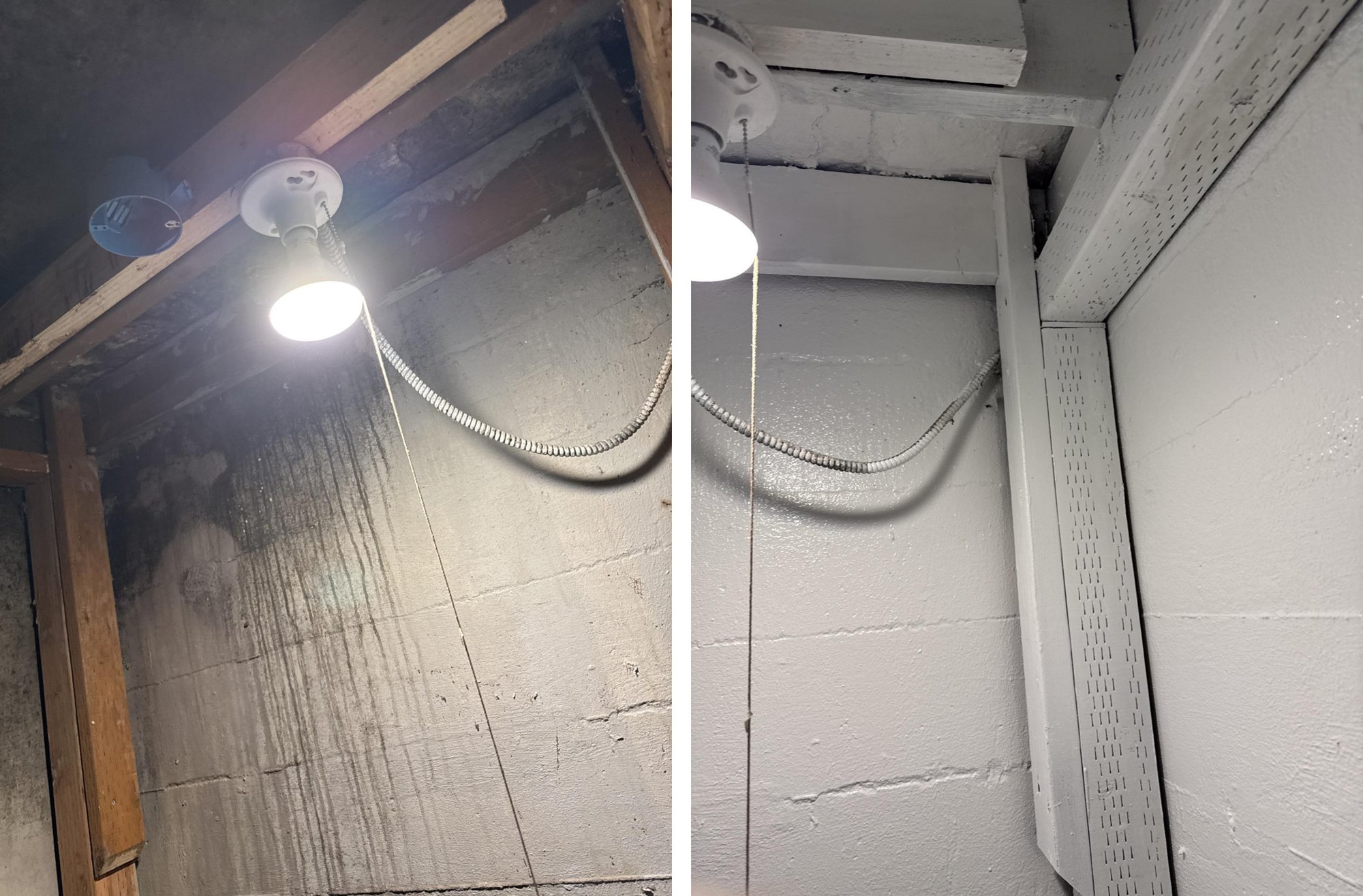
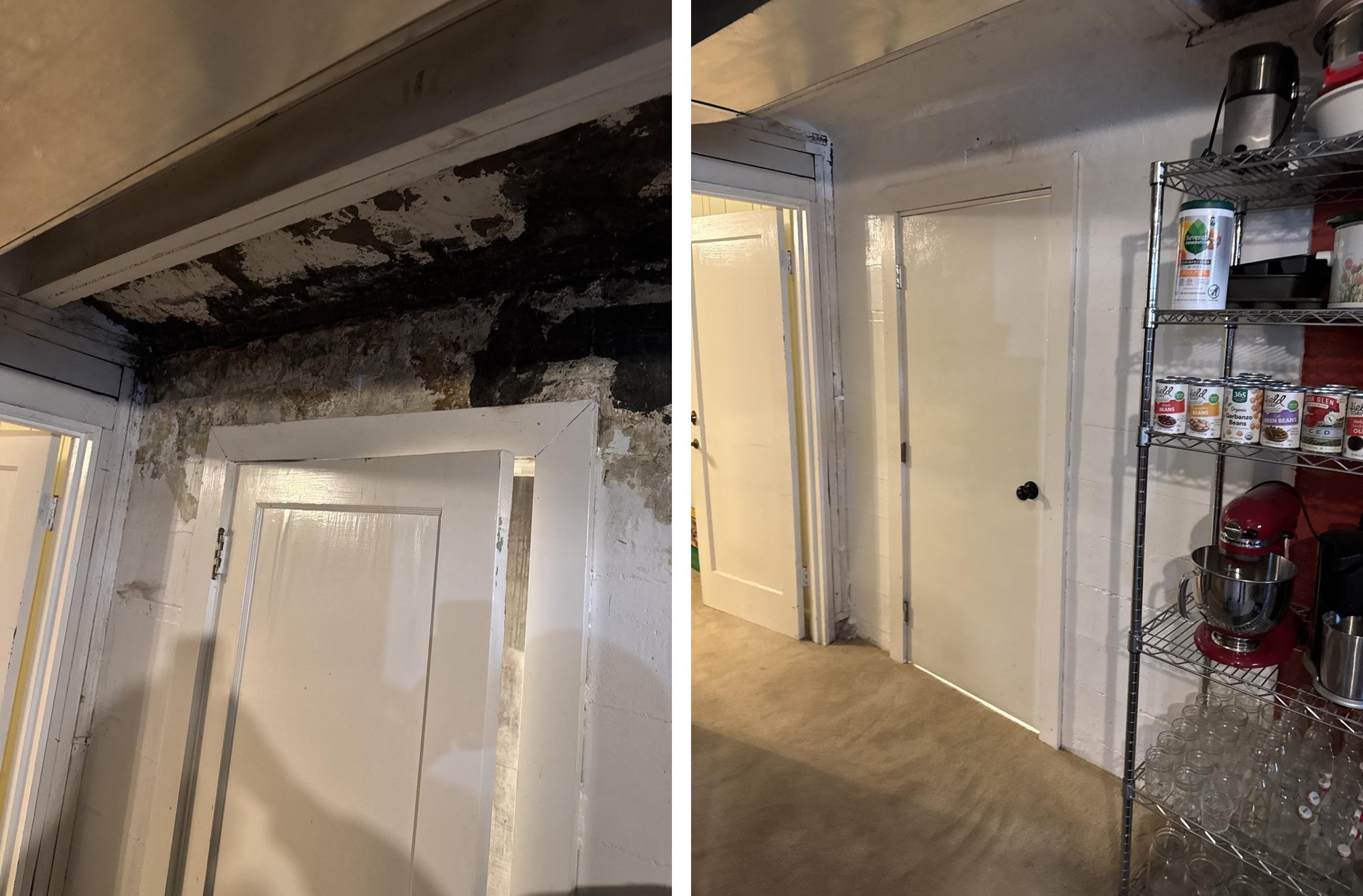
A West Seattle homeowner noticed heavy mold in a basement storage closet. The closet sits directly under the front porch stairs, and water was working its way down from the exterior concrete. Over time it had soaked the concrete walls, wood framing, and ceiling. Mold covered those surfaces and had spread above and on both sides of the closet doorway. Paint was peeling, white mineral deposits had formed on the concrete, and the closet door was damaged.
This was not a one-time spill. Moisture was coming from outside, so cleaning the mold alone would not have kept it from returning.
Our Response
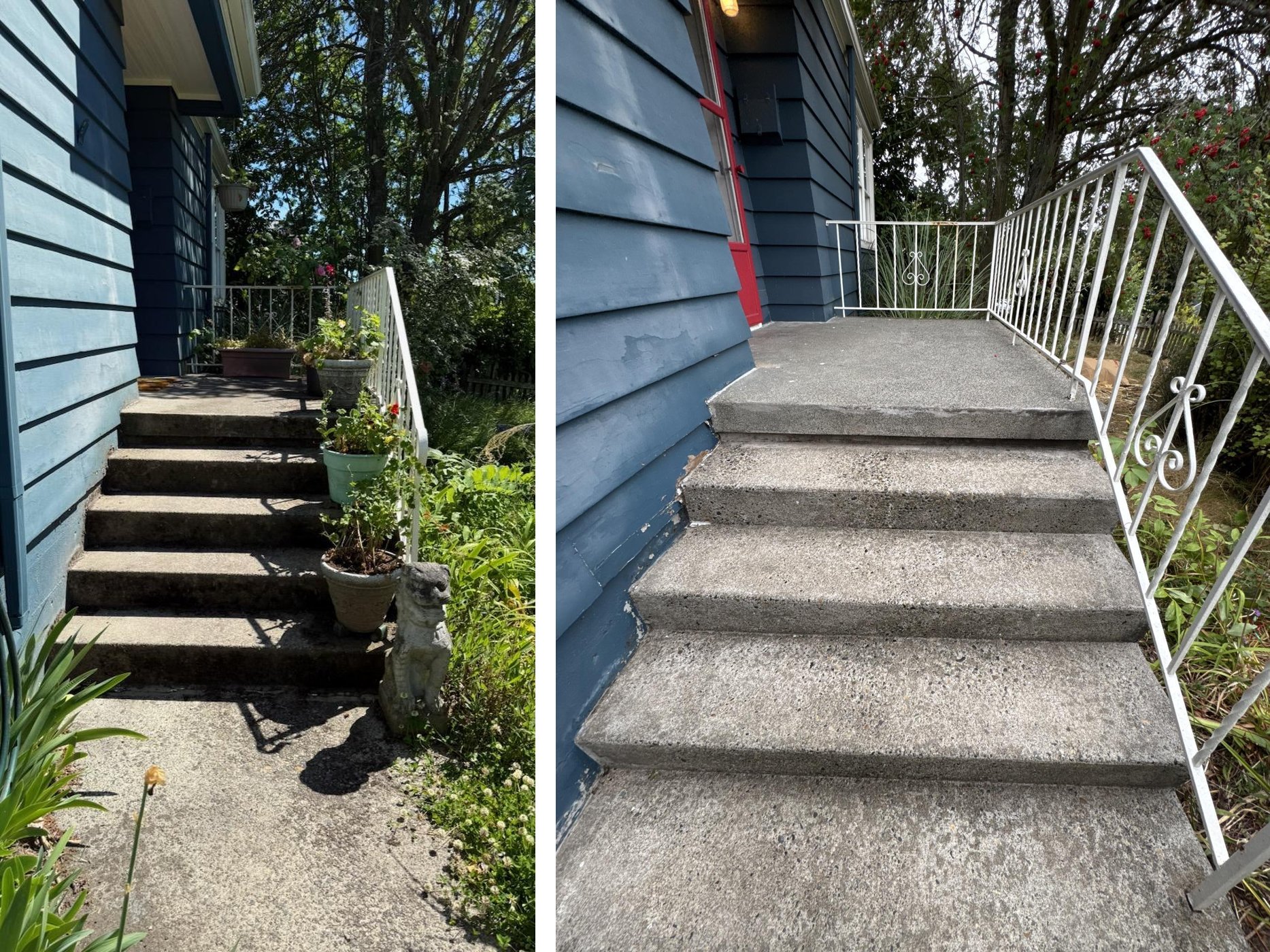
Find the source. We inspected the closet and the porch above it and measured the landing and stairs. While cleaning the porch, we found cracked patch material at the base of the first step. That spot lined up with the worst damage we had seen from inside the basement.
Fix the porch first. We tackled the moisture source before the closet work. We pressure washed and cleaned the porch, stairs, and risers, repaired the failed patch at the first step, and sealed the porch top, sides, and stairs with a concrete sealer so water can no longer work its way down into the basement.
Containment first. Before disturbing any mold, we sealed off the work area with about 150 square feet of poly containment, sealed the HVAC system from the work area, and ran an air scrubber with HEPA filtration. Our technicians worked in full protective gear. Stored belongings were moved or covered so nothing in the rest of the basement was exposed.
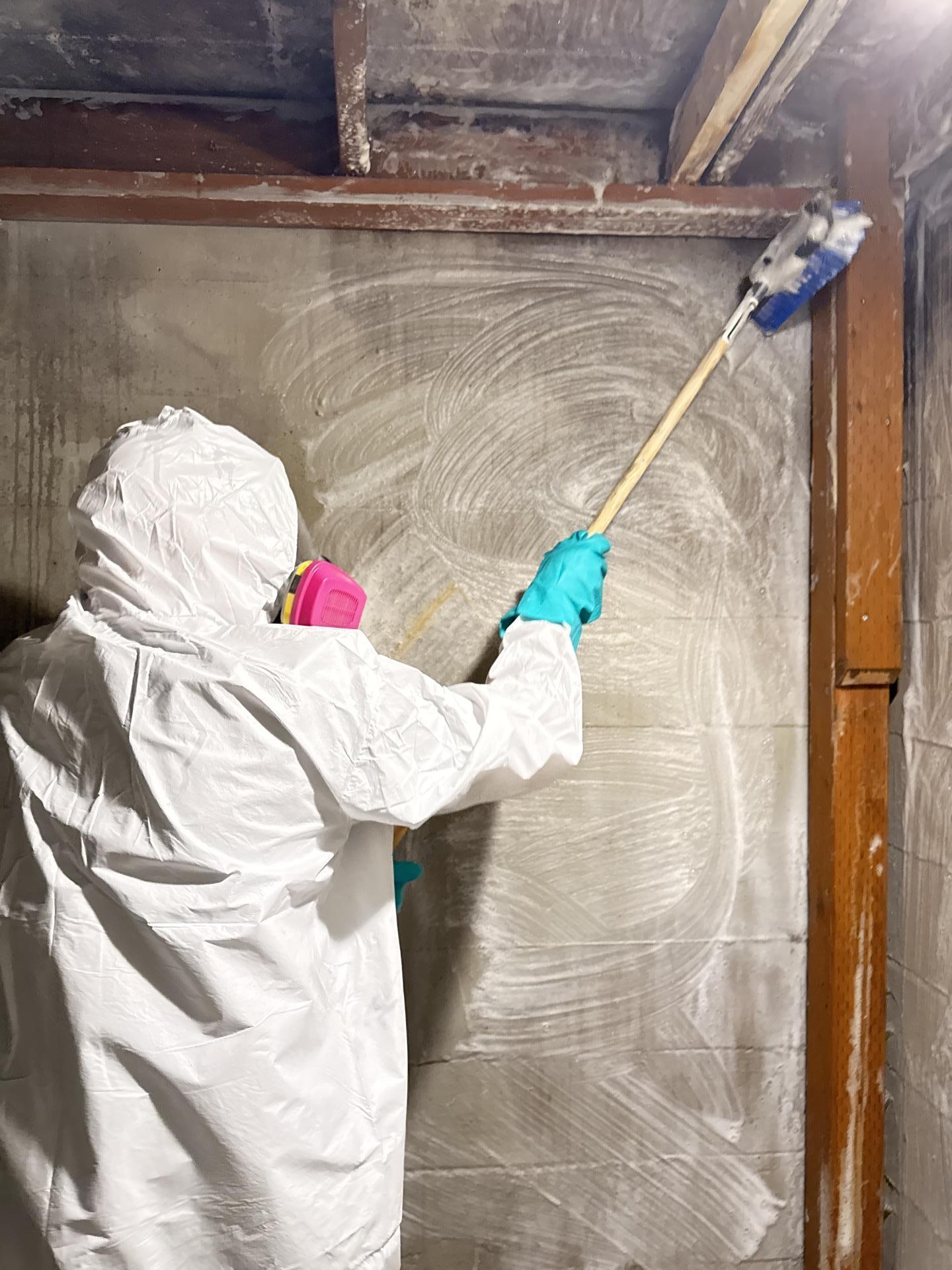
Remove and treat the mold. We scraped away peeling paint, wire brushed the concrete and wood framing, and wiped all treated surfaces. Then we applied a hydrogen peroxide-based mold treatment, repeating it until no visible foaming remained.
Dry it completely. Concrete holds moisture for a long time. We ran dehumidification and air movers and kept monitoring readings until the closet and entry area were dry and within standard. Only then did we pull the equipment and remove containment.
Seal it. Once everything was dry, we encapsulated every treated surface with a mold-resistant coating, finishing with a final coat to give the homeowner a clean, uniform finish.
Finish the details. We cleaned up the work area, put the contents back, sealed the corners and edges where the walls meet the ceiling, and installed a new door, jamb and trim, all painted, to replace the damaged ones.
The Result
The closet and entry area were dried, treated, and sealed with a bright, clean coating, and the door was replaced. The homeowner got their storage space back, and the porch above it was repaired and sealed to keep water out. On-site work came in close to our original estimate of about a week for the mold remediation and a few days for the porch.
Why It Matters
Basement mold often starts outside. Cracked concrete, failed patches, and porch landings can send water into a home for months before anyone sees it. Remediation that stops at the visible mold treats the symptom. We fix the moisture source first, then contain the work, remove and treat the growth, verify that the structure is dry, and seal it, so the problem does not come back.
Mold or hidden moisture in your Seattle home? RestoPros of Seattle can inspect it and give you a clear plan. Contact us today!