News
Water Damage Prevention for the Puget Sound Rainy Season
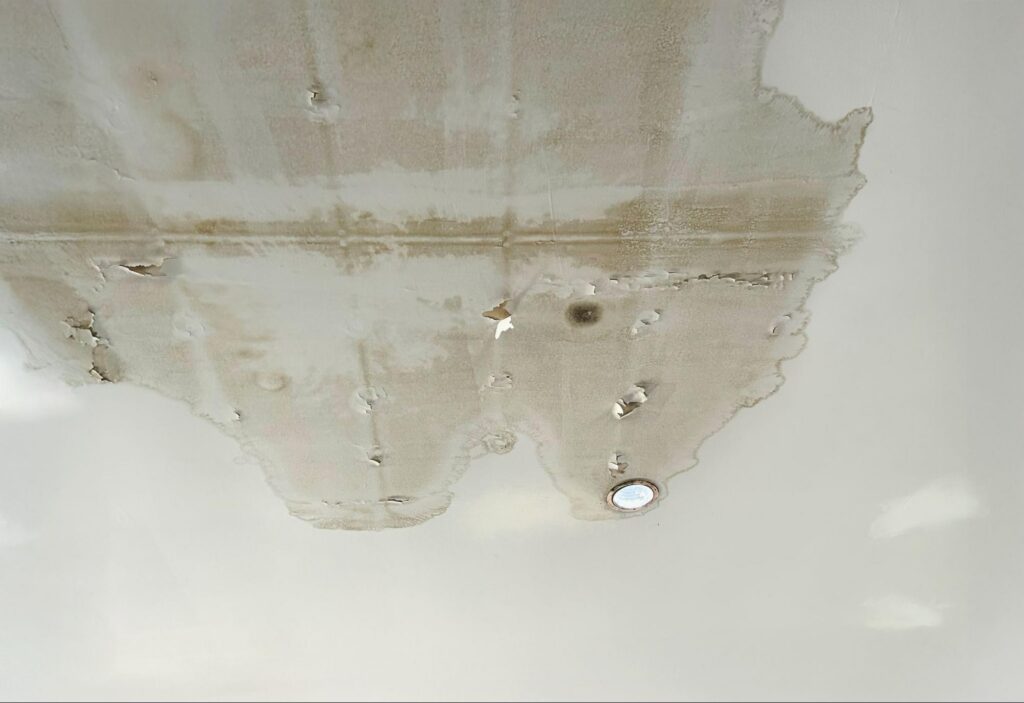
The Short Answer: Water damage prevention during the Puget Sound rainy season means catching moisture early and getting a trained restoration team on site fast when water gets in. Professional inspection, drying, and monitoring stop a small leak from turning into rot, mold, and a large repair bill.
The Puget Sound area sees steady rain from fall into spring, and about 75% of the region’s yearly precipitation falls between October and March. Months of wet weather push water against roofs, foundations, and drains until it finds a way in. By the time a stain or a musty smell shows up, water has often been moving through the structure for days. This guide covers why the rainy season is so hard on homes here, where water damage tends to start, and how professional help keeps the damage small and the cost low.
Why the Puget Sound Rainy Season Is Hard on Homes
The wet season here runs long and peaks in midwinter. Back-to-back atmospheric rivers, which are long plumes of tropical moisture, can drop several inches of rain in a single day. That kind of extreme weather keeps the ground saturated for weeks.
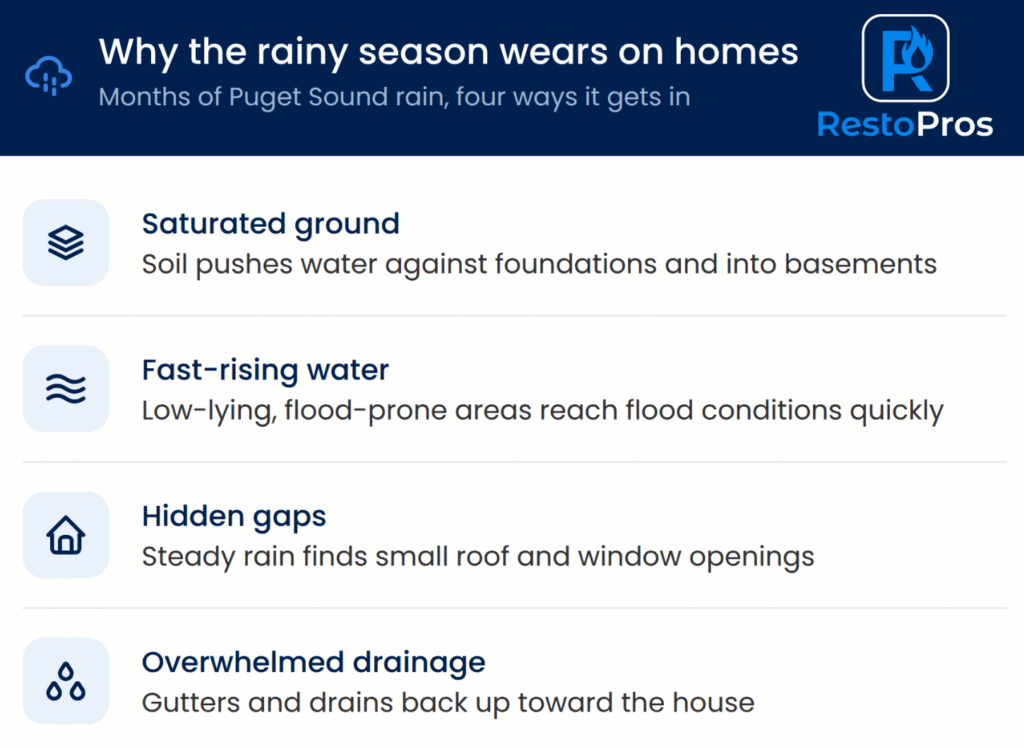
Here is why that wears on a home:
- Saturated soil pushes water against foundations and into basements.
- Rivers and low-lying, flood-prone areas can reach flood conditions quickly.
- Steady rain finds small roof and window gaps that stay dry all summer.
- High water flow overwhelms gutters and drains, so water backs up toward the house.
Where Rainy Season Water Damage Usually Starts
Water damage rarely announces itself. It begins as a small leak or slow seep and spreads through drywall and framing. These are the common sources during a wet Puget Sound winter:
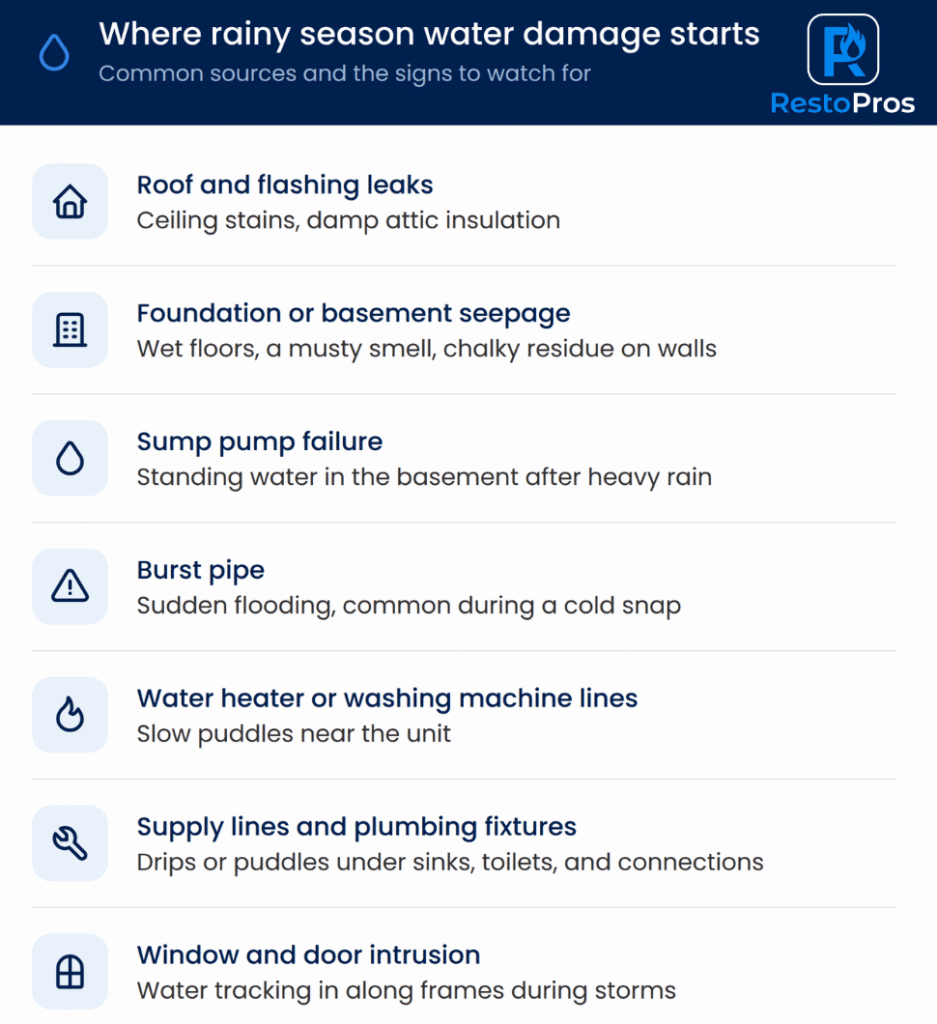
Some of these, like a burst pipe, a leaking water supply line, or worn plumbing fixtures, are not caused by rain directly, but they spike in the same cold, wet months. Any one of them can send water into your walls and floors. That liquid damage often spreads out of sight before you notice it, so quick professional help matters no matter the source.
What Professional Water Damage Prevention Looks Like
The strongest way to prevent water damage during the rainy season is not a weekend project. It is a trained team that checks your home before the worst weather and steps in with fast water damage repair the moment water shows up. Here is what that looks like.
A Professional Moisture Assessment
Trained technicians use moisture meters, thermal imaging, and hygrometers to find water you cannot see behind walls and under floors. Catching a hidden leak or early water intrusion before the heavy rain keeps a minor fix from becoming a major one. This is the same equipment used in professional water damage restoration.
Fast Extraction and Drying
Once water is inside, every hour counts. A restoration team removes standing water with commercial pumps, sets professional drying equipment, and monitors moisture levels until the structure is back to normal. That is what keeps a damp corner from becoming a wall full of mold.
Documentation for Your Insurance Policy
Restoration professionals photograph the damage, log moisture readings, and prepare the records your insurance company needs. Good documentation supports your claim and takes pressure off you during a stressful week. Many teams work directly with your insurer to handle the insurance claim from start to finish.
Flood Damage and Your Insurance Policy
Rain-driven water damage and flood damage are treated differently by insurance, and the difference catches many homeowners off guard.
- Standard homeowners insurance usually covers sudden water damage, like a burst pipe, but not flood damage from rising flood waters outside your home.
- Flood damage almost always needs separate flood insurance, most often through the National Flood Insurance Program (NFIP).
- Homes inside a mapped special flood hazard area face the highest flood risk, and some flood-prone areas fall under local flood damage prevention ordinances that set building rules for floodplain areas.
- The cost adds up fast. Just one inch of water can cause up to $25,000 in damage, according to FEMA and the NFIP.
If you are not sure whether your home sits in a flood-prone area, your insurance policy and FEMA’s flood maps will tell you. Knowing your flood risk and the flood hazards in your area before the rainy season gives you time to add coverage.
How Local Flood Rules Shape Your Risk
Communities across the United States manage flood risk through floodplain management regulations, often written as a local flood damage prevention ordinance. These rules matter for any home in or near a floodplain area.
Here is what they usually cover:
- A building permit is required for a construction project in a mapped flood zone, so new work does not make flooding worse for neighbors.
- Homes are built to a regulatory flood protection elevation, sometimes above the base flood elevation, to keep living space above expected flood heights.
- Rules limit the alteration of natural floodplains and protect natural protective barriers like wetlands that slow water flow.
- They restrict the construction of flood barriers that would divert flood waters and cause damaging increases in flood heights on other properties.
The goal is the accommodation of floodwaters in a way that lowers water damage losses across the area. Knowing whether your home falls under these rules helps you plan for coverage and repairs before the rainy season.
Why Waiting Makes It Worse
Water damage grows every hour it sits. Two things make speed matter during the rainy season:
- Mold moves fast. Mold can start growing within 24 to 48 hours of water exposure, according to the EPA.
- The damaged area spreads. Water wicks into drywall, framing, insulation, and flooring, so a small wet spot keeps getting bigger.
Your home is one of your largest real estate investments, and this is a common, costly problem. Water damage and freezing rank as the second most common home insurance claim in the United States. Fast professional response is what turns a large potential loss into a small, managed repair, which is the real goal of water damage prevention.
Protect Your Home Before the Next Storm
The Puget Sound rainy season gives water many ways into your home, and the damage usually starts before you notice it. Your best protection is a trained team that finds moisture early, dries it fast, and handles the insurance paperwork so a small problem stays small.
That team is RestoPros. Our IICRC-certified technicians serve Bellevue, Bothell, Issaquah, Kirkland, Redmond, Sammamish, Woodinville, and nearby Puget Sound communities with 24/7 water damage restoration, storm damage response, emergency flood restoration, and mold remediation. We find the source, dry the structure, document every step for your insurance company, and rebuild what needs rebuilding, all under one roof. When the forecast turns wet and you want your home protected, contact RestoPros or find your nearest location. We answer the phone any time, day or night, so you never face rising water alone.
Frequently Asked Questions
What is the best way to prevent water damage during the rainy season?
The most reliable prevention is a professional moisture assessment before the heavy rain, plus a fast call to a restoration team the moment you spot water. Trained technicians catch hidden leaks early and dry the structure before mold or rot sets in.
Does homeowners insurance cover rainy season water damage?
It depends on the source. Most policies cover sudden water damage, like a burst pipe, but exclude flood damage from rising water outside the home. Flood damage needs separate flood insurance through the NFIP. A restoration team can document the loss to support your claim.
How fast can water damage lead to mold?
Mold can begin growing within 24 to 48 hours of water exposure. That short window is why fast extraction, drying, and monitoring by professionals matter so much during a wet Puget Sound winter.
What are the signs of hidden water intrusion?
Watch for ceiling or wall stains, a musty smell, peeling paint, warped floors, or a spike in your water bill. Any of these is a reason to call a restoration professional, since the damage is usually larger than it looks.
Do Puget Sound homes really need flood insurance?
Many do. Atmospheric rivers and saturated ground push rivers and drainage into flood conditions, and homes in a special flood hazard area carry real flood risk. Checking FEMA’s flood maps before the season helps you decide on coverage.