Blog
Mold Remediation Cost: Factors and Price Ranges
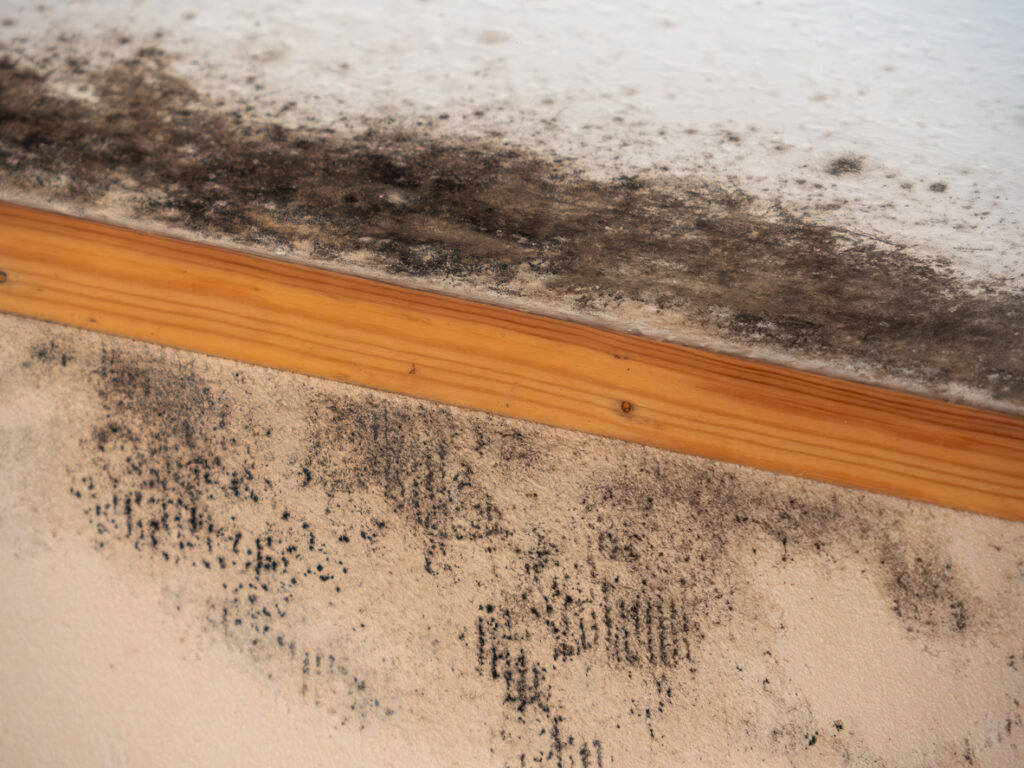
The Short Answer: Mold remediation can range from a few hundred dollars for a small patch to well over $10,000 for extensive contamination, with most standard residential projects landing somewhere in the low thousands. Larger jobs tied to long-term water damage, hidden mold in a crawl space or HVAC system contamination tend to sit on the higher end, and how much your homeowners insurance will cover depends on what caused the mold in the first place.
Mold is one of those problems where waiting almost always makes the bill bigger. A small mold growth behind a baseboard can be a wall cavity full of spores in a matter of weeks. The extent of the problem, the types of materials involved, and whether the source of moisture has been corrected all closely correlate with the cost of remediation. Property owners usually want one number and the honest answer is that there are no two mold problems that cost the same.
What Drives Mold Remediation Cost
Size of the Affected Area
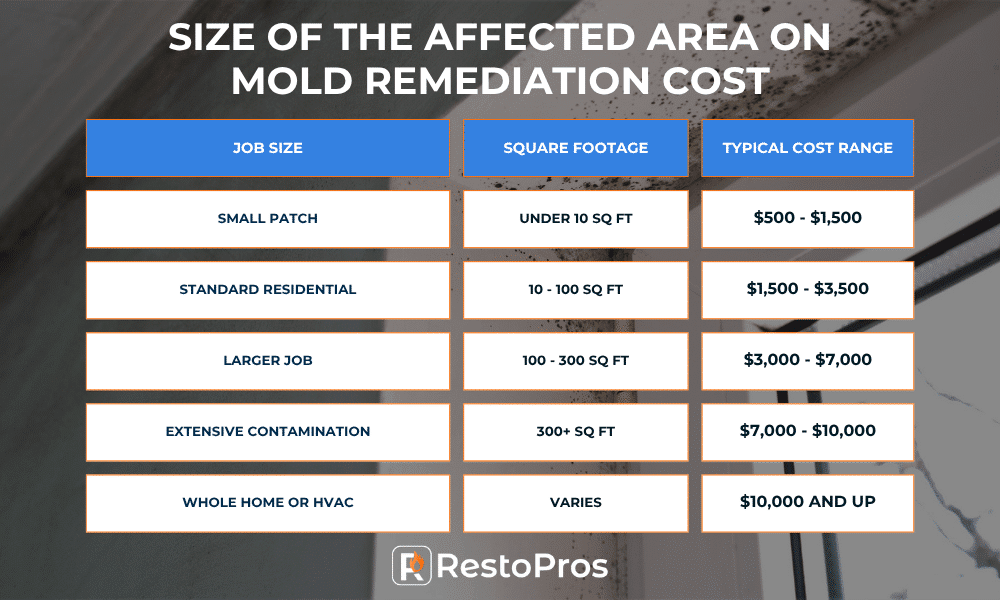
Square footage is the single biggest cost driver. A 10 square- foot patch of visible mold on a bathroom wall is a different job than 500 square feet of mold contamination across a finished basement. Pricing is usually scoped by the square foot of the affected area, with the rate per square foot dropping as the job gets larger. Standard residential projects are around the $2,200 to $2,400 mark, with the full range stretching from $500 for a small patch up past $10,000 for extensive mold contamination.
Location Inside the Home
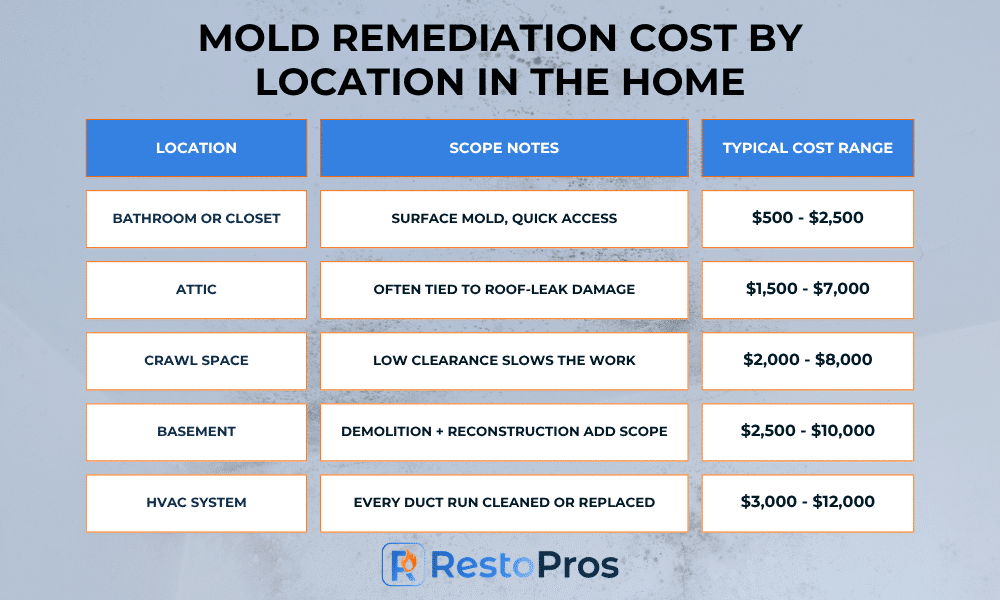
Where the mold has settled matters almost as much as how much of it there is. A crawl space with low clearance takes longer per square foot than an open basement. HVAC system contamination means every duct run has to be cleaned, and sometimes replaced, before the system comes back online. Mold inside wall cavities adds demolition and reconstruction to the scope. Attic jobs tied to roof-leak damage, finished basement cleanups and whole-home HVAC work land on the higher end of the pricing range, while a small closet or bathroom patch sits closer to the lower end.
Type of Mold
A standard mold assessment identifies the mold species before scoping. Most household mold is handled with the same core protocols. If testing returns stachybotrys chartarum or another toxic mold, the containment and protective gear requirements go up, and so does the price. Toxic mold jobs often add 25 to 40 percent to a standard remediation cost because of the extra containment, HEPA filters and air scrubbing required.
What the Price Actually Covers
Most projects start with a mold inspection by a certified technician. The visit uses moisture meters, thermal imaging and air quality testing to map every affected area, including hidden mold growth behind walls, under flooring and inside the HVAC system. Air sampling or surface swabs add lab fees when the scope calls for them, and insurance claims or school properties often require an independent mold assessment before the work begins.
Once the inspection is done, containment barriers go up to isolate the affected area and keep mold spores from spreading to the rest of the property. Crews then remove mold from all affected surfaces, including porous materials like drywall, ceiling tiles, and carpet that can’t be salvaged. Removal is usually the largest line item on the invoice.
From there, an antimicrobial treatment is applied to hard surfaces to kill remaining spores and prevent regrowth. Building materials are replaced, damaged areas are repaired, and the moisture source that caused the mold growth in the first place is addressed. Skipping the moisture fix is the fastest way to pay for the same job twice.
Insurance Coverage for Mold Remediation
Mold is one of the trickier claims to file. A standard homeowners insurance policy covers mold only when it results from a covered peril, like a burst pipe or an appliance leak that happened suddenly. Mold tied to long-term humidity, poor ventilation or deferred maintenance is usually excluded.
Points worth checking on your policy:
- Does your homeowners insurance include a mold endorsement, and what is the cap
- Is there a separate deductible for mold removal
- Does the policy cover both the mold remediation and the water damage that caused it
- Will the insurance company pay for post-remediation clearance testing
Caps on mold claims are often set at $5,000 or $10,000, which can fall short of the total cost on a larger mold infestation. RestoPros documents every stage of the work with photos, moisture readings, scope notes, and lab results so your insurance company has what it needs to process the claim.
Why Fast Response Lowers the Bill
Every day a moisture problem sits unresolved, the scope of the mold grows. A ceiling tile with a small stain today can be a saturated area with hidden mold inside the ceiling cavity next month. Catching a leak early and bringing in professional mold remediation at the first sign of mold growth is almost always cheaper than waiting.
Getting the Right Price for Your Mold Problem

Mold remediation cost comes down to how much mold is present, where it has settled and what caused it. A quick response, a proper mold inspection, and good documentation keep the number as low as possible. Trying to patch over a mold problem without fixing the moisture source almost always doubles the bill the second time around.
RestoPros handles the full process of mold inspection, containment, removal, antimicrobial treatment, and restoration, and coordinates directly with your insurance company along the way. If you have visible mold, a musty smell that will not go away or recent water damage you have not had looked at, contact RestoPros and find your closest location for an inspection, service coverage and response times in your area.
Frequently Asked Questions
Usually, yes. The inspection maps what’s behind the walls, finds the moisture source and documents the job for insurance. Skipping it tends to cost more when hidden spots show up mid-project.
For a small, one-room job with the area sealed off, yes. For bigger jobs, HVAC contamination or toxic mold, it’s smarter to stay somewhere else, especially if anyone in the home has asthma or a weakened immune system.
A small bathroom job wraps in a day or two. Medium jobs run three to five days. A large crawl space, basement or HVAC job can take one to three weeks once drying and clearance testing are added in.
Some carriers keep an approved list; others don’t. Call your insurance company before scheduling testing so the wrong assessor doesn’t hold up the claim.
It almost always means the moisture problem wasn’t fully fixed. A good remediation company will warranty the work and re-inspect at no charge if mold shows up in the same spot.