
At a Glance: Whether your drywall ceiling shows water stains or your bathroom wall has gone soft, not all water-damaged drywall needs to be replaced. A professional assessment determines what can be saved and what must go before mold takes hold.
Water damage moves fast. Within 24 to 48 hours, wet drywall can become a breeding ground for mold. A ceiling stain from a leak, moisture buildup in the bathroom, or a soaked wall after extreme weather can all look minor on the surface while hiding a much bigger problem inside. The wall or ceiling you see is only part of the story. What sits behind it, including the insulation, vapor barrier, and building materials, matters just as much.
How a Restoration Professional Assesses the Damage First
Before any repair work begins, technicians conduct a full inspection of the affected area. This is not a visual check alone. The team uses professional-grade tools to find moisture that the eyes cannot detect.
Assessment tools and steps include:
- Moisture meter readings to measure the actual moisture content inside the wall or ceiling cavity
- Inspection behind the drywall for wet insulation, mold growth, or a compromised vapor barrier
- Checking the source of the water, such as a vent pipe, shower, roof, or basement
- Classifying the water type (clean, grey, or black water), since contaminated water changes the entire scope of work
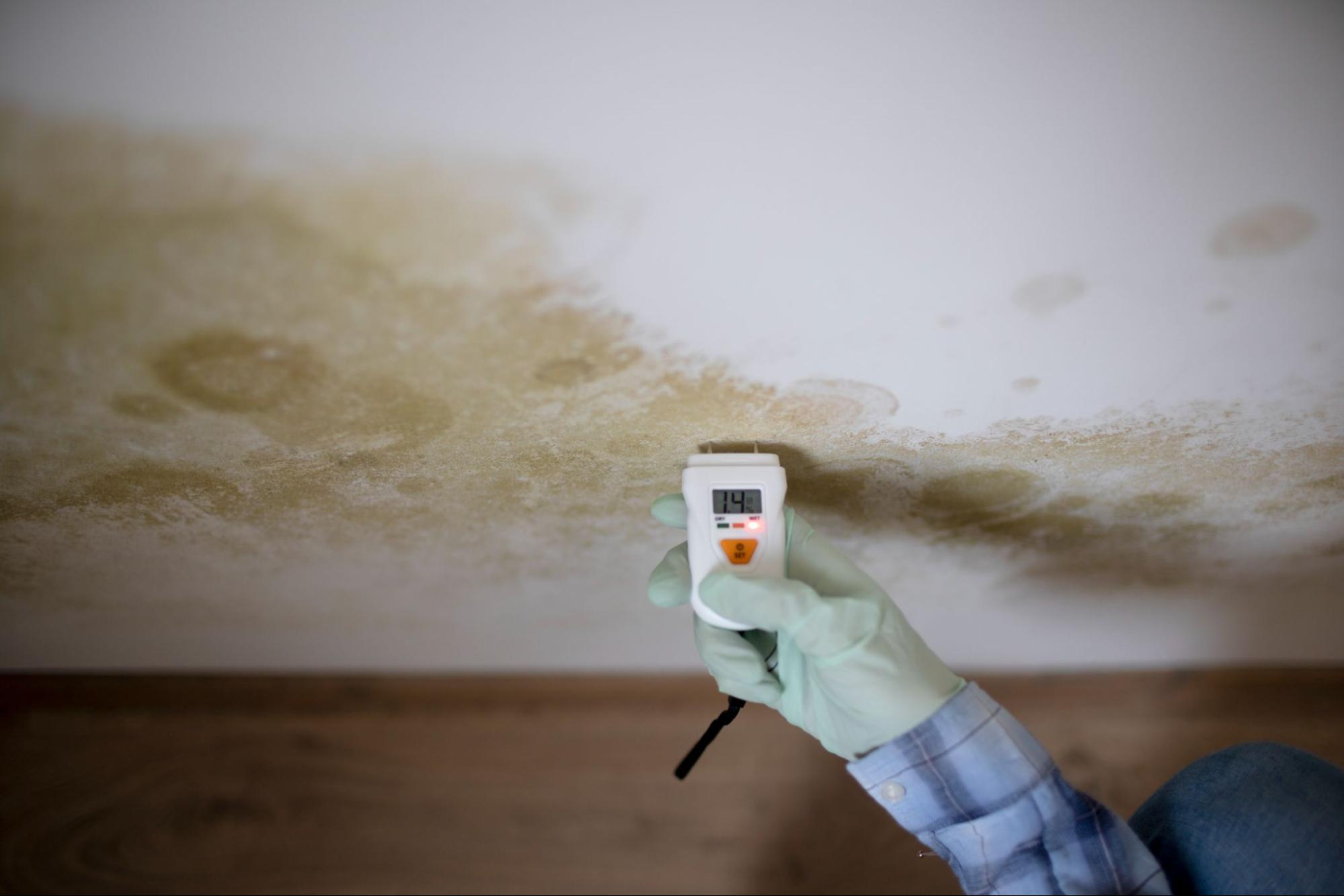
Without knowing the actual moisture content, any repair is a guess. That is why a restoration professional never skips this step.
Save It or Replace It? What Drives the Decision
Not every piece of damaged drywall needs to come down. A restoration company uses specific criteria to make that call, following IICRC S500 standards for professional water damage restoration.
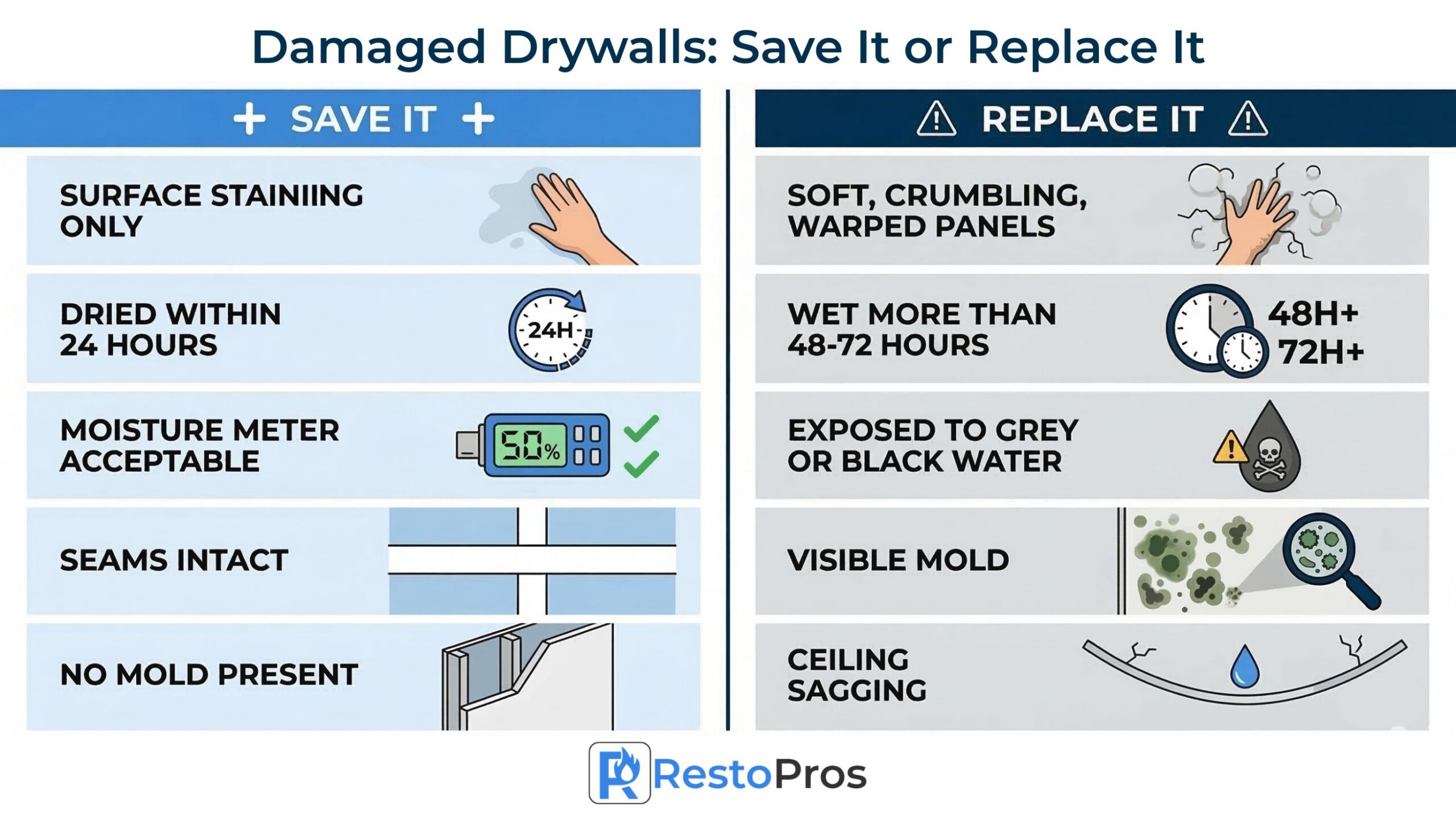
Drywall That Can Often Be Saved
- Surface staining with no structural softness
- Drywall that dried quickly after a minor, clean water leak
- Small areas where the actual moisture content has returned to an acceptable range
- Sections where the seam and corner integrity remain intact
Drywall That Typically Needs Replacing
- Any wall or ceiling that has been wet for more than 48 to 72 hours
- Soft, crumbling, or warped drywall panels
- Drywall exposed to black water or sewage
- Areas with visible mold growth on the surface or behind the panel
- Drywall ceiling repair situations where the ceiling has begun to sag or bow
Regular drywall is not designed to hold up under sustained moisture. Once it loses its structural integrity, no amount of joint compound or drywall compound will make it safe again.
The Drywall Restoration Process
When drywall can be saved, a restoration company follows a precise process. When it cannot, the team handles full removal and rebuild.
Step 1: Controlled Drying
Industrial air movers and dehumidifiers are placed throughout the affected space. In a bathroom, basement, or ceiling repair scenario, this drying phase can take several days. A bathroom fan alone cannot move enough air to dry out a saturated wall cavity.
Technicians monitor moisture meter readings daily to track progress and confirm drying is complete before any repair work begins.
Step 2: Treating What Is Behind the Wall
Before the surface is repaired, a restoration professional addresses what is behind it:
- Wet or damaged insulation is removed and replaced
- The vapor barrier is inspected and repaired if compromised
- Any mold found during this phase triggers mold remediation protocols before wall closure
Step 3: Drywall Patch or Full Panel Replacement
Depending on the scope:
- Small damage areas may be cut out and patched using new drywall and setting compound
- Larger sections require full panel replacement, properly taped at every seam and corner
- Technicians use the right drywall compound for each stage of the repair, which matters for the final finish

Step 4: Finishing and Texture Matching
A repair that looks like a repair is not a finished job.
- Joint compound and drywall compound are applied in the correct sequence
- Texture is matched to the surrounding wall, including knockdown and other patterns
- The repaired surface is prepared for paint, so the finished result blends with the rest of the room
A full-service restoration company handles this through the finishing stage, so the work is not handed off to a separate contractor.
Special Situations That Change the Scope
Bathroom and Shower Areas
Drywall near a shower is at a higher risk because moisture exposure is ongoing. A failing shower caulk or a leaking shower door can saturate regular drywall over the years without being noticed. In wet areas like this, a restoration professional assesses whether tile, shower caulk, or the underlying building materials also need attention before the wall is closed back up.
Ceiling Water Damage
Drywall ceiling repair after a leak requires locating the source before restoration begins. A sagging ceiling holds water weight and poses a safety risk. A restoration company stabilizes the area, extracts the moisture, and addresses the ceiling fully before finishing.
Basement Walls
Basement drywall is particularly vulnerable to moisture buildup from groundwater or a vent pipe issue. The vapor barrier behind basement walls plays a significant role in preventing recurrence, and a restoration professional verifies this as part of any basement water damage job.
What Happens If Water Damage Is Left Alone
Waiting to address drywall water damage leads to a larger and more expensive problem every time.
- Mold can begin growing within 24 to 48 hours of water exposure
- Wet insulation loses its effectiveness and can trap moisture long-term
- Structural building materials behind the wall can weaken over time
- A small patch job becomes a full wall replacement
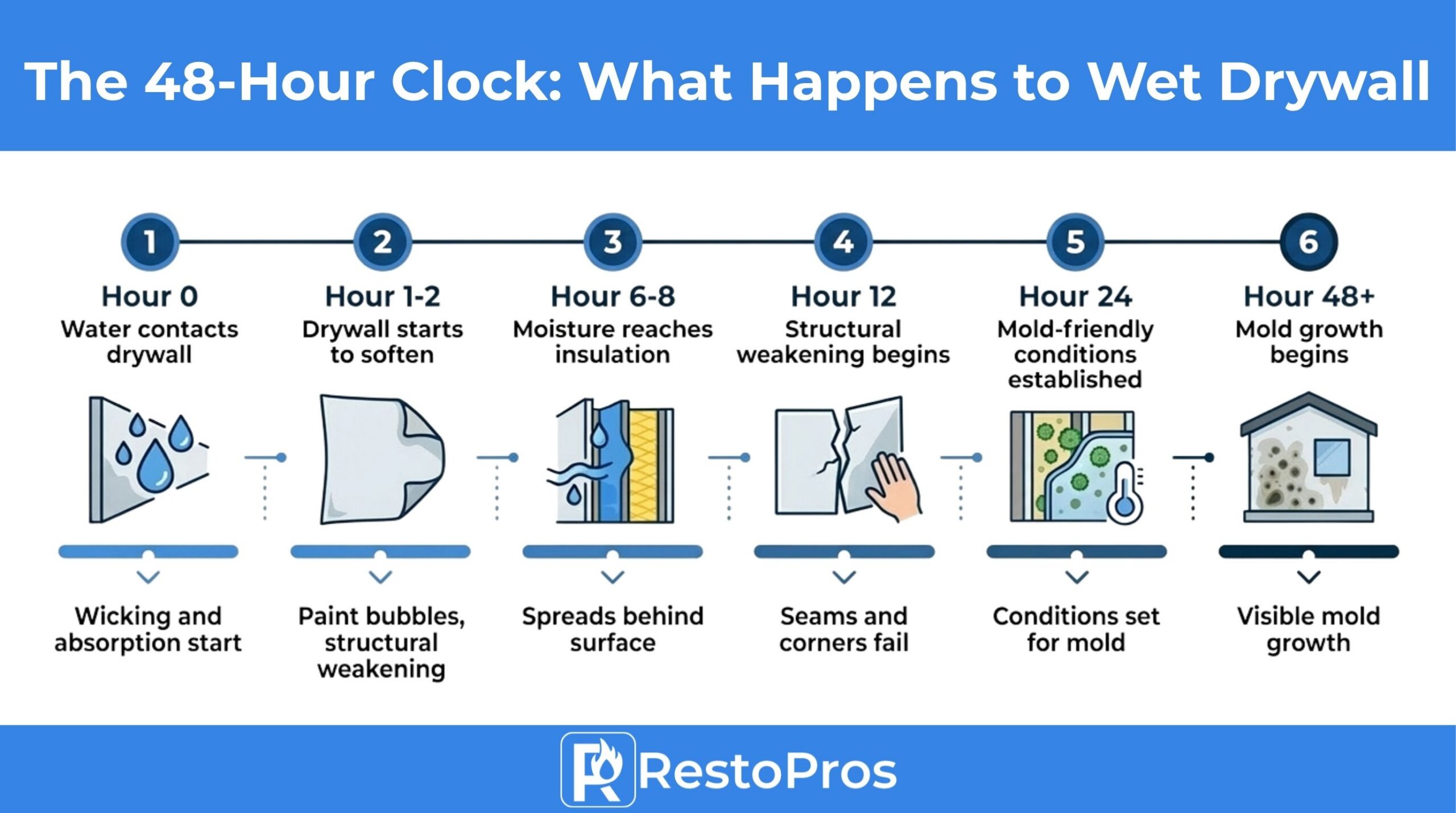
The longer the water sits, the more the scope of work grows.
Don’t Wait on Wet Walls
Drywall water damage is not a wait-and-see situation. The difference between a salvageable wall and a full replacement often comes down to how quickly a professional gets involved. RestoPros is available 24 hours a day, 7 days a week, to assess water damage, dry out affected areas, and complete drywall repairs through the finishing stage.
From the first moisture meter reading to the final coat of paint, RestoPros handles the full scope so you are not managing multiple contractors or guessing whether the repair was done right. If you are seeing stains, soft spots, or signs of a leak, contact RestoPros today before the damage spreads.