



You don’t have to handle it alone. Call us any time, day or night, and let’s figure out next steps together.
Blog
How Long Does It Take Mold To Make You Sick? Health Risks Explained
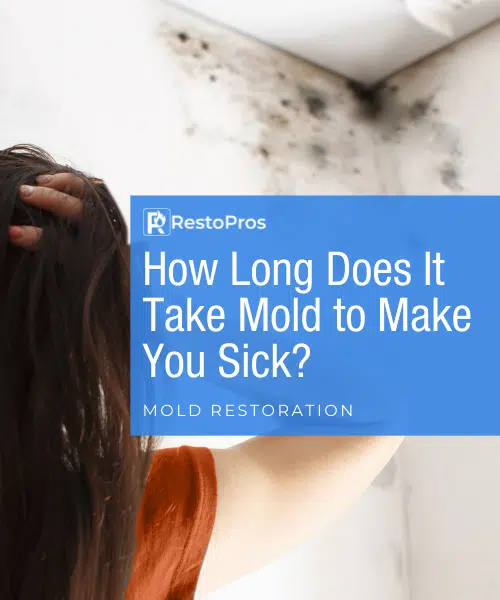
The Short Answer: Mold exposure can trigger symptoms in as little as a few hours for people with mold allergies or compromised immune systems. For others, long-term mold exposure over weeks or months can gradually cause respiratory problems, chronic fatigue, and other serious health issues.
If you have noticed unexplained symptoms like nasal congestion, a persistent runny nose, or difficulty breathing, mold growth in your home could be the cause. Mold spores are microscopic and airborne, meaning you can breathe them in long before you ever see visible mold. The timeline for getting sick depends on factors like the type of mold, the level of exposure, and your individual health. Below, we break down how mold affects your body, the warning signs to watch for, and what professional mold remediation looks like when it is time to act.
How Mold Exposure Affects Your Body
Mold releases tiny spores into the air that you inhale throughout the day. Once inside your airways, these spores can trigger an immune system response. Your body treats mold spores as foreign invaders, which can lead to inflammation in your sinuses, lungs, and throat.
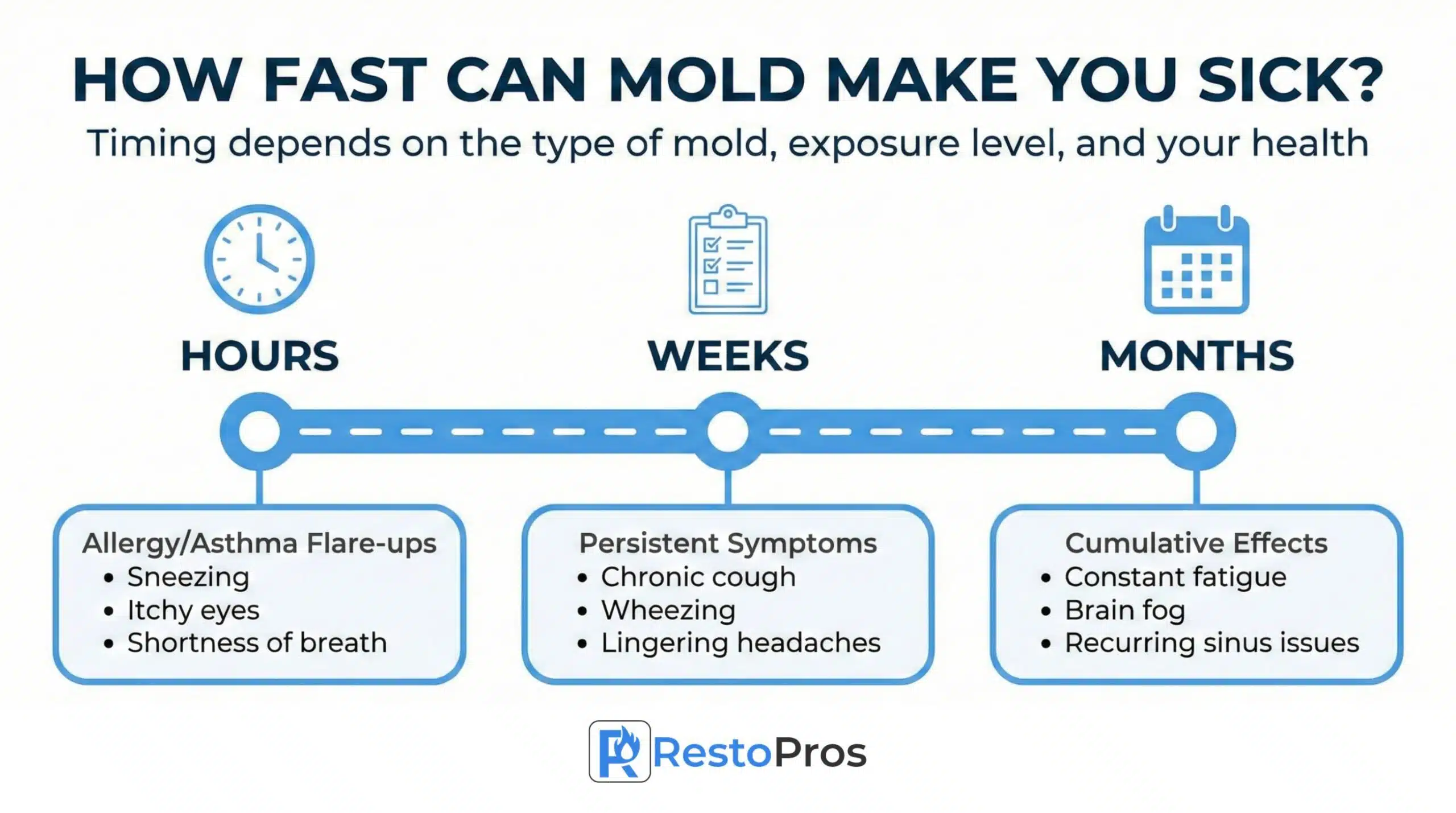
Immediate Reactions (Hours)
Some people experience an allergic reaction within hours of mold exposure. These quick-onset allergy symptoms are most common in individuals with a known mold allergy or seasonal allergies.
Short-term symptoms include:
- Sneezing and a runny nose
- Nasal congestion and sinus pressure
- Itchy, watery eyes
- Skin rashes or irritation from direct contact
- Worsening asthma symptoms, including shortness of breath
Delayed Reactions (Weeks to Months)
For people without a pre-existing allergy, mold sickness often develops more gradually. Long-term mold exposure can cause symptoms that build slowly and are easy to dismiss or attribute to other causes.
Delayed mold exposure symptoms include:
- Chronic fatigue and low energy
- Brain fog and difficulty concentrating
- Recurring headaches
- Persistent respiratory symptoms like coughing and wheezing
- Difficulty breathing during normal activities
Who Is Most at Risk?
Not everyone reacts to mold the same way. Your risk depends largely on your overall health and how much exposure you are dealing with.
High-Risk Groups
- People with asthma or respiratory issues: Mold spores can trigger asthma attacks and make existing respiratory problems significantly worse.
- Individuals with weakened immune systems: This includes those undergoing chemotherapy, organ transplant recipients, or anyone with autoimmune conditions. Mold can cause fungal infections in severe cases.
- Infants and young children: Their developing lungs and immune systems make them more vulnerable to mold toxicity.
- Older adults: Age-related changes in lung function increase sensitivity to airborne irritants.
- People with existing mold allergies: Even low levels of exposure can cause an allergic reaction.
According to the CDC, people with chronic lung conditions who are exposed to mold may develop fungal infections in their lungs, which can lead to serious and sometimes life-threatening complications.
Types of Mold and Their Health Effects
Not every type of mold carries the same risk. Some are relatively harmless, while others produce toxic substances called mycotoxins that can cause severe symptoms.
Common Indoor Molds
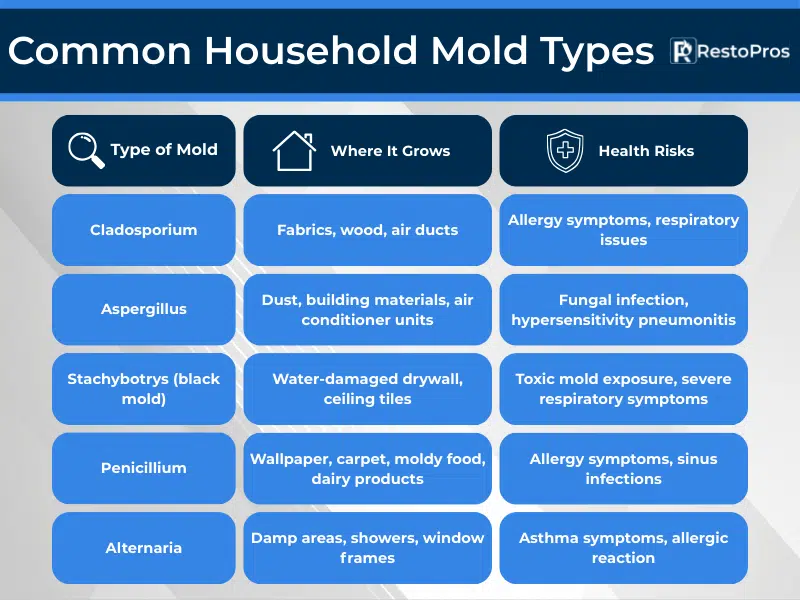
Toxic mold like Stachybotrys produces mycotoxins that can cause health problems beyond typical allergy symptoms. Prolonged exposure to these toxic substances has been linked to respiratory problems, neurological symptoms like brain fog, and in severe cases, damage to internal organs.
The EPA warns that all molds have the potential to cause health effects, and the best approach is to address any mold problem quickly, regardless of the type of mold present.
Warning Signs of a Hidden Mold Problem
Mold does not always grow where you can see it. After water damage, mold often develops behind walls, under flooring, and inside air conditioner systems. Here are signs that a hidden mold problem may be affecting your health.
Environmental Clues
- A persistent musty or earthy smell in certain rooms
- Visible water stains or discoloration on walls and ceilings
- Peeling or bubbling paint
- High humidity that lingers above 60%, especially in basements and bathrooms
- Recent water damage that was not professionally dried
Physical Symptoms to Watch For
If multiple people in your household are experiencing similar unexplained symptoms, mold could be the common factor. Pay attention to health issues that improve when you leave the house and return when you come home. This pattern is one of the strongest indicators of indoor mold exposure.
Common health effects include:
- Respiratory symptoms that do not respond to typical allergy medication
- Skin rashes that appear without an obvious cause
- Chronic fatigue that persists despite adequate rest
- Recurring sinus infections or nasal congestion
- Shortness of breath or wheezing indoors

Why Professional Mold Testing Matters
Guessing about mold is never a good idea when your health is on the line. Professional mold testing identifies the type of mold present, the concentration of mold spores in your air, and the full scope of the problem.
What a Professional Assessment Includes
- Air quality sampling to measure mold spore levels throughout your home
- Surface testing to identify mold growth on materials
- Moisture mapping to locate hidden water damage feeding the mold
- Thermal imaging to detect moisture behind walls and under floors
This data guides the mold remediation plan and helps determine whether the mold issue is surface-level or has spread into building materials that need to be removed.
How Mold Remediation Protects Your Health
Once mold is identified, professional mold remediation is the only reliable way to fully address the problem and protect your health. Disturbing mold without proper containment can send millions of mold spores into the air, actually making exposure worse.
The Professional Remediation Process
- Containment: Affected areas are sealed off using physical barriers and negative air pressure to prevent mold spores from spreading to clean areas.
- Air filtration: HEPA air scrubbers remove mold spores from the air throughout the remediation process.
- Removal: Mold-damaged materials like drywall, insulation, and carpet are safely removed and disposed of.
- Treatment: Remaining surfaces are treated with antimicrobial solutions to eliminate residual mold.
- Moisture control: The underlying moisture source is identified and corrected to prevent future mold growth.
- Verification: Post-remediation testing confirms that mold spore levels have returned to safe ranges.
Addressing the moisture source is just as important as removing the mold itself. Without fixing the water damage or humidity issue, mold growth will return.
Preventing Mold-Related Health Problems
While you cannot eliminate every mold spore from your environment, you can reduce the conditions that allow mold to thrive and cause health problems.
Key Prevention Strategies
- Keep indoor humidity below 60% using dehumidifiers and proper ventilation
- Address any water damage or leaks immediately with professional restoration
- Have your air conditioner and HVAC system serviced regularly
- Monitor room temperature and humidity in basements, crawl spaces, and attics
- Schedule professional mold testing if you notice musty odors or unexplained symptoms
- Avoid storing organic materials in damp areas
Lifestyle changes like improving ventilation and monitoring humidity can help reduce your risk, but they cannot replace professional intervention once mold has taken hold.
When to Call a Mold Remediation Professional
Do not wait for severe symptoms to develop before taking action. If you notice signs of water damage, musty odors, or if anyone in your home is experiencing respiratory problems, nasal congestion, or other unexplained symptoms, it is time to get help.
RestoPros offers 24/7 mold inspection and mold remediation services to identify and eliminate mold problems at the source. Our certified team uses professional-grade equipment to contain, remove, and treat mold while protecting your indoor air quality. We also work directly with your insurance company to simplify the claims process. Contact RestoPros today to schedule an inspection and start breathing easier.