
The Short Answer: Professional mold removal from painted walls requires containment, proper protective gear, HEPA filtration, and addressing the moisture source that caused the mold problem in the first place. RestoPros follows IICRC S520 standards to safely remove mold from interior walls while preventing spores from spreading to other areas of your home.
Mold growth on bathroom walls and interior walls is more than a cosmetic issue. When you see mold growth on a painted wall, the problem often extends beyond the visible surface. Mold spores can penetrate paint layers and grow into the drywall beneath, creating health problems for your family including allergic reactions and respiratory issues.
The EPA recommends hiring professional mold remediation services for any affected area larger than 10 square feet. Even smaller areas may require professional attention if the mold resulted from water damage, contaminated water, or if household members have existing health conditions. This guide explains RestoPros’ professional cleaning process for removing mold from painted walls safely and completely.
Why Painted Walls Develop Mold
The Role of Moisture
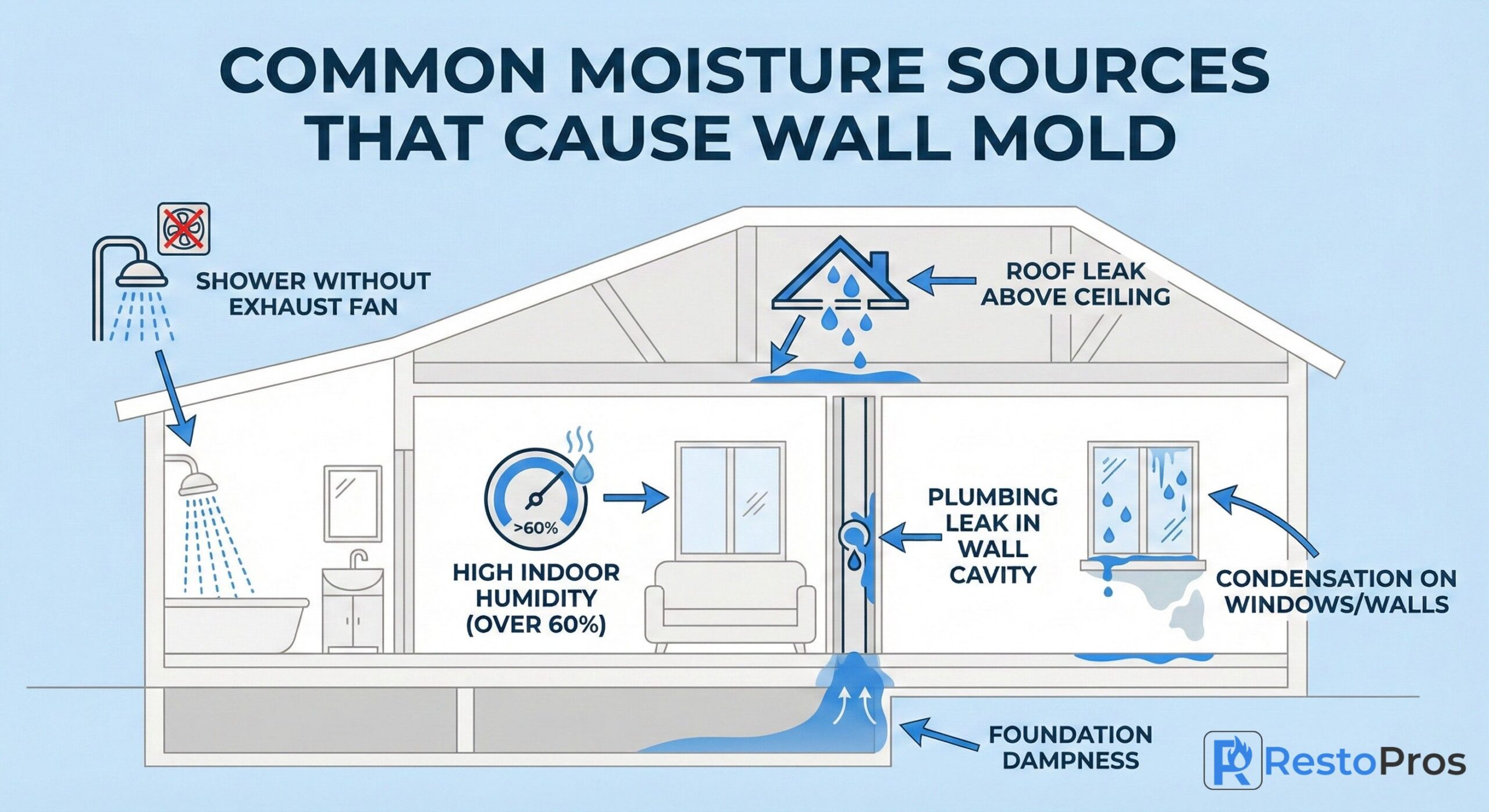
Mold needs moisture to grow. On painted walls, mold growth typically starts when excess moisture becomes trapped against the wall surface. High humidity in bathrooms, poor ventilation, and water damage from leaks create the conditions mold needs to thrive.
Common moisture sources include:
- Condensation from showers without an exhaust fan or proper ventilation
- Roof or plumbing leaks inside wall cavities
- Rising dampness from foundation issues
- High humidity levels above 60% in indoor spaces
- Water damage from flooding or burst pipes
Paint as a Food Source
While paint itself is a non-porous surface, the organic compounds in many paints can serve as a food source for mold. Dust and dirt that accumulate on painted walls also provide nutrients. Once mold establishes on the paint surface, it can send roots (called hyphae) through the paint layer into the porous materials beneath, including drywall paper and wood framing.
Why DIY Mold Removal Often Fails
Many homeowners attempt to clean mold from painted walls using a spray bottle filled with bleach solution, white vinegar, or hydrogen peroxide. While these cleaning solutions may remove visible mold temporarily, they typically fail to solve the underlying mold problem for several reasons.
Surface Cleaning Limitations
- A diluted bleach solution or bleach mixture only addresses mold on the surface
- Scrubbing with a scrub brush or damp cloth can release mold spores into the air
- Cleaning solutions cannot reach mold growing behind the paint or inside the wall
- Without proper containment, mold spores spread to other rooms during cleaning
- The moisture source often remains, allowing mold to return
Health and Safety Risks
Attempting mold removal without protective clothing and proper respiratory protection puts you at risk. Disturbing mold growth releases millions of mold spores into the air. Without professional containment and HEPA filtration, these spores settle throughout your home, potentially creating new mold problems in other areas.
Sodium hypochlorite (bleach) mixed with other household products can create toxic fumes. Even with open windows for ventilation, DIY mold cleaning exposes you to both mold spores and potentially harmful chemical combinations.
RestoPros Professional Mold Removal Process
Our mold remediation process follows IICRC S520 standards and EPA guidelines to remove mold safely and prevent recurrence.
Step 1: Assessment and Testing
Before any cleaning process begins, our technicians conduct a thorough inspection to determine:
- The full extent of mold growth (visible and hidden)
- The moisture source causing the mold problem
- Whether mold has spread to porous materials behind the painted wall
- The total square feet of affected area
- Air quality in the space
This assessment determines whether surface cleaning will suffice or whether affected materials need removal.
Step 2: Containment Setup
For any mold removal project, preventing cross-contamination is a priority. Our team:
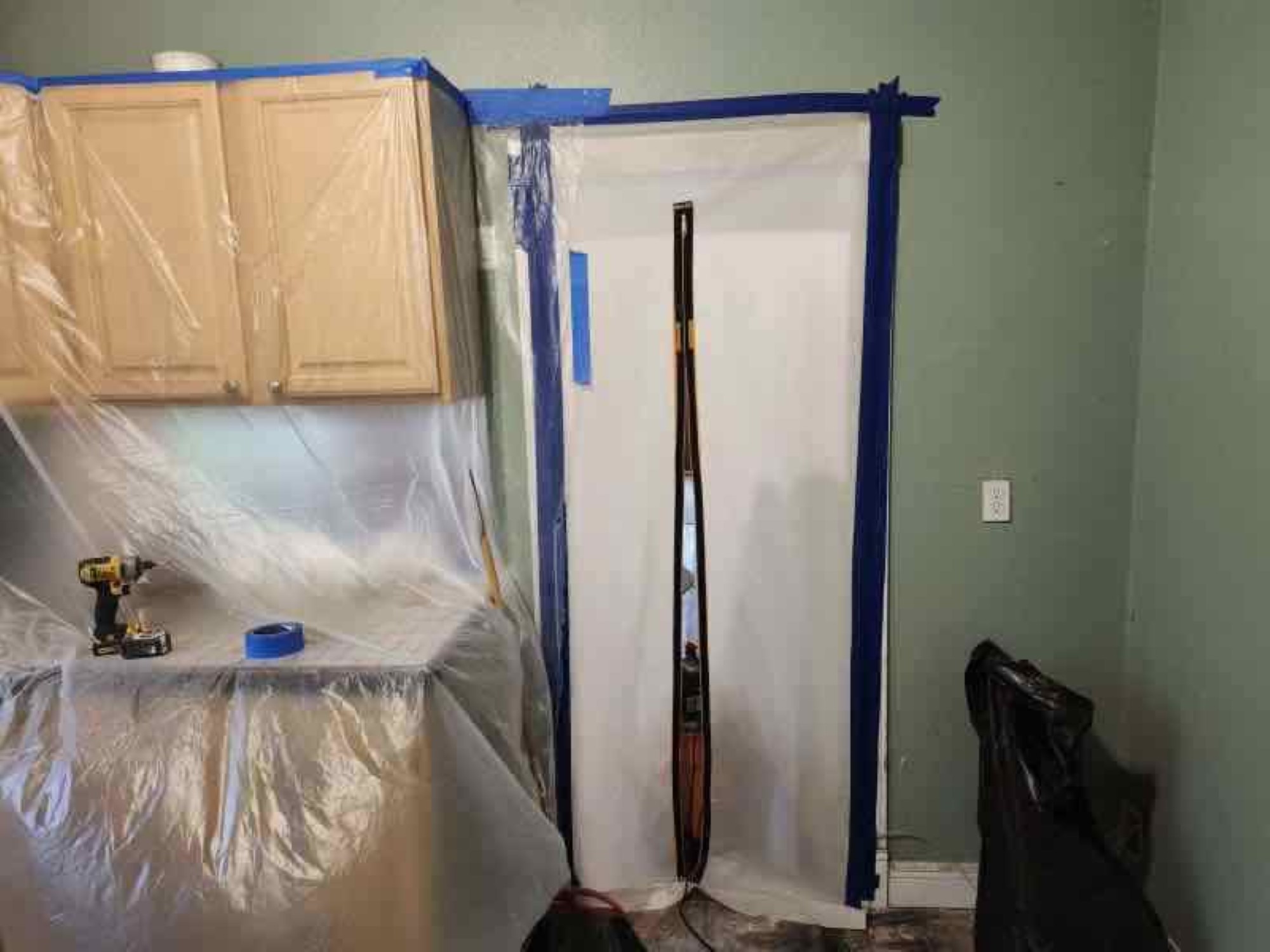
- Seals off the affected area using plastic sheeting
- Creates negative air pressure to prevent mold spores from escaping
- Covers air vents and openings to protect your HVAC system
- Establishes a decontamination area for workers and equipment
Step 3: Personal Protection
Our technicians wear appropriate protective gear throughout the cleaning process:
- NIOSH-approved respirators
- Disposable protective clothing (coveralls)
- Gloves and eye protection
- Boot covers to prevent tracking contamination
Step 4: Air Filtration
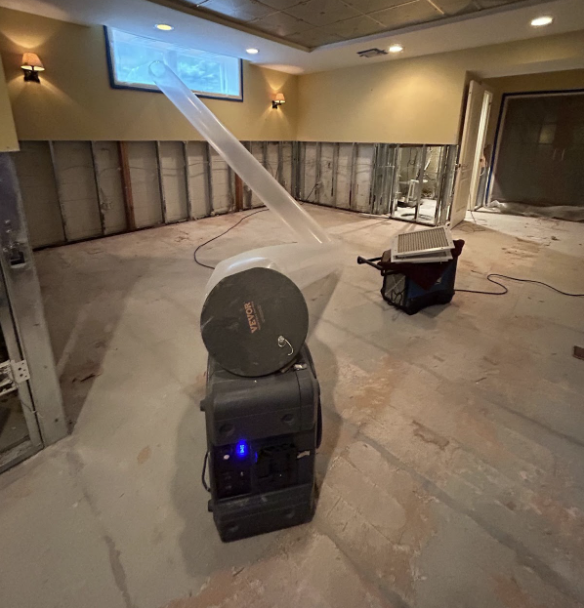
We run HEPA air scrubbers continuously during mold removal. These professional-grade units capture mold spores as small as 0.3 microns, keeping the air clean water of contamination throughout the project. This prevents mold spores from settling on clean surfaces or traveling to other parts of your home.
Step 5: Mold Removal from Painted Walls
The actual mold removal approach depends on what our assessment reveals:
For Surface Mold Only:
- HEPA vacuum the affected area to remove loose spores
- Apply professional-grade cleaning solution (not household bleach)
- Clean the surface using proper techniques that minimize spore dispersal
- HEPA vacuum again after cleaning
- Apply antimicrobial treatment to prevent regrowth
For Mold That Has Penetrated the Wall:
- Remove and dispose of affected drywall sections
- Inspect wall cavity for hidden mold growth on framing
- Clean wood framing using wire brushing, HEPA vacuuming, and antimicrobial treatment
- Address any mold on adjacent porous materials
- Replace removed materials after clearance testing
Step 6: Addressing the Moisture Source
Mold removal is pointless without fixing what caused the mold growth. Our team identifies and recommends solutions for:
- Plumbing leaks (we’ll refer you to a licensed plumber)
- Ventilation improvements for bathroom walls and high humidity areas
- Drainage issues contributing to excess moisture
- Condensation problems on interior walls and exterior wall surfaces
Step 7: Post-Remediation Verification
After mold removal, we verify our work through:
- Visual inspection of all treated areas
- Moisture readings to confirm the area is dry
- Air quality testing when required
- Documentation for your records and insurance
Preventive Measures After Mold Removal
Once we’ve completed mold remediation, these steps help prevent future mold problems:
Control Humidity
- Use an exhaust fan during and after showers
- Maintain indoor humidity below 60%
- Open windows when weather permits for proper ventilation
- Consider a dehumidifier in problem areas
Address Water Promptly
- Fix leaks immediately
- Dry any water damage within 24 to 48 hours
- Monitor areas prone to condensation
Consider Mold-Resistant Paint
When repainting after mold remediation, mold-resistant paint provides an extra layer of protection for bathroom walls and other high humidity areas. This paint contains antimicrobial additives that discourage mold growth on the painted surface.
When to Call RestoPros
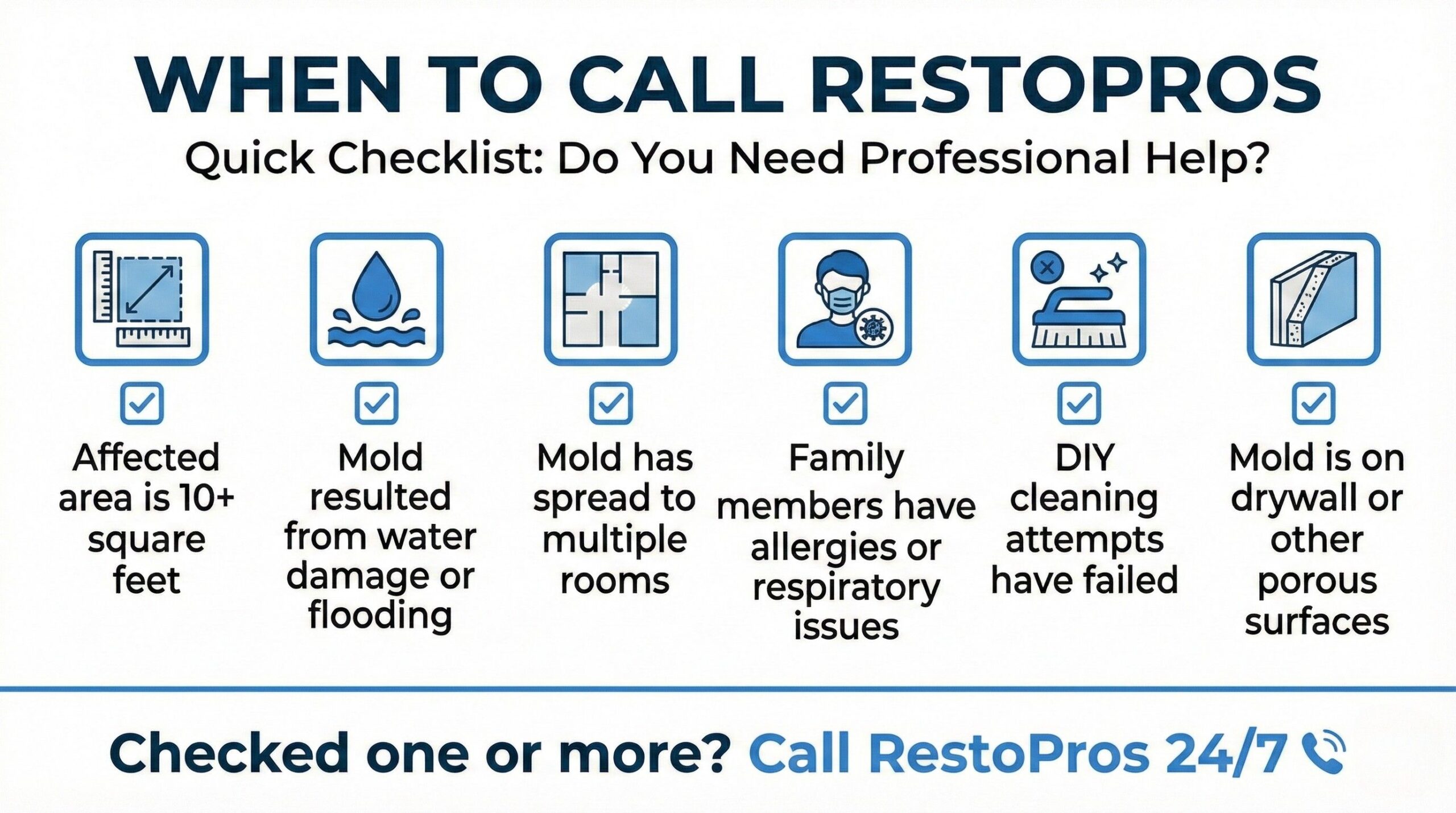
Contact professional mold remediation services if:
- The affected area exceeds 10 square feet
- Mold resulted from water damage or flooding
- Mold has spread to multiple rooms or walls
- Family members experience allergic reactions or respiratory issues
- Previous cleaning attempts have failed
- Mold is growing on porous surfaces like drywall
Protect Your Home and Health
Mold on painted walls signals a moisture problem that will only worsen without professional attention. What appears as a small patch of mold often indicates larger growth behind the wall surface. Attempting to clean mold yourself can spread mold spores throughout your home and expose your family to health risks.
RestoPros provides professional mold remediation that addresses both visible mold and hidden growth. Our IICRC-certified technicians use proper containment, HEPA filtration, and proven techniques to remove mold completely and prevent recurrence. We work with your insurance company to document damage and simplify the claims process.
Don’t let mold compromise your indoor air quality or your family’s health. Contact RestoPros for a professional mold assessment. Our team is available 24/7 to help you address mold problems before they spread further.