
The Short Answer: Mold affects nearly half of all U.S. homes and buildings, causing billions in damage and millions of health-related medical visits every year. The statistics behind mold growth make one thing clear: the longer a moisture problem goes unaddressed, the worse the outcome gets.
Mold spores are always present in the indoor environment. When excess moisture appears, they settle on organic material, porous materials, and hard surfaces and begin growing fast. The numbers below show just how widespread, costly, and dangerous indoor mold really is and why every property owner should take it seriously.
How Common Is Indoor Mold?
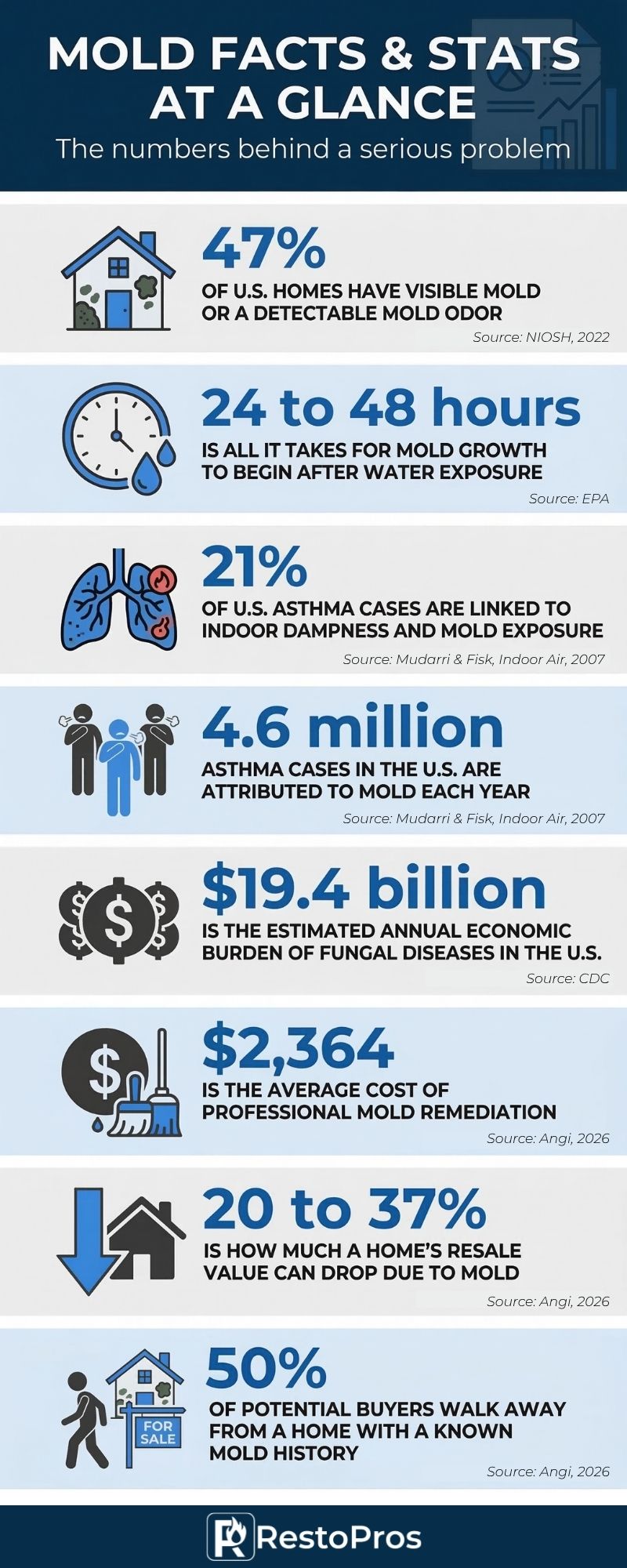
According to a 2022 NIOSH report, the population-weighted average prevalence of dampness and indoor mold growth across U.S. residential buildings was 47%. The numbers are just as significant in commercial buildings, according to the U.S. EPA BASE study:
- 85% of commercial buildings have experienced water damage at some point
- 45% of office buildings currently report active water leaks that can support mold growth
- In schools, 30% report plumbing problems, and 27% have roofing issues that create conditions for indoor mold growth
Mold contamination is not a rare edge case. It is a routine problem across residential and commercial buildings, and most property owners do not discover it until it is already well established.
How Fast Does Mold Grow After Water Damage?
A water problem does not need to be severe to trigger a mold problem. Mold spores settle on wet surfaces quickly, and excessive moisture from a water leak, flooding, condensation on cold surfaces, or a malfunctioning air conditioner is all they need to take hold.
| Time After Water Exposure | What Is Happening |
| 0 to 12 hours | Mold spores begin settling on wet surfaces |
| 24 to 48 hours | Active mold growth can begin on porous materials |
| 3 to 7 days | Visible mold colonies commonly appear |
| 1 to 2 weeks | Mold can spread to walls, ceiling tiles, and HVAC systems |
| 1+ months | Structural damage and widespread mold contamination become likely |
According to the EPA, water-damaged areas need to be dried within 24 to 48 hours to prevent mold growth. Allowing indoor humidity levels to remain elevated after a water event is one of the most common ways a small water problem becomes a large mold remediation job.
Mold Health Statistics
The health effects of mold exposure are well-documented across every age group. Common health problems from indoor mold include a runny nose, coughing, wheezing, asthma symptoms, respiratory problems, and allergic reactions. People with a weakened immune system, allergies, or pre-existing respiratory conditions face the most serious risks, and prolonged mold exposure can trigger an asthma attack even in people without a prior diagnosis.

The connection between indoor mold growth and asthma is one of the most studied areas in environmental health. A 2007 study by Mudarri and Fisk found:
- 21% of U.S. asthma cases could be linked to dampness and mold
- Dampness and mold are associated with a 30 to 50% increase in respiratory illness rates
- An estimated 4.6 million asthma cases in the U.S. are caused by mold each year
A 2016 study in the Journal of Environmental and Public Health found the annual cost of mold-attributable health problems reached $3.7 billion for allergic rhinitis, $1.9 billion for acute bronchitis, and $15.1 billion for asthma morbidity.
Across all fungal infections tied to mold exposure, the CDC reports approximately 7,300 deaths, 130,000 hospital stays, and 13 million doctor visits annually, with a total economic burden of $19.4 billion per year.
Mold Spore Count Levels
Indoor air quality becomes a concern when mold spore counts climb. Mold testing can identify spore levels in a space, and even counts below the thresholds can signal hidden mold contamination if they are elevated compared to outdoor levels. The National Allergy Bureau classifies outdoor mold spore levels this way:
| Spores per Cubic Meter | Mold Level |
| 0 to 6,499 | Low |
| 6,500 to 12,999 | Moderate |
| 13,000 to 49,999 | High |
| 50,000+ | Very High |
Mold Remediation Cost Statistics
Mold cleanup costs vary widely depending on where the mold is located and how many square feet are affected. According to Angi’s 2026 data, professionals typically charge $10 to $25 per square foot, with a national average of $2,364 per project:
| Location | Average Remediation Cost |
| Bathroom | $500 to $1,000 |
| Basement | $500 to $3,000 |
| Attic | $1,000 to $4,000 |
| Interior Wall | $1,000 to $20,000 |
| HVAC System | $3,000 to $10,000 |
| Whole House | $10,000 to $30,000 |
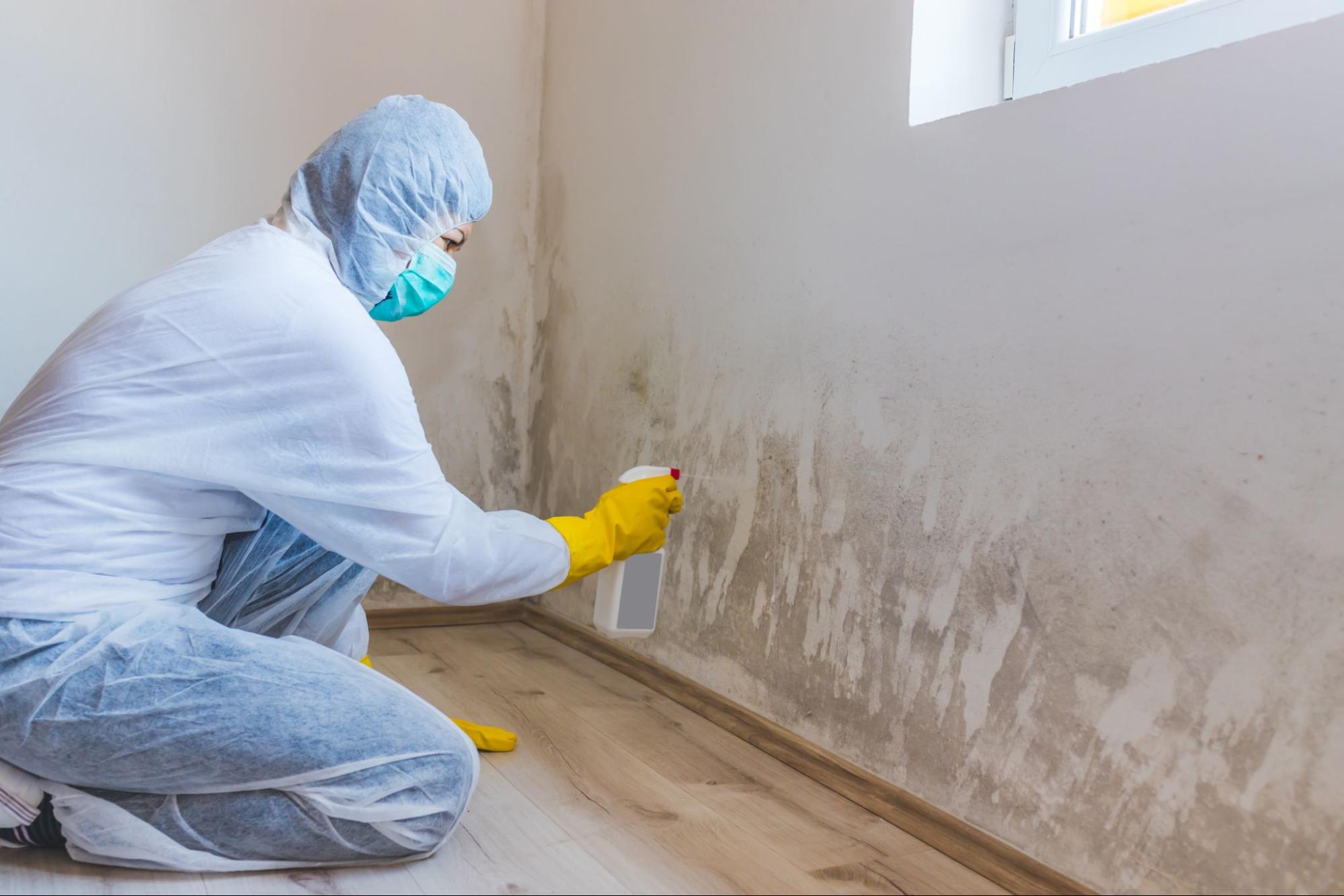
Mold inside walls, ceiling tiles, or an HVAC system typically increases costs by 50% or more compared to surface-level mold on accessible hard surfaces. A thorough mold assessment before any mold cleanup begins is what allows restoration professionals to accurately scope the full extent of the problem.
Beyond remediation costs, a home’s resale value can drop 20 to 37% due to a mold problem, and up to 50% of potential buyers walk away from a purchase once they learn a property has had mold, even after a successful mold remediation.
What These Mold Facts Mean for Your Property
The mold facts and numbers tell a clear story: mold is a widespread, costly, and genuinely dangerous problem across U.S. homes and commercial buildings. Nearly half of all properties show signs of it, billions go toward treating it each year, and the health effects tied to mold exposure affect millions of Americans annually. For any property owner, the cost of waiting only goes up with time.
When water damage or visible mold appears in your property, time is already working against you. RestoPros is available 24/7 to handle your mold remediation from initial inspection through final restoration. Contact RestoPros today to protect your property before a small problem becomes a major one.