
The Short Answer: Attic mold grows when warm, moist air gets trapped in your attic space with no way to escape. RestoPros removes it through a professional attic mold remediation process that treats the contamination, corrects the moisture source, and protects your home from future mold growth.
Attic mold is one of the most overlooked problems a homeowner can face. Because most people rarely go into their attic, mold can grow undetected for months. By the time it’s found, it’s often spread across the attic sheathing, roof sheathing, and attic floor, threatening both structural integrity and the air quality in your living space below.
Left untreated, attic mold leads to serious health issues, including respiratory problems and allergic reactions, as well as costly structural damage.
What Causes Mold Growth in an Attic?
Mold spores are always present in the air, but they need three things to grow: moisture, warmth, and something to feed on. Your attic provides all three.
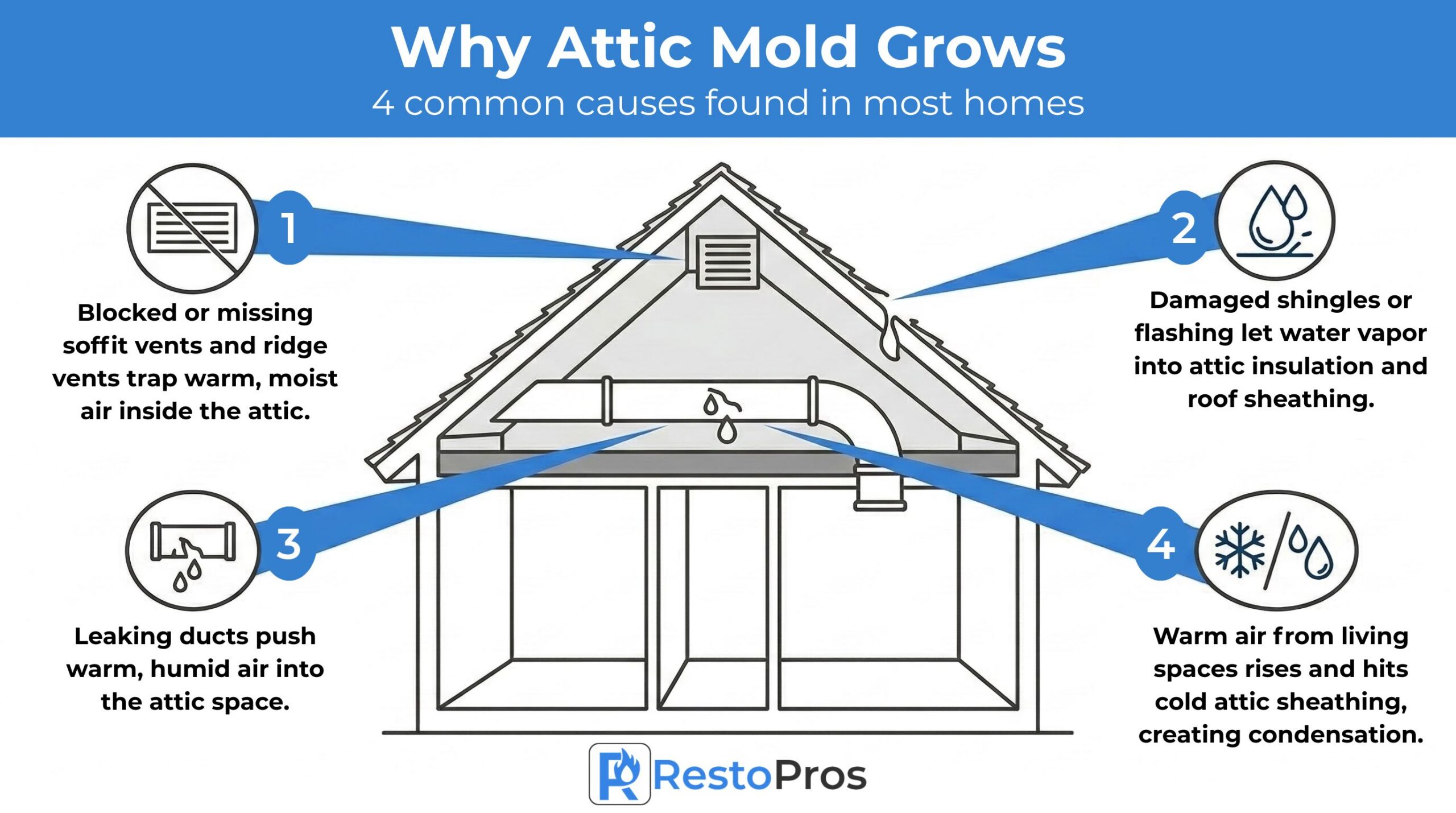
Poor Ventilation Traps Moist Air
Inadequate ventilation is the leading driver of attic mold. When warm air from your living space rises and enters the attic with nowhere to go, moisture levels spike. This happens when:
- Soffit vents or ridge vents are blocked or missing
- The attic ventilation system is undersized for the home
- Exhaust fans from bathrooms or kitchens vent directly into the attic instead of outside
According to the EPA, controlling moisture is the single most effective way to prevent indoor mold growth, and proper attic ventilation is a key step.
Roof Leaks and Water Damage
A roof leak introduces water directly into the attic space. Even small leaks allow water vapor to accumulate in attic insulation and on the roof sheathing, creating the moisture problem that mold needs to take hold. Storm damage, missing shingles, and deteriorated flashing are common culprits.
HVAC System Leaks
A leaking HVAC system duct in the attic pushes warm, humid air into a space that’s supposed to stay dry. The combination of warm temperatures and trapped moisture creates near-perfect conditions for microbial growth.
Winter Months and Condensation
During winter months, warm air from inside the home rises through gaps in the attic floor or ceiling and hits the cold attic sheathing. This causes condensation, which builds up over time and feeds mold growth even without a visible roof leak.
Health Risks of Attic Mold
Attic mold isn’t just a moisture issue. It’s a health issue that affects the air your family breathes every day.

The CDC notes that mold exposure can cause a range of health effects depending on the person and the level of exposure. Common health effects linked to mold include:
- Respiratory problems such as coughing, wheezing, and shortness of breath
- Allergic reactions, including sneezing, a runny nose, and skin irritation
- Worsened asthma symptoms, especially in children and older adults
- Headaches and fatigue from prolonged exposure to mold spores
Black mold, in particular, is associated with more serious reactions. If you notice mold stains on your attic sheathing or smell a musty odor in your home, don’t delay. Learn more about how mold spreads from this RestoPros blog.
Structural Risks You Can’t Ignore
Beyond health, active mold growth causes real structural damage:
- Roof sheathing and attic sheathing deteriorate as mold breaks down wood fibers
- Attic insulation becomes saturated and loses its effectiveness
- Attic joists and beams weaken over time, raising the cost of eventual repairs
- Mold contamination spreads from the attic into wall cavities and the crawl space below
The longer attic mold goes untreated, the more expensive the repair becomes.
How Professional Attic Mold Remediation Works
Our attic mold remediation process is built around two goals: removing the existing mold problem and correcting the moisture issue behind it. Here’s what that looks like from start to finish:
Step 1: Inspection and Moisture Assessment
Every job starts with a full inspection of the attic space. Our team identifies:
- Active mold growth and mold stains
- Moisture levels in attic insulation and sheathing
- Ventilation gaps, blocked soffit vents, or ridge vents
- Signs of a roof leak or HVAC system leak
- Any connected water damage from a crawl space or adjacent area
Step 2: Containment
Before the removal process begins, the affected area is fully contained to prevent mold spores from spreading into your living space. This includes sealing off the attic and using negative air pressure equipment to capture airborne spores.
Step 3: Attic Mold Removal
The hands-on removal process addresses all contaminated surfaces:
- Antimicrobial treatments are applied to the affected attic sheathing and roof sheathing
- Heavily contaminated attic insulation is safely removed and disposed of
- HEPA vacuuming removes mold spores from surfaces throughout the attic space
- Mold stains on wood surfaces are treated to stop microbial growth at the source
Step 4: Drying and Moisture Control
Once mold is removed, the focus shifts to the underlying moisture problem. Industrial drying equipment brings moisture levels down to safe thresholds throughout the attic floor and surrounding structure.
Step 5: Ventilation Correction
Our team coordinates with trusted contractors to address ventilation systems that contributed to the mold issue, including evaluating soffit vents, ridge vents, and exhaust fan routing. ENERGY STAR recommends that attics be properly air-sealed and ventilated to prevent moisture buildup, a standard we work to meet on every attic mold remediation job.
Step 6: Mold-Resistant Insulation and Final Inspection
Where attic insulation was removed, mold-resistant insulation is recommended as a replacement. A final post-remediation inspection confirms that mold contamination levels have returned to normal and that the attic space is clean and dry.
How to Know If You Have an Attic Mold Problem
Watch for these warning signs:
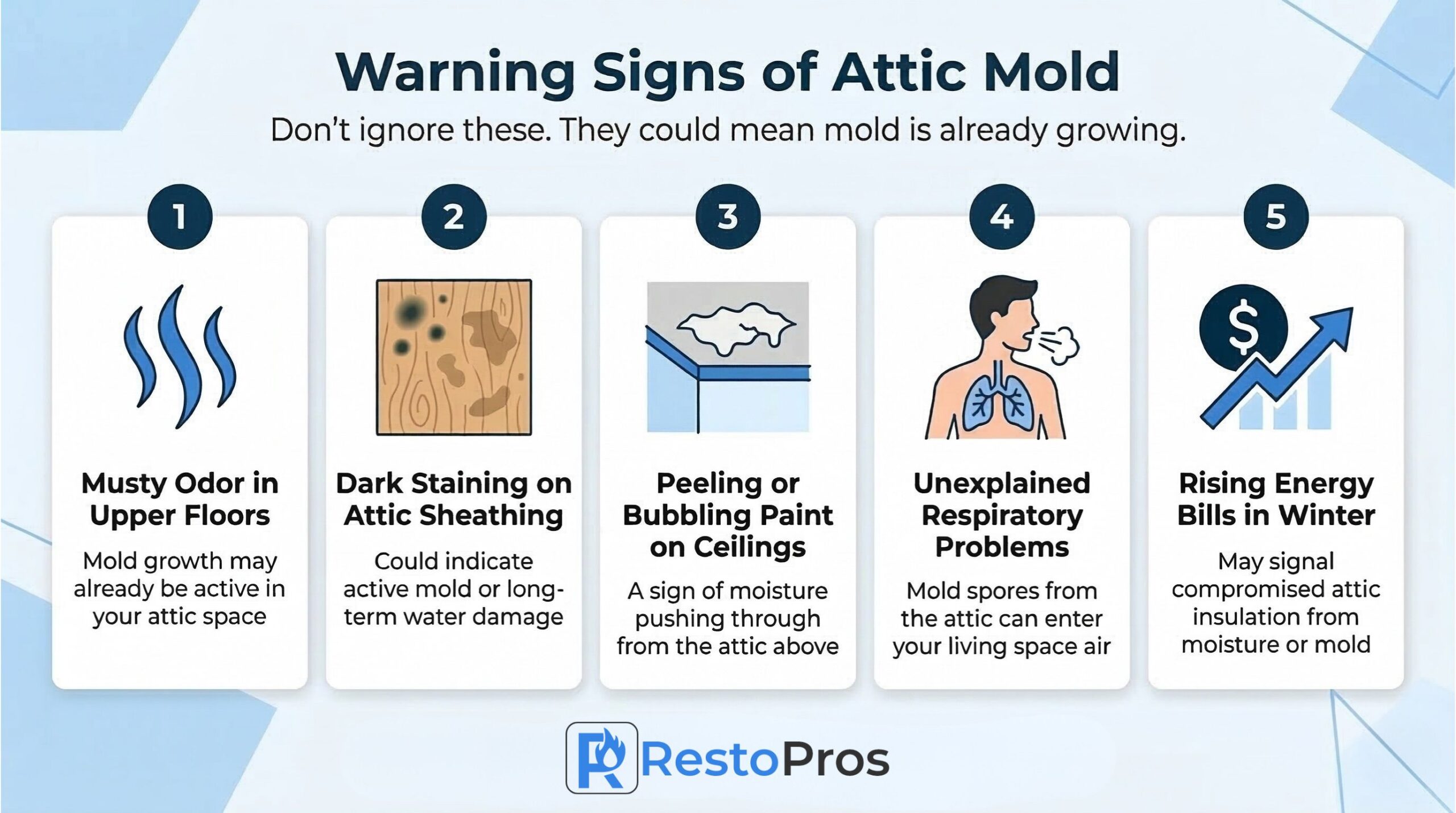
If you notice any of these, contact a professional before the problem grows.
Can You Prevent Attic Mold?
Prevention comes down to moisture control and proper attic ventilation. RestoPros recommends scheduling a professional inspection if:
- Your home is older and has never had a ventilation system check
- You’ve had a recent roof leak or storm damage
- You’ve added a new living space or an HVAC system without updating the ventilation
- You live in a climate with high humidity or extreme cold winters
Explore RestoPros’ full mold remediation services here.
Don’t Let Attic Mold Get Ahead of You
Attic mold is a serious problem, but one that professionals can fully resolve when caught and treated correctly. The combination of poor ventilation, trapped warm air, and a moisture issue creates conditions where mold grows fast and spreads farther than most homeowners expect.
RestoPros brings the training, equipment, and process to handle full attic mold remediation, from the initial inspection through final clearance. Our team works quickly to protect your home’s structure and the air quality in your living space, and we’ll help document everything your insurance company needs along the way.
If you’re seeing signs of mold in your attic or have recently dealt with water damage or a roof leak, don’t wait. Contact RestoPros today for a professional assessment and get your attic back to a safe, healthy condition.