
The Short Answer: Remediation focuses on removing hazards like mold, contaminated materials, or hazardous waste from a property. Restoration is the process of repairing and rebuilding the property back to its original, pre-loss condition after the hazards have been addressed.
If you’re a property owner dealing with water damage, mold, or fire damage, you’ve probably seen these two terms used interchangeably. But remediation and restoration are actually two different phases of the recovery process, and understanding the distinction helps you know what to expect when professionals arrive at your door.
RestoPros handles both sides of this equation, from initial assessment and hazard removal through full construction services and rebuild. Note: Service offerings vary by location. Check with your local RestoPros franchise to confirm whether restoration and rebuild services are available in your area. Here’s how each phase works and when your property needs one, the other, or both.
What Is Remediation?
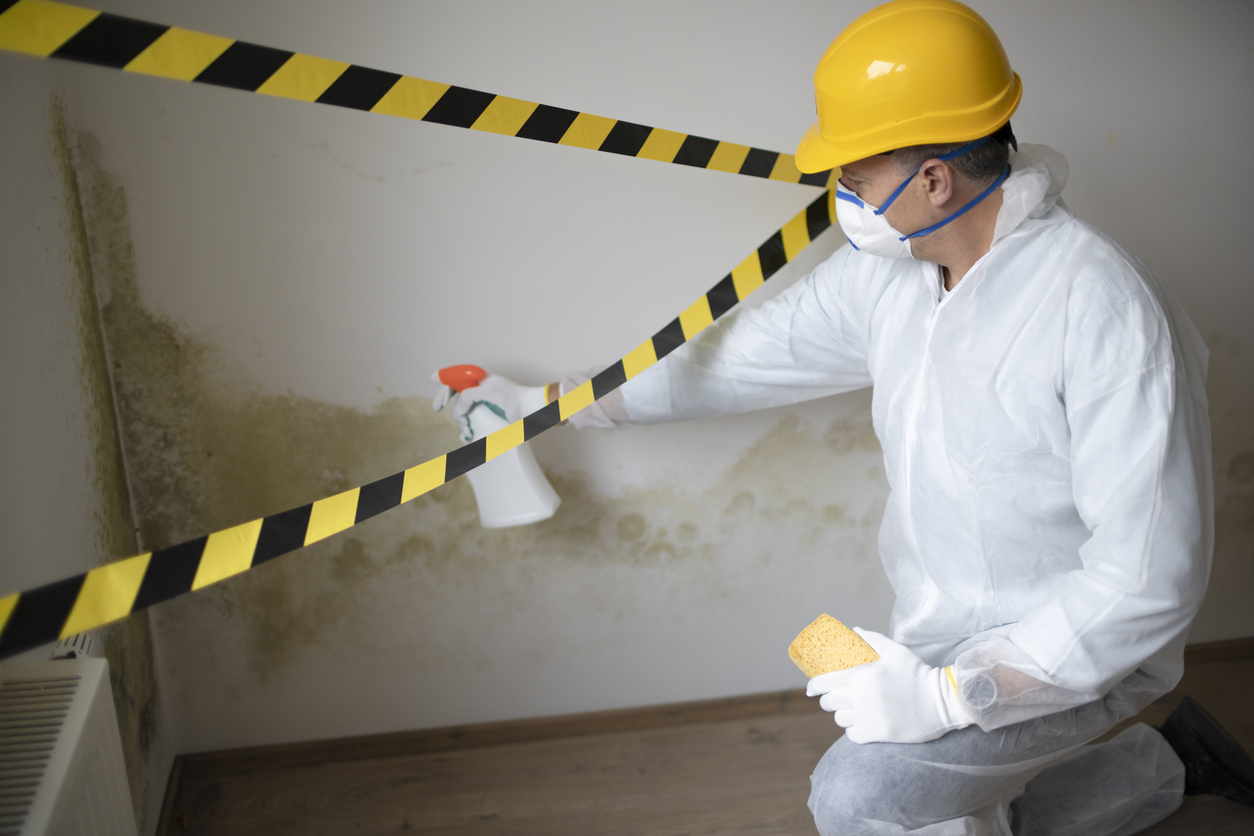
Remediation is the process of identifying, containing, and removing dangerous materials or conditions from a property. The goal is to eliminate the source of damage and any related health risks before any rebuilding begins.
Think of remediation as the cleanup and hazard removal stage.
Common Types of Remediation
- Mold remediation: Removing mold growth, treating affected surfaces, and eliminating spore contamination from indoor air
- Water damage remediation: Extracting standing water, drying structural materials, and removing contaminated items
- Fire and smoke remediation: Removing soot, ash, smoke residue, and odor from surfaces and air systems
- Biohazard remediation: Safely handling and disposing of hazardous waste like sewage backups or chemical spills
What Happens During Remediation
Every remediation project follows a structured process. At RestoPros, that looks like this:
- Assessment: Technicians inspect the property to determine the type and scope of damage, including hidden issues behind walls or under floors
- Containment: Affected areas are sealed off to prevent contaminants like mold spores from spreading to clean zones
- Removal: Damaged or contaminated materials (drywall, carpet, insulation) are safely removed and disposed of following EPA and OSHA guidelines
- Treatment: Remaining surfaces are cleaned, sanitized, and treated with antimicrobial or deodorizing agents
- Verification: Air quality testing and moisture readings confirm that the contaminated site has been brought back to safe levels
Remediation protects human health by addressing the immediate dangers. Without it, restoration work would just be building over a problem that hasn’t been solved.
What Is Restoration?
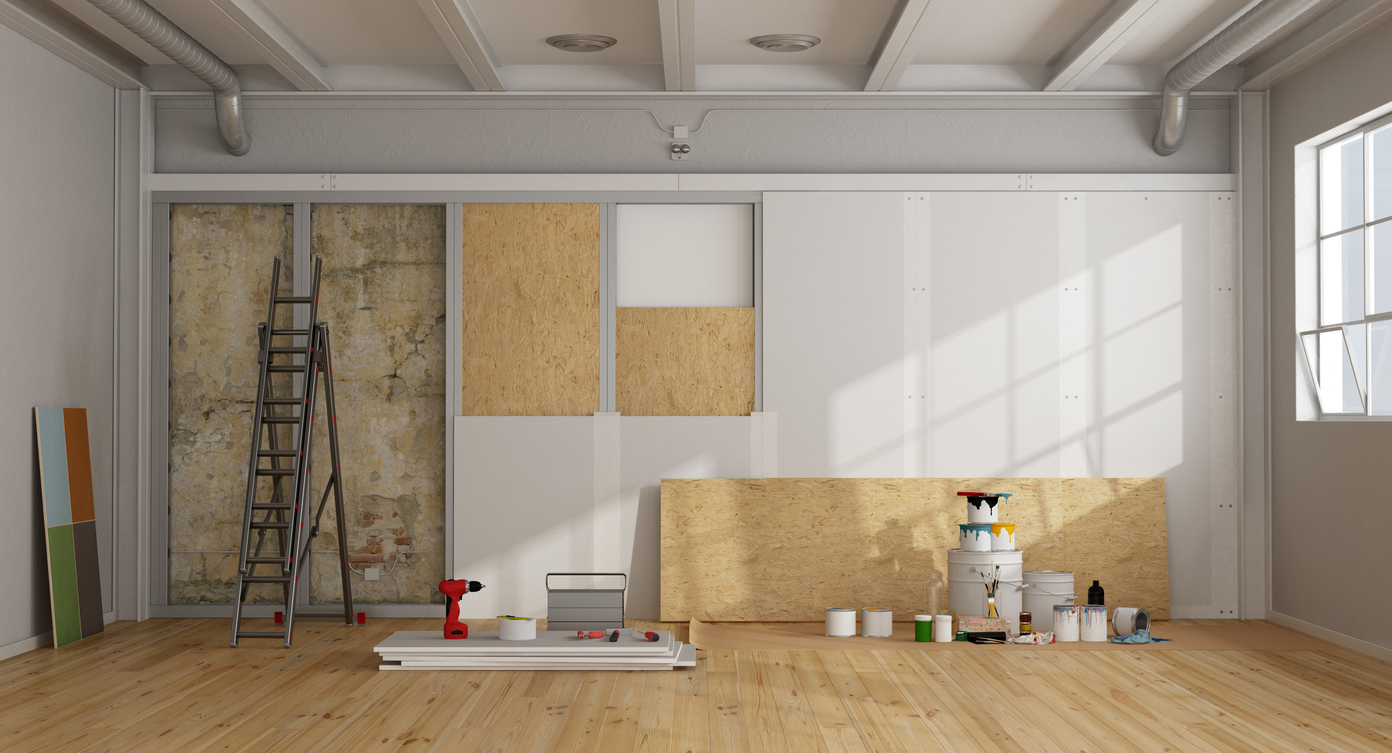
Restoration is the repair and rebuild phase. Once a property has been properly remediated, restoration brings it back to its pre-loss condition through construction services, structural repairs, and finishing work.
Think of restoration as the rebuilding stage.
What Restoration Covers
Depending on the project type, restoration can include:
- Replacing drywall, flooring, and insulation removed during remediation
- Repainting walls and ceilings
- Rebuilding structural framing, cabinetry, or fixtures
- Replacing damaged electrical and HVAC components
- Final inspections and quality checks
RestoPros’ Restoration Process
RestoPros offers full restoration and rebuild services so property owners don’t have to coordinate between multiple contractors. The process includes:
- Planning (1 to 2 weeks): Insurance coordination, material selection, and contractor scheduling
- Construction (2 to 8 weeks): Project managers oversee every step, provide weekly updates, and handle any changes or supplement claims
- Walkthrough and wrap-up (1 to 2 weeks): A final walkthrough with the property owner to confirm everything meets expectations before closing out the project
Remediation vs. Restoration:
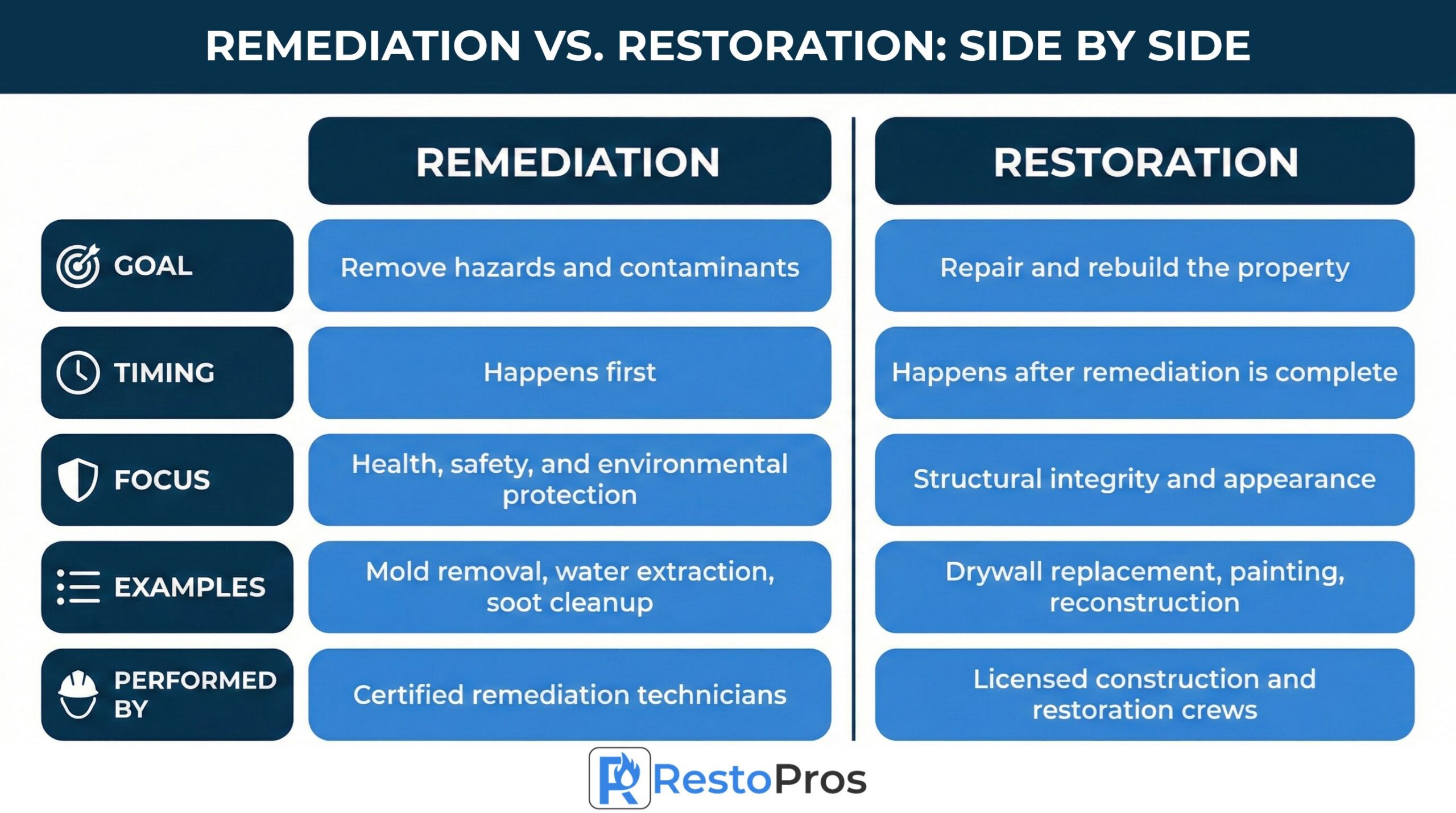
Both phases are part of a complete recovery. Skipping remediation and jumping straight to restoration can lead to recurring mold growth, lingering odors, structural decay, and ongoing risks to human health.
When Do You Need Remediation, Restoration, or Both?
Remediation Only
Some situations call for remediation without a full rebuild. For example:
- A small area of mold growth caught early that requires mold remediation services but no structural repair
- Minor water damage where materials can be dried in place without removal
- Smoke odor in a property where no physical damage occurred
Restoration Only
In rare cases, a property may need repairs without remediation:
- Cosmetic damage from a minor storm that didn’t introduce moisture or contaminants
- Structural wear that requires rebuilding but poses no contamination risk
Both Remediation and Restoration
Most damage events require both phases working together. Common scenarios include:
- Significant water damage: Standing water creates a contaminated site that needs extraction, drying, and mold prevention before walls and floors can be rebuilt. Learn more about RestoPros’ water damage services.
- Fire and smoke damage: Soot and smoke particles need to be fully removed before any construction services begin
- Large-scale mold infestation: Mold behind walls often means removing and replacing entire sections of drywall, insulation, and sometimes framing
- Storm damage: Flooding from severe weather can introduce contaminated water, debris, and structural damage that requires a full remediation-to-restoration approach. See RestoPros’ storm damage services.
Why the Order Matters
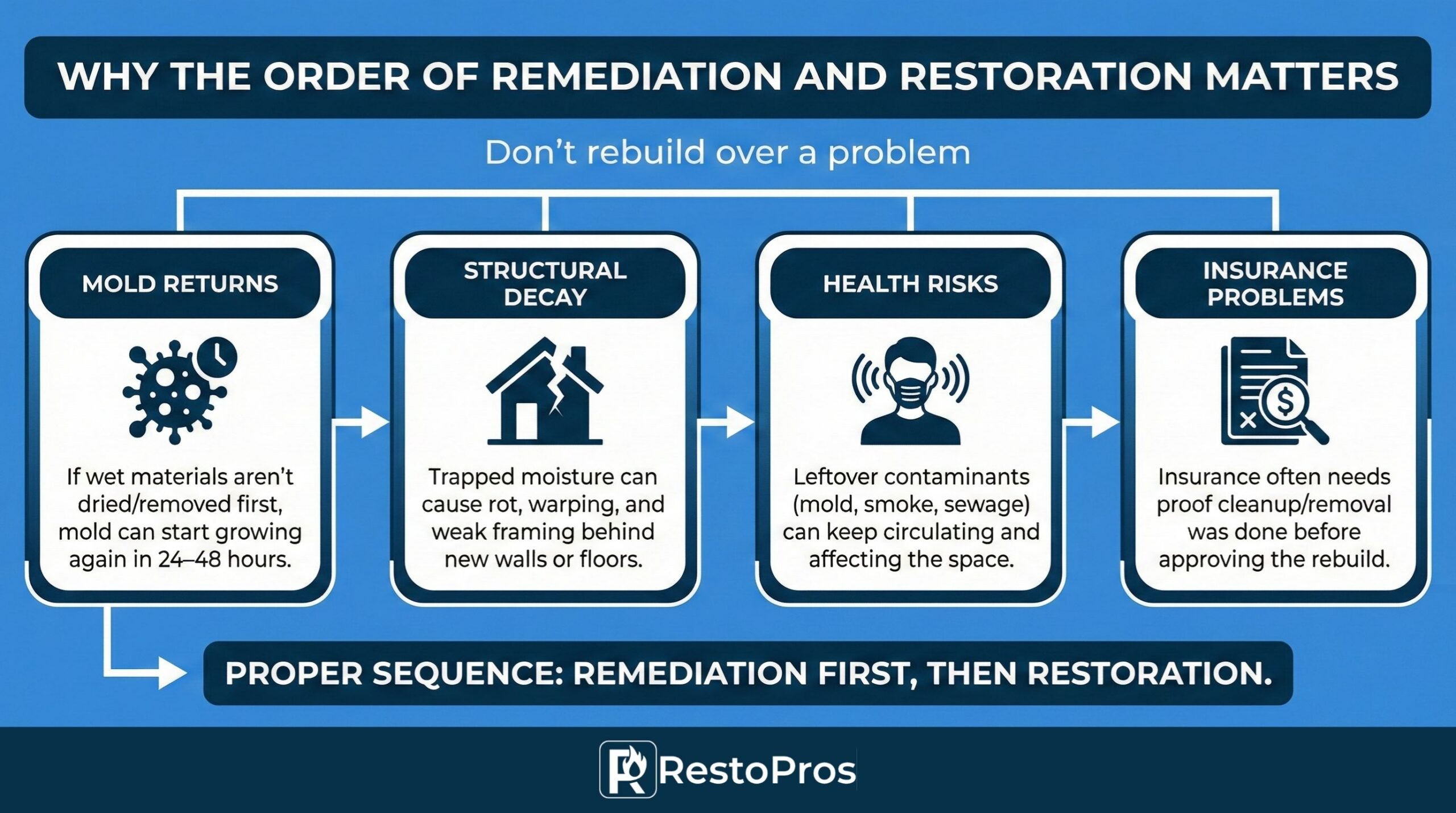
Attempting restoration before remediation is complete is one of the most common and costly mistakes in property recovery. Here’s why the sequence matters:
- Mold returns: If moisture and mold spores aren’t fully addressed, new mold growth can develop behind fresh drywall within days. According to FEMA, mold can begin growing in as little as 24 to 48 hours after water exposure.
- Structural failure: Building over water-damaged framing without proper drying can lead to wood rot and weakened supports
- Health risks: Sealing in contaminants behind new materials traps hazardous particles that continue to affect indoor air quality and human health
- Insurance complications: Most insurance carriers require documented remediation before approving restoration claims. Skipping steps can result in denied coverage.
Effective action means following best practices: assess the damage, remediate the hazards, then restore the property. That’s the approach RestoPros follows on every project.
Protect Your Property with the Right Approach
When damage hits your home or business, knowing the difference between remediation and restoration helps you make informed decisions and avoid costly mistakes. Remediation removes the danger. Restoration brings your property back. RestoPros handles both under one roof with 24/7 emergency response, IICRC-certified technicians for remediation, licensed construction crews for full rebuild, and dedicated project managers who coordinate directly with your insurance company. From the first phone call through the final walkthrough, you get a single point of contact for the entire recovery. Contact RestoPros today for a free inspection, or find a location near you to get started.