




You don’t have to handle it alone. Call us any time, day or night, and let’s figure out next steps together.
Blog
Wind Damage to the Roof: What To Look For After a Storm
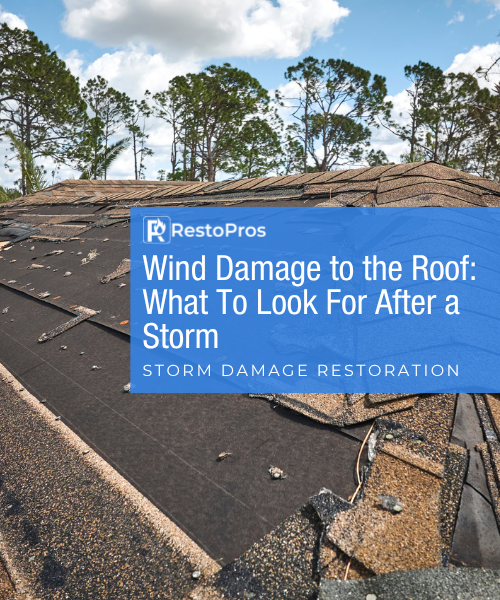
The Short Answer: Wind damage to a roof shows up as missing or lifted shingles, granule loss, dented flashing, and debris on the surface. After any storm, schedule a professional inspection right away to catch hidden problems before water intrusion causes bigger issues.
After a strong storm passes through, your roof takes the brunt of the punishment. High wind, hail, heavy rain, and flying tree branches can leave behind damage that may not look serious from the ground but can quickly turn into water stains, mold growth, and structural damage inside your home.
How High Wind Damages a Roof
Even moderate wind speed can lift, loosen, or tear shingles loose. The faster the wind, the more force it puts on every part of the roofing system.
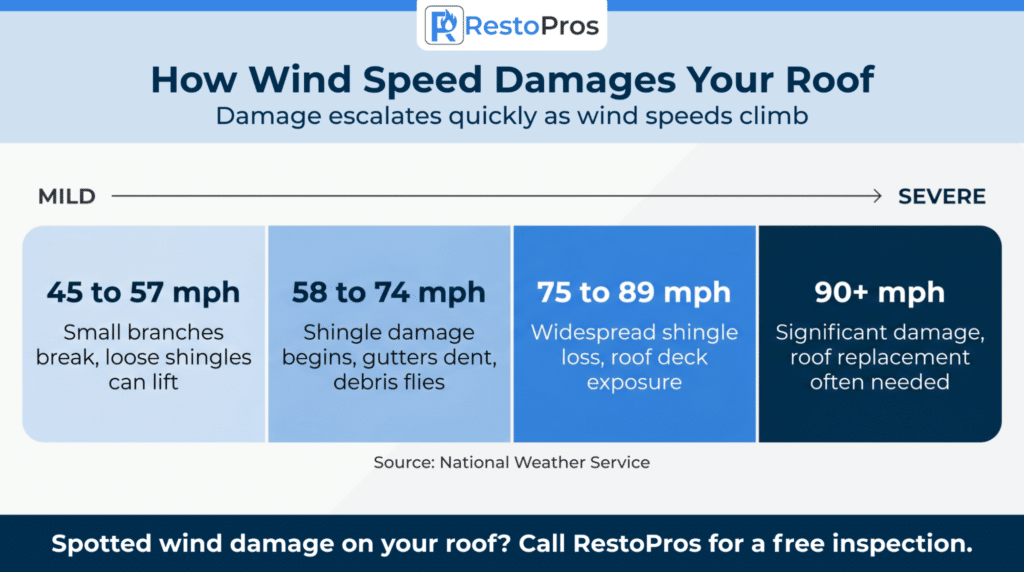
Strong wind does not have to come from a tornado or hurricane to cause real harm. Even a sudden gust during a winter storm or summer thunderstorm can peel back asphalt shingles and expose the roof deck below. FEMA’s Ready severe weather guide notes that thunderstorms can bring intense wind, flash flooding, and hail throughout most of the year.
Signs of Wind Damage to the Roof You Can See From the Ground
You do not need to climb up to spot trouble. Many signs of roof storm damage are visible from your yard or driveway.
Look for:
- Missing shingles scattered across the lawn or driveway
- Lifted, curled, or bent shingle edges along the roofline
- Dark patches where granules have been stripped away
- Damaged or missing flashing around the chimney, vents, and skylights
- Bent or detached gutters and downspouts
- Tree branches resting on the roof or hanging over it
- Sagging spots along the roofline
Even one missing shingle leaves the roof deck open to wind-driven rain. That single weak point can lead to water intrusion within hours of the next storm.
Interior Signs of Roof Damage After a Storm
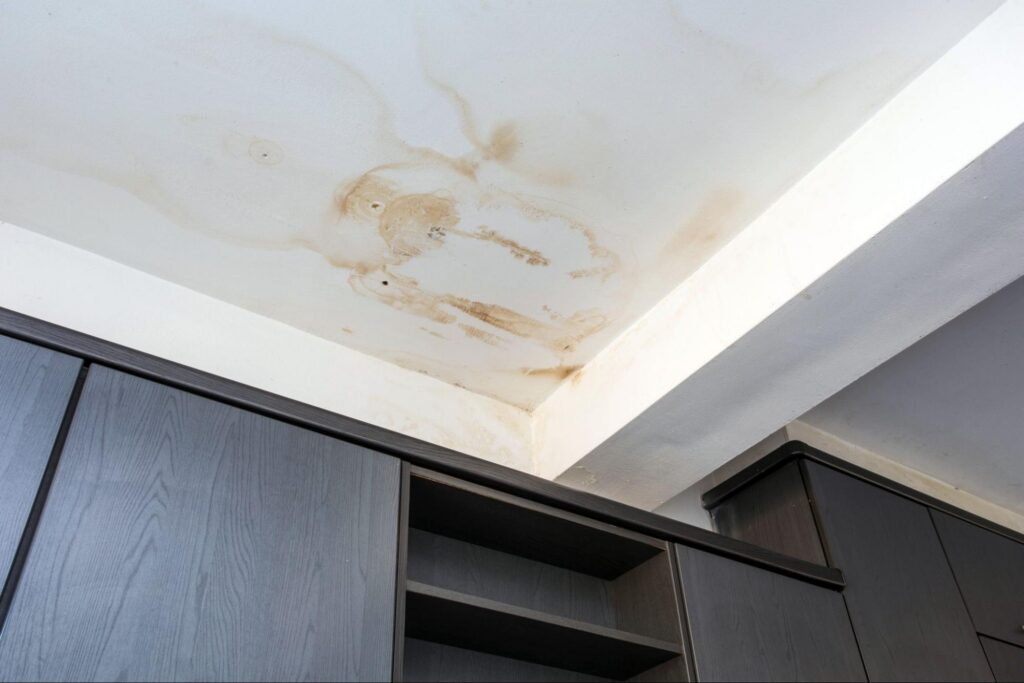
Sometimes wind damage looks minor from the outside, but is already letting water in. Check these areas inside your home after severe weather events:
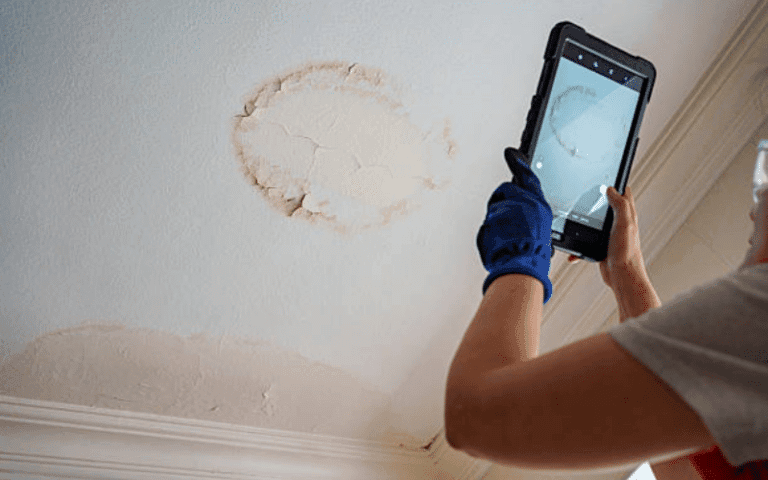
- Water stains on ceilings or upper walls
- Peeling paint or bubbling drywall near the ceiling
- Damp insulation in the attic
- Daylight is visible through the roof boards in the attic
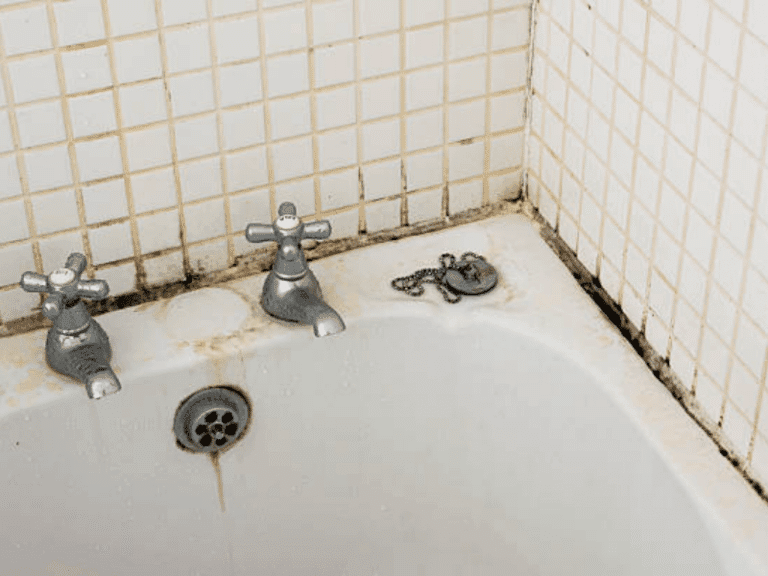
- Musty odors in upper rooms or storage spaces
- Drips or pooling water during heavy rain
Water stains often spread far from the actual leak point, so what looks like a small spot on the ceiling may point to much larger roof damage above.
Common Wind Damage to Asphalt Shingles
Asphalt shingles are designed to handle a certain wind rating, but storms often push past that threshold. IBHS research on asphalt shingle performance shows that the seal between shingles is the most important factor in high-wind durability, and aging or improper installation can cause shingles to fail well below their rated wind speed. The most common forms of physical damage include:
Lifted Shingles
Wind gets under the edge of a shingle, breaks the seal, and lifts it away from the roof. Even if the shingle settles back down, the seal is broken, and the next gust can tear it off.
Creased or Cracked Shingles
A bent shingle has a fold line where the roofing material has cracked. Water seeps through that crack into the roof deck below.
Granule Loss
Hail damage and high wind can knock granules off shingles. Without granules, the asphalt underneath wears down faster from the sun and rain, shortening the life of the roof.
Torn or Missing Shingles
Strong winds can rip whole shingles off the roof. This is the most obvious form of visible damage and almost always calls for roof repair right away.
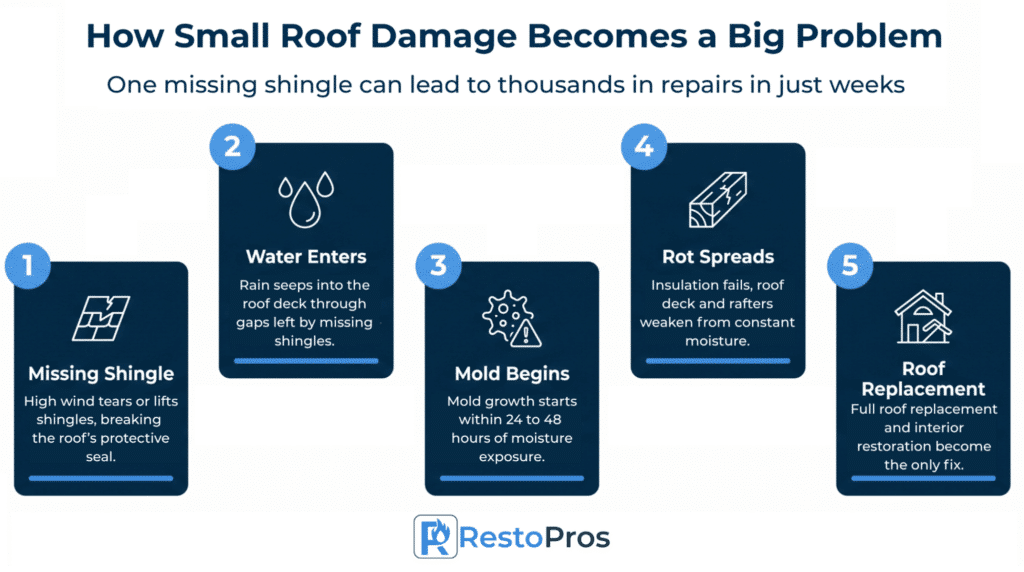
Why Even Small Wind Damage Becomes a Big Problem
A few missing shingles may not seem like a big deal, but the damage rarely stays contained.
Once the protective layer is broken:
- Water intrusion starts during the next rain
- Roof deck rot sets in if moisture sits for days
- Insulation gets soaked and loses its R-value
- Mold growth can start within 24 to 48 hours of moisture exposure, according to EPA guidelines
- Ice dams form in winter storms when warm air escapes through gaps
- Structural damage to rafters and ceilings follows over time
Research from the Federal Alliance for Safe Homes (FLASH) shows that a sealed roof deck can prevent as much as 90% of wind-driven rain from entering through deck joints when the primary roof cover fails. Without that secondary barrier, water enters fast.
The longer the roof storm damage goes unaddressed, the higher the repair costs climb. What might have been a small roof repair turns into a full roof replacement plus interior water damage restoration work.
The Insurance Claim Process for Wind Damage
Most homeowners insurance policies cover wind damage, but the insurance claim process moves faster when damage is documented quickly. The Insurance Information Institute recommends contacting your insurer right away and keeping detailed records throughout.
Here is how the process usually works:
- Document the damage with photos and notes as soon as it is safe
- Contact your insurance agent to open a claim
- Schedule a professional inspection to confirm the extent of damage
- Meet with the insurance adjuster for the on-site review
- Receive the repair estimate and approved scope of work
- Begin restoration with a qualified roofing contractor and damage restoration team
Insurance coverage varies. Some insurance policies pay replacement cost while others pay actual cash value, which factors in depreciation. Reviewing your insurance policy ahead of storm season helps you know what to expect from your insurance company.
The Professional Restoration Process After Wind Damage
When a storm leaves behind significant damage, the priority is stopping further damage and drying out anything that got wet. A trained restoration team handles each step in order so nothing falls through the cracks.
Free Inspection and Damage Assessment
A trained team checks the home for visible damage, water intrusion points, and hidden moisture. Detailed documentation supports the insurance claim from day one.
Emergency Repairs and Tarping
Temporary repairs like roof tarping and board-up keep wind-driven rain out of the home while permanent fixes are scheduled.
Water Damage Cleanup
Standing water, soaked insulation, and damp drywall get removed. Industrial drying equipment pulls moisture from the roof deck, framing, and floors below.
Mold Prevention and Remediation
Because mold can start within 24 to 48 hours, mold remediation treatment begins quickly to stop spores before they spread through the home.
Structural Repairs and Rebuild
Damaged framing, ceilings, and walls go through rebuild service to bring the home back to pre-storm condition. In cases of major roof damage, coordination with a licensed roofing contractor for a new roof keeps the timeline on track.
Insurance Coordination
The restoration team works directly with the insurance company, providing photos, scope of work, and estimates so the claim moves forward without extra back-and-forth for the homeowner.
When to Call a Professional Right Away
Some signs mean you should not wait for a regular roof inspection cycle. Call for help right away if you notice:
- Active leaks during or after a storm
- Visible holes in the roof or daylight in the attic
- A tree or a large branch on the roof
- Sagging ceilings or walls
- Standing water in the attic or upper floors
- Mold or musty smells after recent storm exposure
Each of these points can cause damage that will get worse fast without emergency repairs.
Get Ahead of Wind Damage Before It Spreads
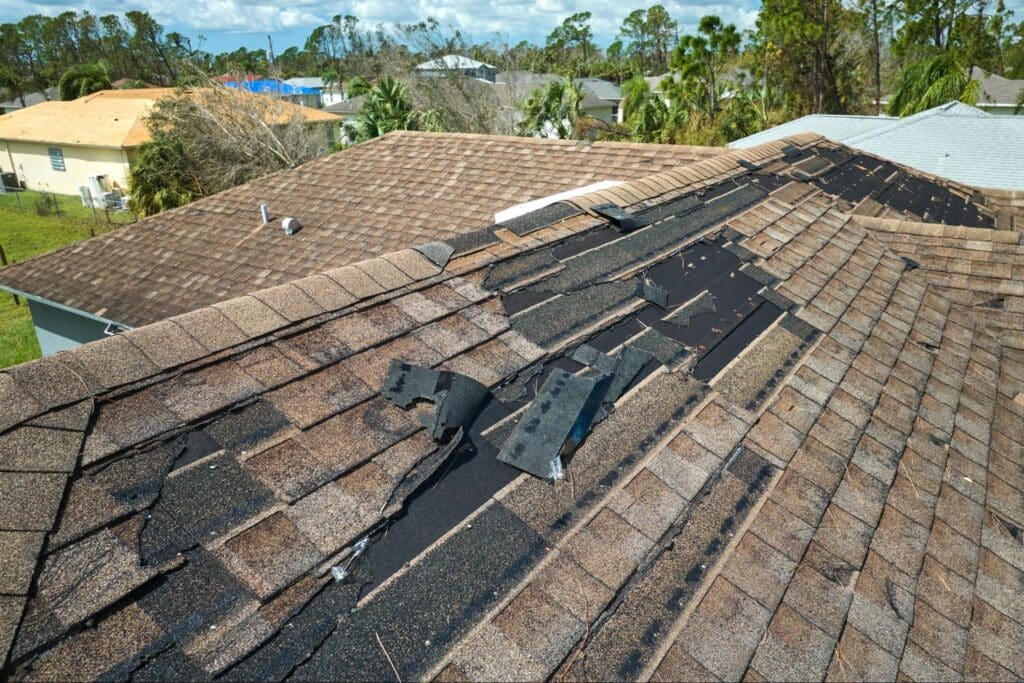
Wind damage to a roof rarely fixes itself. Missing shingles, lifted flashing, and small leaks turn into water damage, mold, and costly repairs the longer they sit. Spotting the signs early and calling a professional inspection team is the fastest way to protect your home, file a strong insurance claim, and avoid further damage.
RestoPros has trained restoration teams ready 24/7 to handle storm damage, water damage, and full rebuild work after severe weather events. The team coordinates directly with your insurance company so you can focus on your family instead of paperwork. If you suspect wind damage to your roof after a recent storm, contact RestoPros today for a free inspection and a full storm damage response.