Blog
Mold in Rental Properties: Tenant and Landlord Responsibilities
The Short Answer: In most rentals, the landlord is responsible for fixing the moisture problem and paying for mold remediation, while the tenant is responsible for reporting mold quickly and keeping the unit reasonably clean and ventilated. Who pays often comes down to the cause of the mold and the lease agreement.
Mold in a rental property puts tenants and landlords in a tough spot. A tenant worries about their health and security deposit. A landlord worries about repair bills, liability, and the building’s value. The rules are not always obvious, since mold sits where habitability law, health guidelines, and the specific rental agreement overlap. Learn more about who is responsible for mold in a rental unit, what the law expects from each side, and the steps that protect both the tenant and the property owner.
Who Is Responsible for Mold in a Rental Property?
| Cause of the mold | Who is usually responsible |
| Roof leak, plumbing leak, or failed appliance | Landlord |
| Poor ventilation built into the unit | Landlord |
| Flooding or storm damage to the building | Landlord |
| Tenant ignored or hid a known leak | Tenant |
| Tenant kept the unit damp or blocked vents | Tenant |
| No clear cause, first report | Shared, per the rental agreement |
Landlord Responsibilities
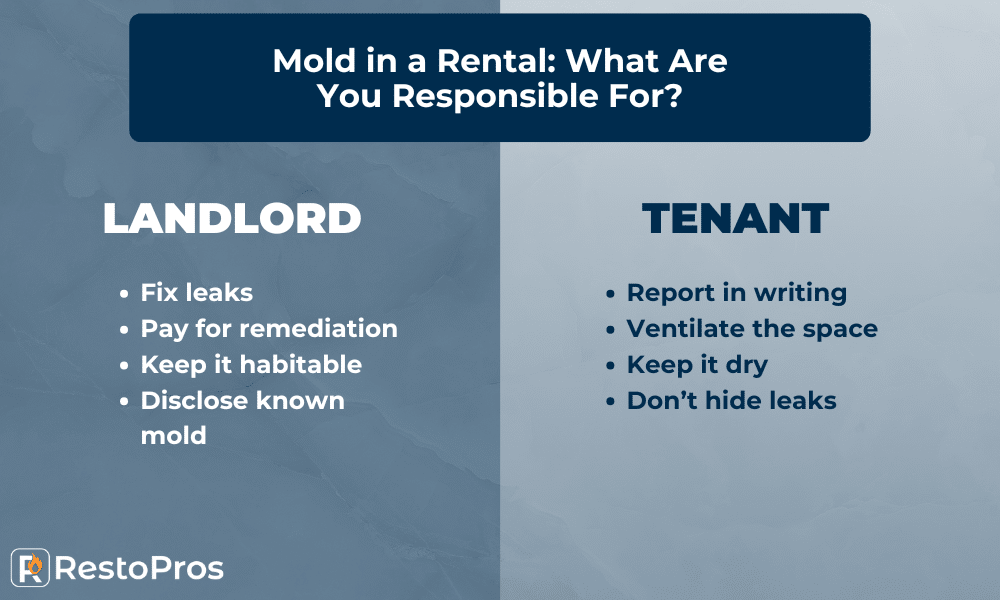
Under the implied warranty of habitability, a landlord must keep a dwelling unit in habitable condition and fit for occupancy. For mold, that means fixing leaks and moisture problems within a reasonable time after they are reported and repairing the source of water so indoor mold growth does not return.
It also means scheduling a professional mold assessment when there is visible mold or a musty smell, paying for professional water damage cleanup when the building is the root cause, and correcting housing code violations tied to damp or unsafe conditions. Routine upkeep is a form of mold prevention, and many landlords also disclose known mold issues to prospective tenants.
Tenant Responsibilities
Tenants share the job of keeping a rental home mold-free. That starts with reporting leaks, damp spots, or the presence of mold to the landlord quickly and in writing. Tenants can also help prevent mold by using ventilation when available, keeping vents unobstructed, promptly reporting known leaks, and keeping the unit reasonably clean and dry. A renter who reports mold early protects both their health and their security deposit.
What the Law Says About Mold in Rentals
Mold law in rental housing isn’t as in-depth as you would think, which is why the rental agreement and good records are so important. There are no federal permissible exposure limits or building tolerance standards for mold in a residential property. Agencies like the EPA and OSHA treat indoor mold as an environmental health concern rather than a regulated pollutant like lead paint or asbestos.
State and local rules fill part of that gap. About 15 states have some mold-specific law, and cities differ too. A few states are working toward their own limits, but most handle mold through habitability rules and building codes. At the federal level, the U.S. Department of Housing and Urban Development includes mold in its housing quality standards for federally assisted housing, and the EPA publishes mold and moisture guidance.
Because the rules change by location, tenants and property owners should check local law or seek legal assistance for a specific dispute.
Common Causes of Mold in a Rental Unit
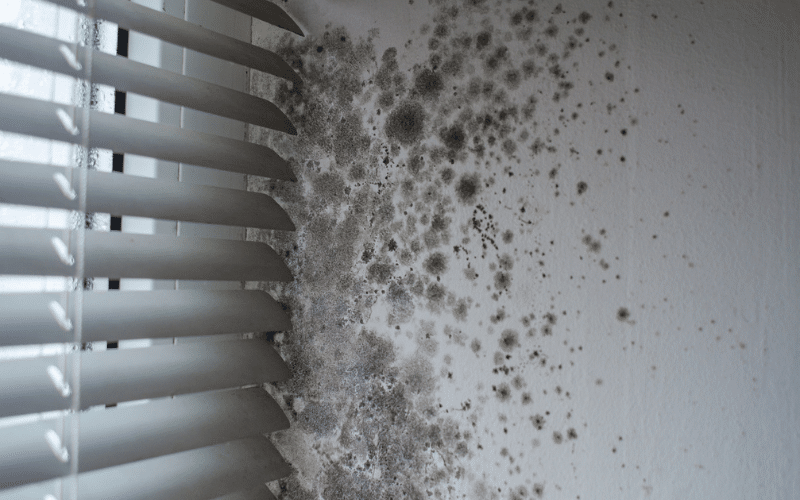
Mold needs moisture, so a mold outbreak almost always starts with water that was not dried in time. In a rental unit, the usual triggers are hidden roof or plumbing leaks, high indoor humidity paired with poor ventilation, or condensation around bathrooms, kitchens, and windows. Flooding, storm damage, or water damage from an appliance can leave standing water in basements and other damp places, all of which feed mold growth.
Mold can start growing on damp material within 24 to 48 hours, and mold spores spread quickly through the air once mold growth begins. That short window is why a moisture problem should never be put off for later.
Health Risks of Mold Exposure
Mold in a residential property is a health issue just as much as a maintenance issue. Ongoing mold exposure can affect anyone in the home, though some people react more strongly than others. Common symptoms are similar to an allergic reaction: sneezing, congestion, itchy eyes, or a skin rash. People with asthma, allergies, or weaker immune systems tend to experience symptoms sooner, and long exposure to toxic mold is linked to more severe respiratory health effects. Because the health risk rises the longer mold sits, a fast response protects everyone in the rental unit.
What to Do When You Find Mold in a Rental
Both sides have a clear next move.
For tenants:
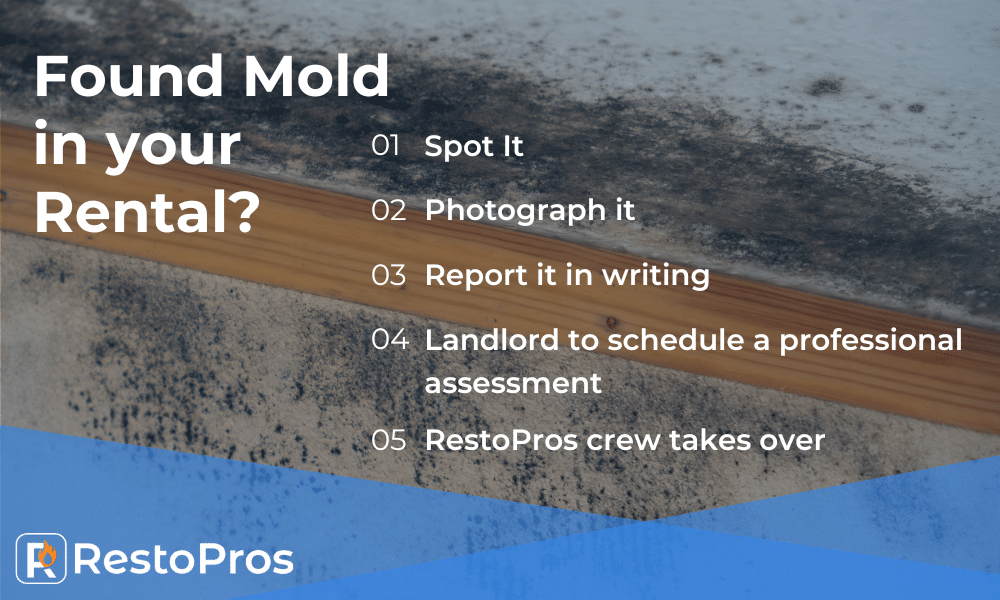
- Photograph the mold and any water damage
- Report the mold to the landlord in writing, and keep a copy
- Ask for a timeline and a professional mold assessment
For landlords:
- Respond quickly to protect habitability and limit liability
- Arrange a professional mold assessment to find the full extent of the mold growth
- Fix the moisture source, then schedule professional removal
Taking action early is the difference between a minor fix and a costly cleanup down the road.
Mold and Your Security Deposit
If the mold came from a problem with the building, a landlord generally cannot use the tenant’s security deposit to cover it. If a departing tenant caused or hid the mold, the landlord may be able to deduct repair bills from the security deposit. Clear records, early reports, and a written rental agreement protect both sides from a cleanup fight, and documentation from a professional mold inspection helps settle who owes what.
When a Professional Mold Assessment Is Needed
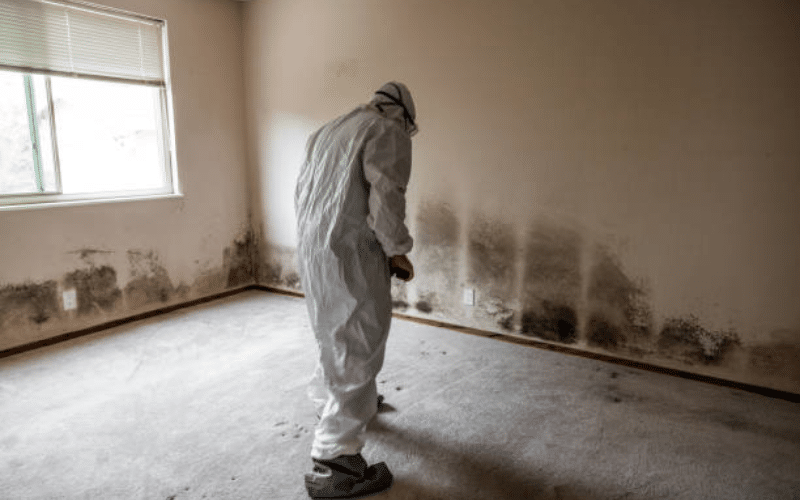
Small surface spots are one thing, but a larger mold issue calls for a professional. Once mold covers more than 10 square feet, the EPA recommends a professional mold assessment, as hidden mold behind walls or under floors is hard to measure without proper tools. A professional assessment also documents the presence of mold, which is important for the insurance claim, and a trained team handles containment so mold spores do not spread to clean rooms during removal.
Protect Your Rental With RestoPros
Responsibility for mold in a rental property often depends on what caused the moisture problem, the terms of the lease, and applicable state or local law. Landlords are generally responsible for maintaining habitable conditions and addressing building-related leaks or moisture problems, while tenants are typically responsible for promptly reporting issues and taking reasonable steps to keep the unit clean and ventilated.
When mold appears, addressing the moisture source quickly can help prevent the problem from spreading. RestoPros provides professional mold remediation services to help identify affected areas, contain mold growth, remove damaged materials, and restore the property.
If you discover mold in a rental property, contact RestoPros for professional help, or find the RestoPros location nearest you to get started.
Frequently Asked Questions
Retaliating against a tenant for reporting a mold problem or a code violation is illegal in many states. A renter who reports mold in writing and follows the rental agreement is usually protected, though rules vary, so legal assistance can help in a dispute.
The landlord usually pays when the mold is caused by a building issue like a leak or a ventilation problem. A tenant may owe repairs only if they caused or hid the moisture problem. The rental agreement and a professional mold assessment help decide.
Most habitability laws require a landlord to act within a reasonable time after a written report is submitted. What counts as reasonable depends on the state and the severity of the mold problem, so check local rules or ask a housing attorney.
A crew like RestoPros starts with a full inspection to map the mold problem, sets up containment so mold spores do not spread, stops the moisture source, removes the affected material, and cleans and dries the space before any rebuild. This process is what keeps the mold from returning.
Yes, RestoPros provides mold assessment and remediation for rental properties and works directly with landlords, tenants, and insurance so the right party is billed and the unit is documented. Our team is available 24/7, so a mold problem in a rental unit does not have to wait.