Blog
Disaster Prep for Seniors and Their Caregivers
The Short Answer: Prep for a disaster by building a three-day emergency supply kit, writing down a simple emergency plan, and setting up more than one way to get weather warnings. For older adults, add extra medication, mobility needs, and a caregiver who knows the plan.
Disasters do not treat everyone the same. Older adults get hit hardest, and the numbers are hard to look away from. People 60 and older accounted for 75% of the deaths in Hurricane Katrina. Storms move fast, medications run out, and a flight of stairs turns into a wall.
A little planning changes that. Knowing how to prep for a disaster ahead of time buys an older adult time and safety when a storm moves in, and it comes down to three things: a kit, a plan, and a reliable way to hear the warnings. When a storm does leave damage behind, RestoPros can handle the cleanup so recovery does not fall on your shoulders.
Why Older Adults Face Higher Risk

Age alone is not the danger. The problem is what tends to come with it, and disasters pull on every one of those threads at once.
- Many older adults cannot drive or reach reliable transportation, which turns an evacuation route into a real obstacle
- Home oxygen, dialysis, refrigerated insulin, and daily prescriptions all depend on power and pharmacies that a storm can knock out
- Roughly 15% of people 50 and older have no home internet, so emergency alerts sent by app or web never reach them
- Stocking two weeks of food and medicine costs money that a lot of seniors on fixed incomes do not have on hand
Caregivers sit in the middle of all this. Knowing the risks ahead of time is what lets you plan around them instead of scrambling when severe weather is already on the radar.
Build the Emergency Supply Kit
Start here, because a stocked kit is the difference between riding out a few rough days at home and an emergency. After a disaster you may be on your own for a while, so be sure to have enough supplies to last several days without power, water, or a store run.
The basics for any household:
- Water, one gallon per person per day, for at least three days
- A three-day supply of food that needs no cooking, plus a manual can opener
- A battery or hand-crank radio with a NOAA weather band, and extra batteries
- Flashlights, a first aid kit, and phone chargers or a power bank
What Seniors Should Add
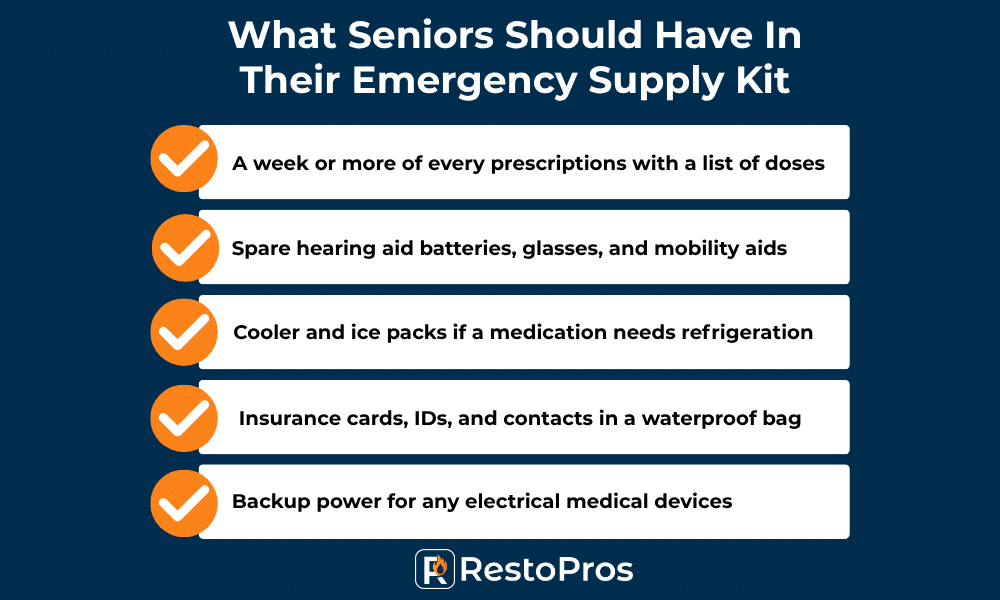
The standard list stops short for older adults. Round it out.
- A week or more of every prescription, plus a written list of doses and the pharmacy
- Spare hearing aid batteries, glasses, and any mobility aids like a cane or walker
- Cooler and ice packs if a medication needs refrigeration
- Copies of insurance cards, ID, and a contact sheet in a waterproof bag
- Backup power for any medical device that runs on electricity
Keep the kit by the door you would leave through, and check it twice a year so nothing sits expired when it counts.
Write a Plan Everyone Knows
A kit without a plan leaves you guessing at the worst possible moment. The plan does not need to be fancy. It needs to be written down, and everyone involved needs a copy.
Cover these points:
- Where you go: Pick two places, one nearby and one out of town, in case the storm closes roads. Map the evacuation route to each.
- How you leave: If driving is not an option, arrange a ride now. Ask family, a neighbor, or your local emergency services about transportation for people with medical or mobility needs.
- Who you call: Name one out-of-area contact everyone checks in with, since long-distance lines often work when local ones jam.
- What comes with you: List the grab-and-go items, the kit, medications, and important documents, so nothing gets left in a rush.
Caregivers, walk the plan with the person you look after and post it where it is easy to find. A plan only helps if the people using it have seen it before the storm.
Set Up More Than One Way to Get Warnings
Weather warnings are worthless if they never reach you. Since a single alert can fail, stack a few.
Layer Your Alerts
- Turn on Wireless Emergency Alerts on any cell phone, which push to the screen with a loud tone
- Keep that NOAA weather radio in the kit, since it works with no internet and no cell signal
- Sign up for your county’s alert system, often by text or phone call
- Ask a family member to call directly when severe weather is coming, a low-tech backup that never hurts
For anyone with hearing loss, set alerts to vibrate and flash, and test them once so there are no surprises.
After the Storm, Let Professionals Handle the Damage
Once everyone is safe, the house still needs attention, and this is the part that should not fall on a senior or a stretched-thin caregiver. Floodwater, wind damage, and a days-long power outage leave problems that get worse the longer they sit. Standing water breeds mold within a day or two. A compromised roof lets the next rain in.
Climbing onto a wet roof or wading through floodwater to assess it is exactly the kind of risk the prep was meant to avoid. That work belongs to trained crews with the right equipment.
RestoPros steps in here. Our teams handle storm damage and water damage restoration, document everything for your claim, and work directly with your insurance company so you are not managing paperwork during recovery.
Prep Now, Recover Easier Later

Prepping for a disaster comes down to three moves. Build a three-day kit with the extras seniors need, write a plan everyone has seen, and set up more than one way to hear a warning. Do those before a storm is on the map and you buy yourself time, safety, and a lot less panic when severe weather hits.
The prep keeps people safe. The cleanup afterward is where RestoPros takes over. Our certified crews respond fast, restore what the storm damaged, and handle the insurance side so recovery does not land on an older adult or the person caring for them.
Do not wait for the forecast to turn. Contact RestoPros to learn how we support storm recovery, or find your nearest location so you know who to call the moment the weather clears.
Frequently Asked Questions
Twice a year is a good rhythm, and pairing it with daylight saving time makes it easy to remember. Water, food, and batteries all have expiration dates, and medications rotate out even faster. For a senior’s kit, recheck prescriptions every few months, since doses change and refills expire.
Keep copies of photo ID, insurance policies, Medicare or Medicaid cards, a current medication list, and contact details for doctors and family. Add a list of medical devices and their power needs. Store one set in a waterproof bag in the kit and another as a photo or scan on a phone or in the cloud.
That call belongs to local officials, and when they order an evacuation, leaving is the safer choice even when it is hard. The fix is to solve the hard part early. Arrange transportation and a destination before the season starts, so a mobility challenge does not become a reason to ride out a dangerous storm at home.
Most policies cover sudden storm damage, though flood damage usually needs separate flood coverage. Coverage varies, so read the policy or call your insurer before a storm, not after. When damage does happen, RestoPros documents it thoroughly and works with your insurance company to support the claim.
Distance changes the plan, not the goal. Build the kit together on a visit, name a nearby neighbor or friend who can check in fast, and keep a shared copy of the plan and medication list. Set up alerts on the senior’s phone, and line up a local contact who can reach them when you cannot.