Blog
Sump Pump Failure: Warning Signs and What to Do When The Basement Floods
The Short Answer: Sump pump failure usually shows up as odd noises, constant running, visible rust or no response during heavy rain. If your basement floods from a failed sump pump, call RestoPros right away to extract the water, dry the structure and start restoration before damage spreads.
A sump pump runs quietly in the background for years, then becomes the most important piece of equipment in your home the moment water starts rising. When it fails, water damage begins within minutes, creeping into drywall, flooring, and even your home’s foundation. Catching warning signs early gives you a chance to prevent the mess. Missing them often means a flooded basement and limited time to control the damage. RestoPros responds to failed sump pump calls across the country, and the first hours after basement flooding matter more than most homeowners realize.
Warning Signs Your Sump Pump Is Failing
Most sump pump problems show signs before the water rises. A sump pump is a mechanical device, and like any mechanical device, it wears out, loses efficiency and eventually stops. Watching for these signs gives you a window to call for help before a basement flood.
Signs worth paying attention to:
- The pump runs constantly, even in normal conditions when the sump pit should be nearly empty
- The pump cycles on and off every few seconds when it should run in longer intervals
- Strange grinding, rattling or humming noises from the unit
- Visible rust on the pump housing or on the discharge pipe fittings
- The float switch sticks or responds slowly when lifted by hand
- Water sitting in the pit long after the pump should have cleared it
- A musty smell coming from the sump area
- The pump trips the breaker when it kicks on
A sump pump should be nearly silent and only run when the water level in the sump pit reaches the float switch. Anything outside that pattern usually points to a failure in progress.
Common Causes of Sump Pump Failure
Power Loss
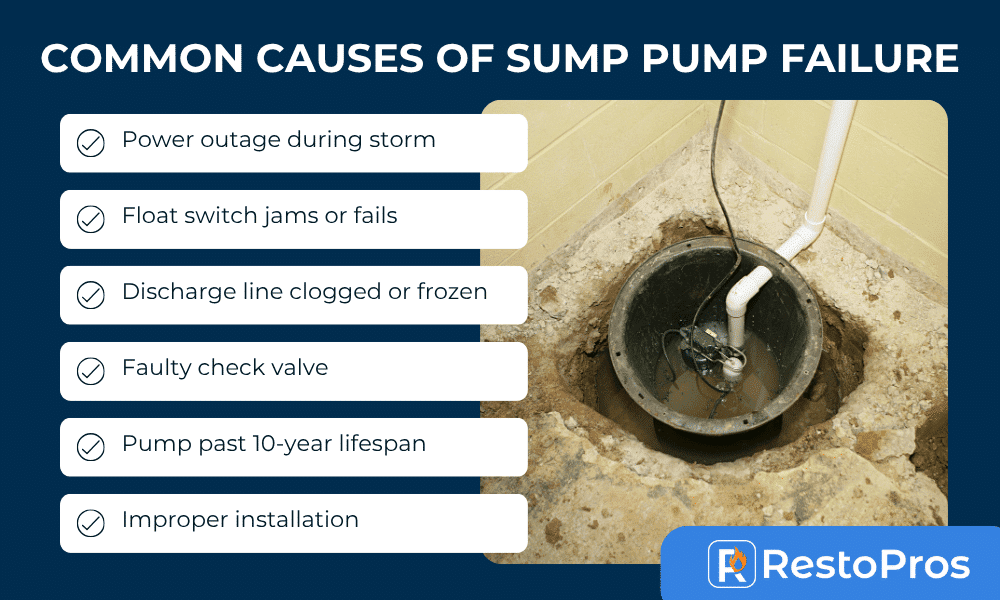
A pump needs electricity to run, so a power outage during a storm is one of the common causes of basement flooding. Severe weather often knocks out power at the exact moment heavy rain is pushing groundwater up through the drain tile system. Without a battery backup, the unit sits silent while water climbs. A battery backup system gives it a few hours of runtime even when the grid is down.
Float Switch Problems
The float switch tells the pump when to turn on. When it jams against the pit wall, hangs up on a wire or wears out, the pump either runs nonstop or never kicks on at all. Float switch failure is one of the most common reasons a sump pump stops working.
Clogged Discharge Line
The discharge pipe carries water from the pump to a point outside your home’s foundation. If the discharge line freezes, collapses or gets blocked by debris or tree roots, water has nowhere to go. A faulty check valve on the discharge line can also let water flow back toward the pump, forcing it to work on the same water over and over until it burns out.
Age and Wear
A sump pump has a service life of about ten years under normal conditions. After that, the motor bearings wear, impellers crack and seals leak. Submersible pumps often last a bit longer than pedestal pumps, but neither lasts forever. Without regular maintenance, small issues become full failures.
Improper Installation
Improper installation causes trouble that may not show up for months or years. A pit that is too small, a discharge pipe pitched the wrong way or a missing check valve all cause early failure.
What Happens When Your Basement Floods
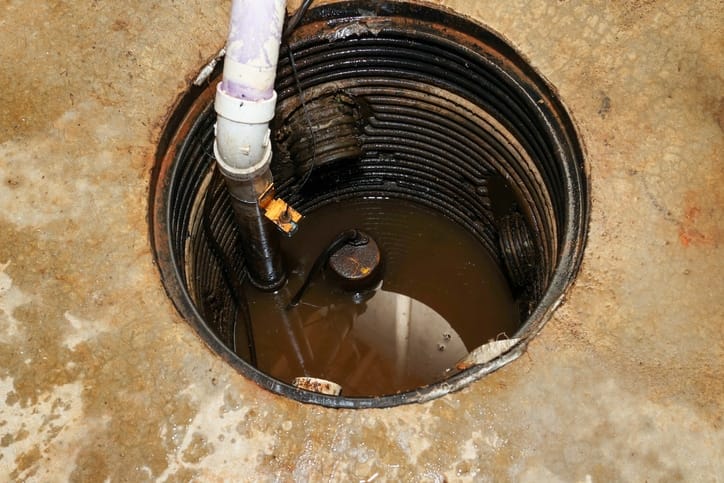
When a sump pump fails during heavy rain, water enters the basement in a specific pattern. It usually comes up through the pit first, then spreads across the basement floor. In homes with a drain tile system, water can also push up through floor cracks or along the wall seams.
The damage starts right away:
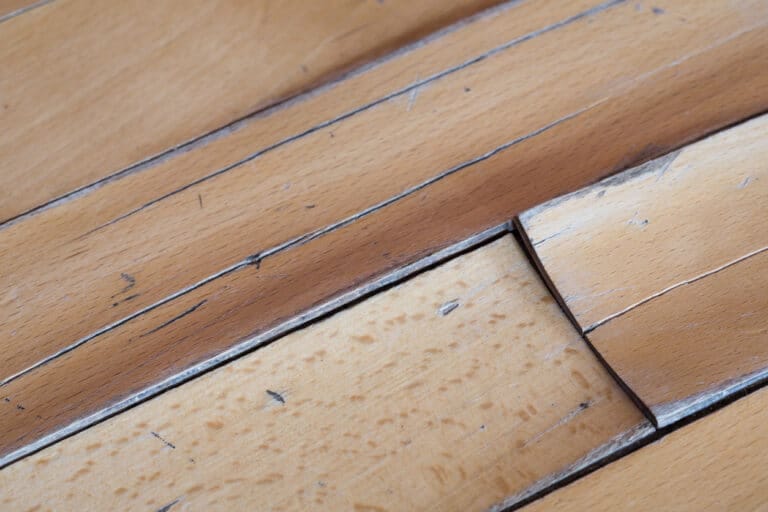
- Carpet, padding and subfloor absorb water within minutes
- Drywall wicks moisture several inches up the wall through capillary action
- Insulation inside the walls traps water and loses its R-value
- Stored boxes, furniture and electrical components in the basement take on water
- Air humidity climbs sharply, which affects every surface in the room
A flooded basement is more than ruined carpet. Water left standing on the basement floor for even a day begins pulling moisture into materials that will need to be removed, dried, or replaced.. That is why the response window matters so much.
The RestoPros Response ProcessDocumented moisture readings and a quick restoration timeline give adjusters clear evidence that you acted responsibly, which often strengthens your claim.
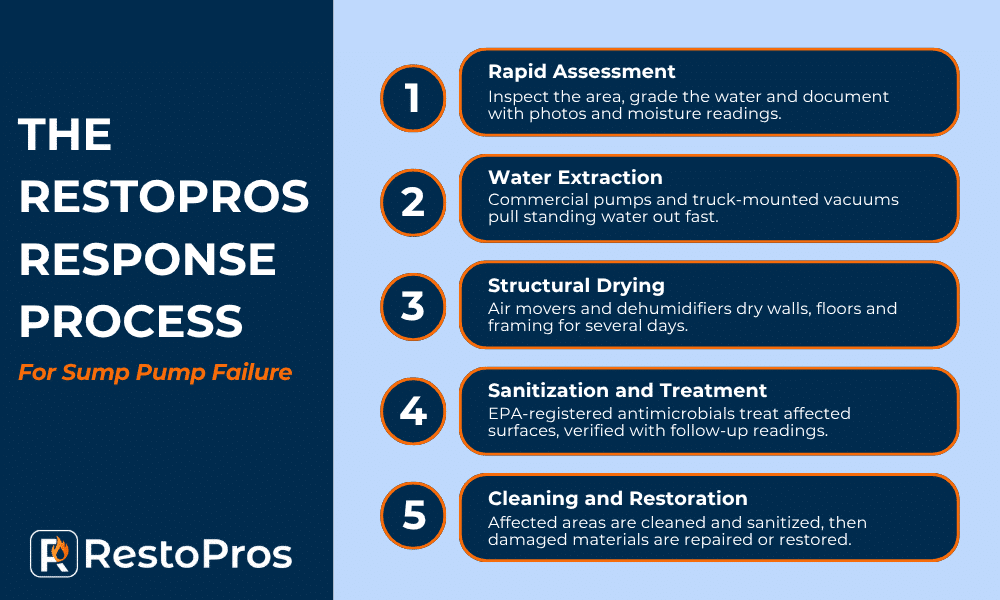
RestoPros understands the stress of basement flooding, and the response is built to limit damage from the first phone call. Technicians are available 24/7, and the process follows the same core steps for water from a failed sump pump, a sewer backup or a heavy storm.
Rapid Assessment
A technician inspects the affected area, categorizes the water and documents everything with photos and moisture readings. Water from a sump pump failure is usually Category 2 or Category 3 depending on sewer backup contamination. That classification drives the entire restoration plan.
Water Extraction
Commercial pumps and truck-mounted vacuums pull out standing water first. The faster this happens, the less water the structure absorbs. For a severe basement flood, extraction can take several hours of continuous work with multiple units running at once.
Structural Drying
After the pump trucks leave, air movers and industrial dehumidifiers run for several days to pull moisture out of walls, flooring, framing and any crawl space that was affected. Technicians take daily moisture readings and adjust equipment placement until readings return to normal. The drying protocols follow IICRC S500 standards for water damage restoration.
Sanitization and Treatment
Water pulled during sump pump failure jobs, especially when tied to a sewer backup or drain overflow, carries bacteria that need antimicrobial treatment. Technicians apply EPA-registered products to affected surfaces, then verify treatment with follow-up readings.
Cleaning and Restoration
All affected areas are cleaned and sanitized, and damaged materials are repaired or restored. That can include drywall, joint compound, water-based primer, flooring and furniture. The team handles anything from a few square feet to a full rebuild and documents every item for the insurance company so the claim moves faster.
Insurance Coverage for Sump Pumps
A standard homeowners insurance policy often does not cover damage from sump pump failure or water backup out of the box. Most carriers offer a separate rider called water backup coverage that pays for cleanup and repairs when a sump pump, sewer backup or drain overflow pushes water into your home. Flood insurance through the National Flood Insurance Program covers rising groundwater but has its own exclusions.
Points to review on your policy:
- Does your standard homeowners insurance policy exclude water backup?
- Do you carry a water backup coverage endorsement, and what is the limit?
- Is the deductible for water backup separate from the main deductible?
- Does the policy require proof of regular maintenance or regular testing of the pump?
RestoPros documents every step of restoration for your insurance company. That paperwork, including moisture readings, photos and itemized scopes, often makes a the difference on how much a standard homeowners insurance policy actually pays out on a sump pump failure claim.
Why Fast Action Matters
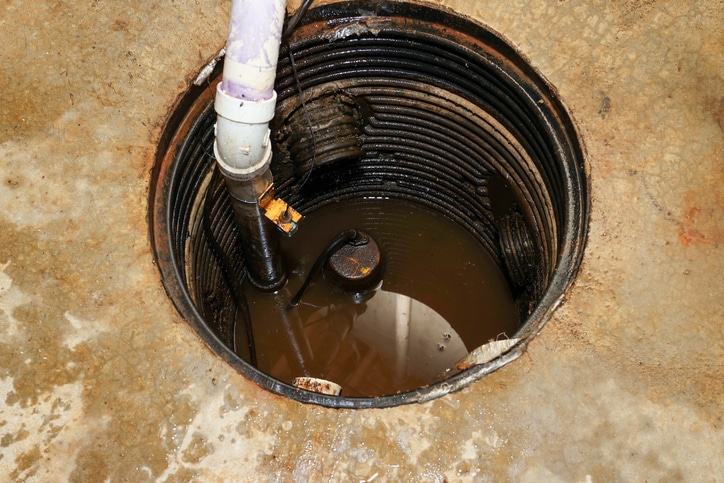
Water pooled on the floor for 24 hours is a different problem than water pulled out within a few hours. Mold spores activate quickly on damp organic materials, and the longer moisture stays trapped in walls and floors, the more material has to come out.
RestoPros teams carry professional-grade pumps, dehumidifiers, air movers and moisture meters that are not available at retail. The equipment matters, but the training matters more. Certified technicians know where water travels in a wall assembly, how to dry framing without ripping it out and when materials have to be removed to prevent lasting damage.
Find your nearest RestoPros location for water damage restoration as soon as you notice a basement flood or standing water from a failed sump pump. The response team can be on-site quickly, and the sooner extraction starts, the sooner your basement is saved.
Frequently Asked Questions
No. A submersible or pedestal pump won’t run without power. A battery backup system covers that gap, and some homeowners add a water-powered backup pump for longer outages during severe weather. Without one, water from the drain tile has nowhere to go and the sump overflows.
Once a year at a minimum, with regular testing of the float switch and check valve a few times during wet seasons. A pro visit catches worn impellers, cracked discharge lines and a drifting float switch before any of them turn into a basement flood.
Flood insurance covers surface water from storms and overflowing rivers or lakes. A water backup rider on your homeowners insurance covers water pushed in from a failed sump pump or sewer backup. Properties in flood-prone areas usually need both.
Out through the discharge line to a storm drain, dry well or splash block well away from the house. If the discharge pipe isn’t pitched right or ends too close to the foundation, that same water seeps back in and the pump works on it again.
Our dispatch team collects the basics about the water source, the size of the affected area and the type of flooring involved. A certified crew is then sent to your property with the equipment needed to begin extraction and the drying process. Our teams are available 24/7 for emergencies.