Blog
How Schools Can Prevent Mold During Extended Breaks

The Short Answer: Schools grow mold over long breaks because empty buildings run reduced HVAC while no one catches a leak or rising humidity. Steady moisture control, scheduled checks, and a mold remediation partner on call keep a small moisture problem from becoming a large one.
A school can sit empty for weeks over summer, winter, or spring break. With fewer people around, a slow leak or a stalled condensate drain can feed mold growth before anyone notices. Reduced HVAC schedules and moisture from cleaning or painting add to the risk. Here is how facilities teams lower that risk, and when to bring in a mold remediation professional.
Identify High-Risk Areas Before the Break
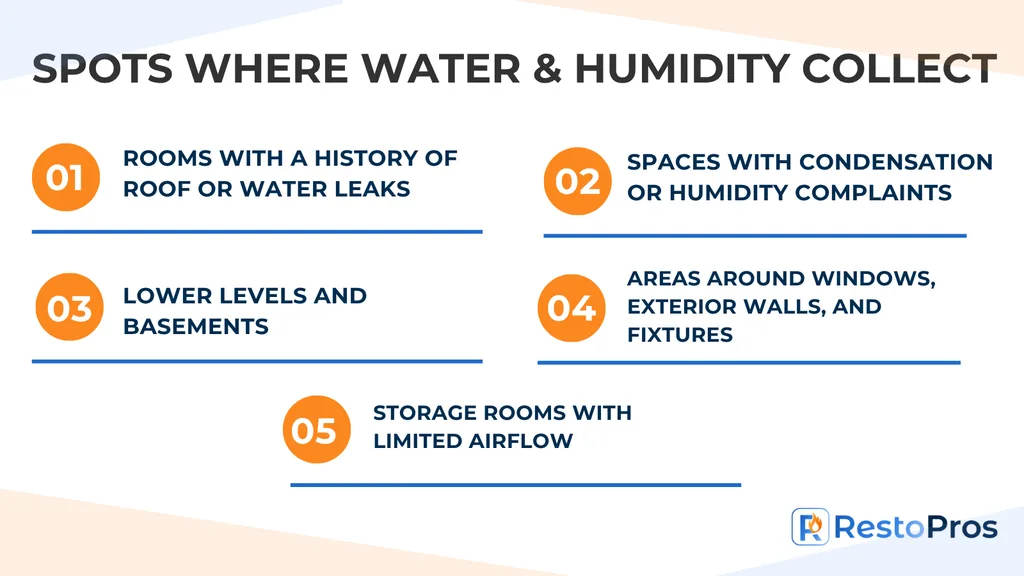
Walk the building before it empties so staff can act on any active moisture problem. Focus on the spots where water and humidity collect:
- Rooms with a history of roof or water leaks
- Lower levels and basements
- Spaces with recurring condensation or humidity complaints
- Areas around windows, exterior walls, and fixtures
- Storage rooms with limited airflow
Musty odors, discoloration, or warped materials usually point to an unresolved source, not a one-time spill. A mold assessment by a qualified mold assessor confirms whether mold contamination is present and how far it has spread before the break begins.
Don’t Shut Down Moisture Control With the School
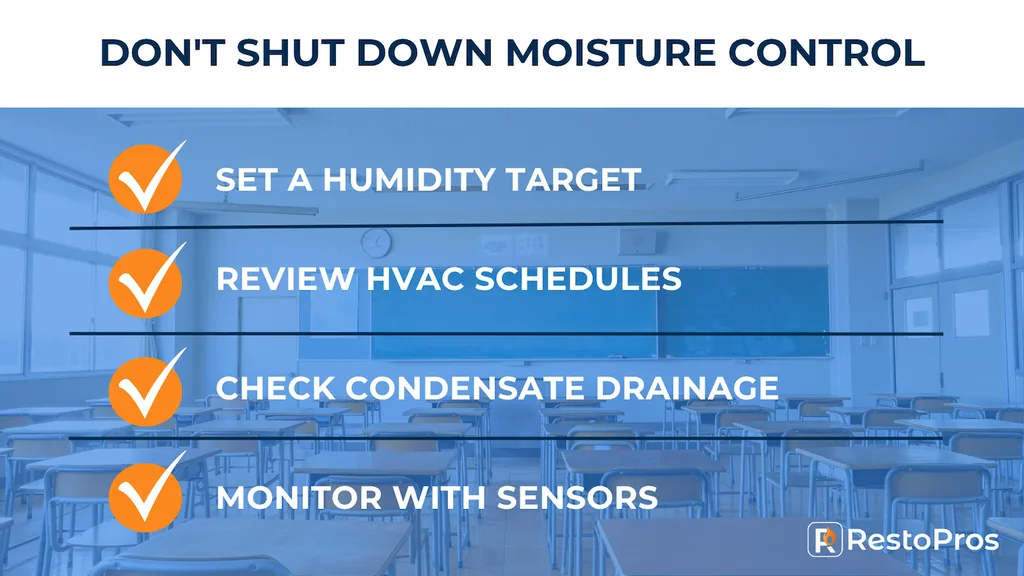
Cutting HVAC saves energy, but the building still needs enough cooling and dehumidification to hold moisture in check. Damp materials can start growing mold in as little as 24 to 48 hours, and once indoor humidity climbs past about 60 percent, condensation and mold get much more likely, which is why the EPA points to a target range of 30 to 50 percent. In a school that sits mostly empty, holding that range for weeks takes a plan set before the doors close:
- Set humidity levels for the break and hold to them
- Review HVAC and dehumidification schedules
- Check condensate lines and drainage
- Use sensors to track changes, with someone assigned to review alerts
Keep a Scheduled Building Check During Long Breaks
Have someone walk the school on a set schedule and look for new ceiling or wall staining, warped flooring, musty odors, standing water, or fresh leaks. Moisture meters and infrared cameras point toward problem areas, but they do not confirm mold on their own, which is why a trained mold assessor should verify anything the check turns up.
Have a Response Plan Before Someone Finds Mold
When mold or a moisture source turns up, stop the moisture first, document what was found, and leave large or concealed areas undisturbed so mold spores do not spread. Escalate recurring issues instead of treating the same stain again, and bring in a mold remediation professional when the scope is unclear.
RestoPros handles that response as your service provider. A trained mold remediator contains the area, runs HEPA filter air scrubbing to capture airborne spores, removes mold, and corrects the moisture problem so it does not return. Technicians carry IICRC certification and follow EPA guidelines, and mold that spreads through ductwork is common in closed buildings, so mold in HVAC systems deserves its own look.
Conduct a Pre-Return Walkthrough
Before students return, reinspect known problem areas, review humidity trends, and confirm past repairs are still dry. Investigate lingering odors or staining and document anything unresolved. Mold exposure can trigger an allergic reaction or other health concerns for people with asthma or weaker immune systems, so a stained ceiling tile is worth confirming rather than painting over.
Protect Your School Before the Next Break

A long break is a good window for maintenance, but it can let a moisture problem grow unseen. A steady plan for inspection, humidity control, and response helps facilities teams catch issues early and avoid a larger mold or water damage problem.
RestoPros provides commercial water mitigation, mold remediation, and property restoration for schools. Contact RestoPros to set up an assessment or a response plan before your next extended break.
Frequently Asked Questions
A walkthrough once or twice a week, paired with humidity sensors reviewed between visits, works for most buildings. Rooms with a moisture history warrant more frequent checks. A mold remediation contractor can help set a schedule based on your risk areas.
It depends on the cause. Mold from a sudden covered event like storm damage or a burst pipe may be covered, while mold from an unaddressed moisture problem is less likely. RestoPros documents the mold damage and works with your insurer.
That comes down to the lease. Some agreements put repairs on the property manager, others on the school. Either way, whoever spots the problem should escalate it fast, since delays let mold spread and raise the cost.
Requirements vary across the United States, since states set their own rules on mold-related licensing and professional regulation. Even where testing is not required, a mold assessment confirms the scope and finds hidden moisture a visual check can miss.
Yes. Mold can grow inside walls, above ceiling tiles, or in HVAC systems, and spores still circulate into classrooms. Mold exposure symptoms can appear before the source is spotted.