Blog
Mold in HVAC Systems and Air Ducts: Risks and Removal
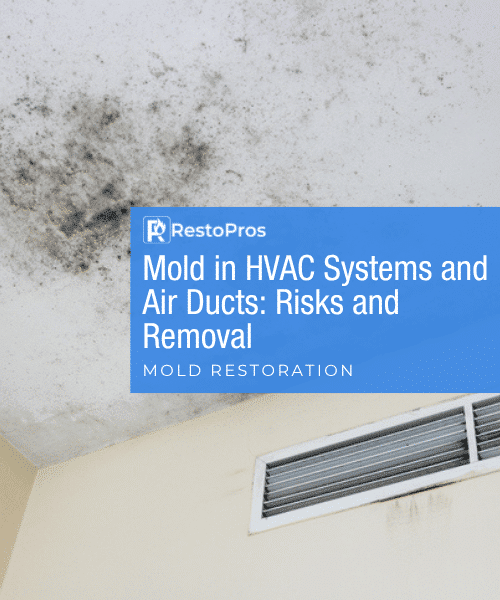
The Short Answer: Mold grows inside an HVAC system when moisture from the evaporator coil, drip pan, or air ducts meets dust and organic material. Professional mold remediation from RestoPros removes the mold spores at the source, treats the affected components, and controls the moisture issues that let it return.
Your HVAC system moves air through every room, so mold growth inside it can spread microscopic mold spores well beyond the unit. Warm, damp spots like the evaporator coil and drain pan give mold the moisture and organic material it needs to take hold. Once colonies form, the air conditioner pushes spores through the air ducts and out the air vents, lowering your indoor air quality and triggering allergy symptoms. A musty smell or visible mold growth near a vent usually means the problem is already established. RestoPros removes HVAC mold with professional cleaning, containment, and moisture control.
How Mold Gets Into Your HVAC System

An HVAC system creates the exact conditions mold needs. The cooling process pulls warm air across a cold evaporator coil, and that temperature gap produces condensation. When water sits where it should not, mold growth follows.
Common sources of HVAC mold include:
- Evaporator coil condensation: The coil stays cold and damp while the AC unit runs, giving mold spores a steady moisture supply.
- A clogged drip pan: Standing water in the drain pan creates excess moisture that feeds mold growth.
- High indoor humidity: Air that holds too much moisture lets mold settle on duct surfaces and other components.
- Water damage: A leak or flood near the system raises the humidity level and speeds up mold growth. RestoPros provides water damage restoration to dry these areas before mold spreads.
- Dust and organic material: Mold feeds on the dust, pollen, and debris that collect inside air ducts.
When moisture is present in a forced-air system, the chance of microbiological growth such as mold rises, and spores can be released into your living space.
Signs of Mold in Your Air Ducts and AC Unit
HVAC mold often hides inside ductwork and the air handler, so the warning signs reach you before the mold itself does. Watch for these indicators:
- A musty odor that gets stronger when the air conditioner turns on
- Visible mold growth around air vents, registers, or the AC unit
- Allergy symptoms like itchy eyes, sneezing, or congestion that ease when you leave the house
- Black mold staining on or near duct openings
- Higher indoor humidity that does not improve with normal cooling
A musty smell with no clear source points to mold somewhere in the system. Because much of an HVAC system is sealed, a professional inspection is the reliable way to confirm a mold problem. Our musty smell guide explains what those odors mean for your home.
Health Risks of HVAC Mold
When mold grows in your ductwork, the system spreads microscopic mold spores through the air you breathe. That ongoing mold exposure affects indoor air quality and can lead to real health problems, especially for sensitive groups.
Mold exposure can cause a stuffy nose, sore throat, coughing, wheezing, burning eyes, and skin irritation. People with asthma or a mold allergy may have severe allergic reactions, including asthma attacks. Those with weakened immune systems or chronic respiratory conditions face a higher risk of lung infections.
Groups most affected by long-term exposure include:
- Children and older adults
- People with asthma or allergies
- Anyone with a compromised immune system
- People with existing respiratory issues
Because the air conditioner circulates spores throughout the house, HVAC mold reaches more people than mold confined to one room.
Why Surface Cleaning Falls Short
A quick wipe-down or a bleach solution on a visible spot does not solve HVAC mold. Mold roots into porous materials and reaches sealed parts of the system that household cleaning cannot touch. Spraying a vent leaves the colony inside the ductwork untouched, and the air conditioner keeps moving spores.
Many sections of a heating and cooling system are not accessible for inspection, so trained providers should locate and verify any mold. Removing HVAC mold the right way calls for containment, professional-grade equipment, and a plan to stop the moisture issues behind it. That is the work RestoPros does.
The RestoPros HVAC Mold Removal Process

RestoPros follows IICRC guidelines to remove mold safely and keep spores from spreading during the job. Our mold remediation process moves through clear stages.
Inspection and Containment
We start with a professional mold inspection to find every spot of mold growth, including hidden colonies in air ducts and around the evaporator coil. We then set up containment barriers so mold spores do not travel to clean areas while we work.
Removal and Professional Cleaning
Our certified team removes mold-infested porous materials and uses HEPA vacuums and air scrubbers to pull spores out of the air. We treat hard surfaces and HVAC components to kill remaining spores and prevent regrowth, restoring healthier air quality.
Moisture and Humidity Control
The way to control mold is to control moisture. We address the excess moisture feeding the mold problem and recommend humidity control measures so the cooling system stays dry. Repairs to the HVAC unit itself should be handled by a licensed HVAC technician, since RestoPros does not perform plumbing or HVAC mechanical work.
Preventing HVAC Mold From Coming Back
Once your system is clean, a few habits lower the odds of another mold infestation:
- Keep your indoor humidity below 60%, and closer to 50% when you can
- Change air filters on a regular basis so dust does not build up
- Schedule regular maintenance for your AC unit, including drain pan checks
- Address water damage fast, since mold can begin growing within 24 to 48 hours
If a leak or flood hits your system, our emergency restoration services respond around the clock to dry the area before mold takes hold.
Protect Your Air and Your Health

Mold in your HVAC system puts mold spores into the air your family breathes, which can lower indoor air quality and bring on allergy symptoms, respiratory issues, and other health effects. Because the air conditioner moves air through every room, a small mold problem in the ductwork can become a whole-home concern fast. Surface cleaning and a bleach solution will not reach the mold hiding inside the system, and the moisture issues behind it need attention too.
RestoPros removes HVAC mold at the source, treats the affected components, and helps you control the humidity that lets mold return. Our IICRC-certified technicians are available 24/7 with professional cleaning and proven mold removal methods. Contact RestoPros today to schedule a mold inspection and protect your home, your cooling system, and your health.
Frequently Asked Questions
It is best to limit use until the system is treated. Running the air conditioner keeps circulating spores through your air ducts and into each room, which spreads the problem and prolongs your exposure. If you need cooling in the meantime, ask your remediation provider whether a temporary setup makes sense for your situation.
Most jobs run one to three days, depending on how far the mold has spread and how many components are affected. A contained colony near the evaporator coil clears faster than mold that has traveled deep into the ductwork. Your inspection determines the timeline before any work begins.
Coverage usually depends on the source. Many policies pay for mold that results from a sudden, covered event like a burst pipe, while mold traced to long-term humidity or deferred maintenance is often excluded. Check your policy language and document the cause, since that detail drives most claim decisions.
Not always. Hard, non-porous ductwork can often be cleaned and treated, while porous materials like fiberglass duct liner that hold mold may need replacement. The inspection identifies which components can be saved and which cannot.
An annual check paired with regular maintenance catches moisture problems before mold takes hold. Homes in humid climates, or any home that has had a leak or flood near the system, benefit from more frequent attention.
It reaches more of the house. Mold in a single room stays mostly in that space, but mold inside the system travels through the air vents to every room the HVAC unit serves, so a small colony can affect your whole home’s air quality.