Blog
How to Tell if You Have Mold in Your Attic
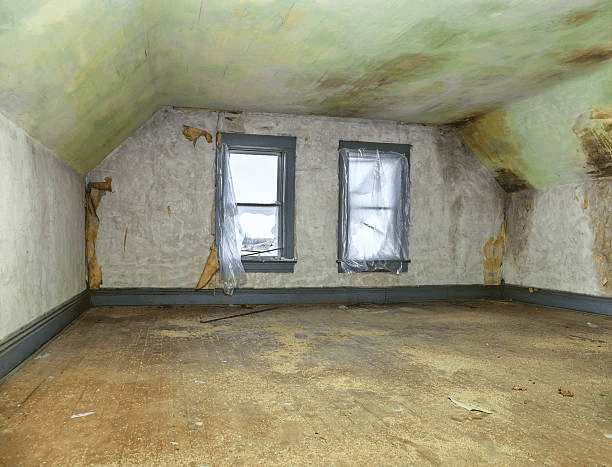
The Short Answer: Attic mold usually appears on the underside of the roof sheathing as gray, white, green, or brown patches that follow the framing bays, sometimes fuzzy and sometimes flat and speckled. It tends to start on the coldest, least ventilated part of the attic, which is often the north-facing slope or the corners farthest from the vents.
Most homeowners never see it. Attics get visited once or twice a year, and mold growth can spread hundreds of square feet before anyone notices. By the time a musty smell reaches the hallway below, the moisture problem has usually been going on for a season or longer.
What Mold Looks Like in an Attic
Where Mold Shows Up First
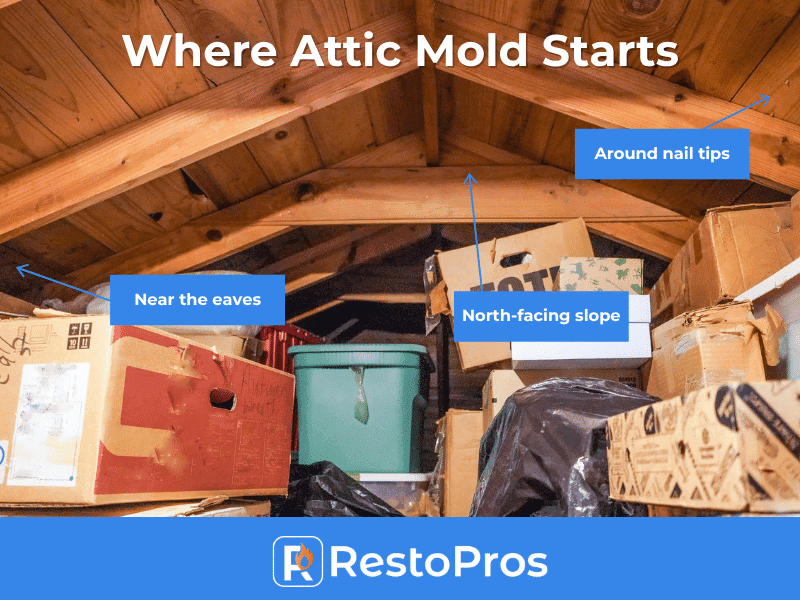
Mold in an attic almost always starts on the underside of the roof sheathing, the plywood or board decking that the shingles are nailed to. Look at the coldest surfaces first. The north-facing slope, the corners farthest from any ridge vent, and the area near the eaves tend to go first, because that is where warm, moist air from the house condenses.
Nail tips are another early spot. In cold weather, frost forms on the exposed nail points, melts during the day, and drips onto the wood below. Small dark rings around nail heads often show up before anything else does.
What Mold Actually Looks Like
Attic mold takes several forms and varies in appearance:
- Gray or white patches that look powdery or slightly fuzzy
- Green or olive coloring, often in irregular blotches
- Yellowish brown or dark staining that follows the grain of the plywood
- Speckled dots scattered across a whole sheet of decking, which is common on older homes
The pattern is a useful clue. Growth that stops at the edges of each framing bay, or that appears heavily on one slope of the roof and not the other, points to a ventilation or condensation issue rather than a leak.
What Often Gets Mistaken for Mold
Not every dark patch on roof sheathing is mold growth. Mineral staining, old soot from a decommissioned chimney, sun discoloration on wood that was stored outside before the house was built, and dried water stains from a roof leak repaired years ago all look similar from a distance. Telling them apart takes a moisture reading and a trained eye, which is one reason a mold inspection matters before anyone starts removing material.
Signs You Can Notice Outside of the Attic
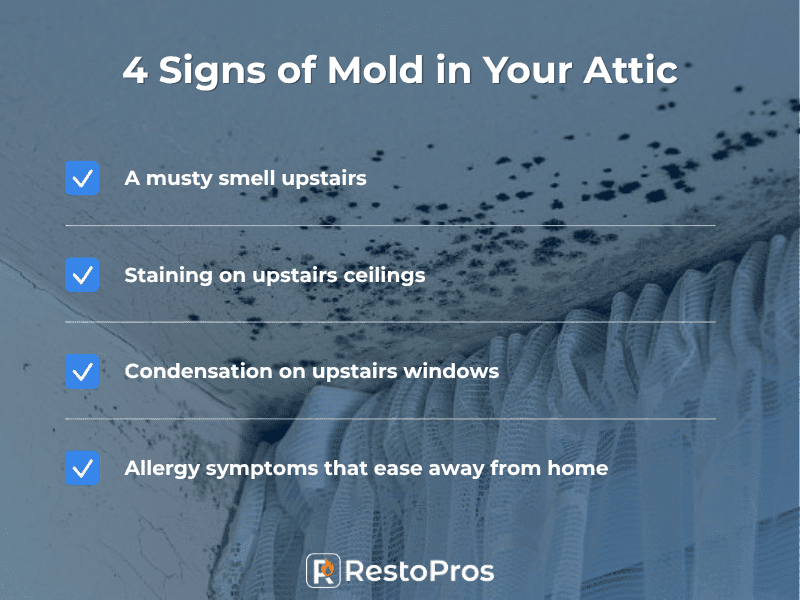
- A musty smell near the attic hatch, in upstairs closets, or in the top-floor hallway
- A musty odor that gets stronger on humid days or when the HVAC system runs
- Stains on upper-floor ceilings or paint that bubbles near the ceiling line
- High indoor humidity, condensation on upstairs windows, or a cold spot in an upstairs room
- Allergic reactions or respiratory issues that ease up when your family is away from the house
None of these confirm anything on their own. However, together they are a reason to have your attic space professionally inspected.
What Causes Attic Mold
Mold needs moisture to thrive, and an attic provides several opportunities. If you clean up the mold without correcting the water problem, it will come right back.
A Roof Leak
Damaged flashing, failed nail seals, ice damming, or storm damage lets water into the decking. A roof leak produces mold in a defined area, usually with staining that runs downhill from a single point.
Poor Ventilation
An attic is designed to breathe. Air enters low through the soffit vents and exits high through a ridge vent or gable vent. When attic insulation gets pushed over the soffit vents, or when the ridge vent is undersized or blocked, that airflow stops. Without proper ventilation, humid air sits against cold decking all winter.
Warm, Moist Air From Below
Heated air rises through a house and pushes into the attic through gaps around light fixtures, plumbing chases, and the attic hatch. That movement is called the stack effect, and it carries all the humidity from showers, cooking, and laundry with it.
The bigger version of the same problem is exhaust vents that terminate in the attic instead of outside. Bathroom exhaust fans and dryer vents that dump into the attic space deliver warm, wet air directly onto cold wood. Bathroom fans venting into an attic are one of the most common causes of attic moisture.
Why Attic Mold Calls for Professional Remediation
When mold growth covers more than 10 square feet, the job moves beyond homeowner cleanup and into professional territory, with containment barriers and controlled airflow. Attic mold usually covers far more than that by the time it becomes visible, since roof decking gives it an uninterrupted surface to spread across.
Two factors make attic mold a more intricate problem:
- Mold spores travel down, not just sideways. The same stack effect that pushes humidity up also pulls air from the attic into living space when doors open and the HVAC runs. Disturbing a contaminated attic without containment can move spores through the entire house and hurt indoor air quality in rooms that were previously fine.
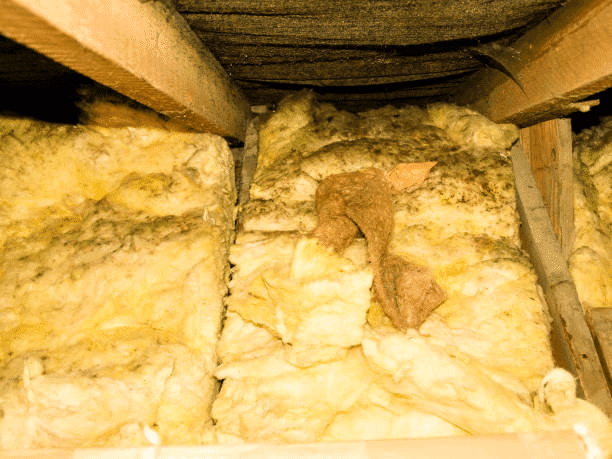
- Attics are full of porous materials. Insulation, cardboard boxes, and wood decking absorb moisture and hold contamination. Surface cleaning does not remove the mold, and contaminated attic insulation usually has to be removed.
How RestoPros Handles Attic Mold Remediation
- Inspection and moisture mapping: Technicians use moisture meters, thermal imaging, and air quality testing to find the affected area, including growth hidden behind or under insulation, and identify the moisture source driving it.
- Containment: Barriers isolate the attic so mold spores cannot spread into the rest of the property during the work.
- Mold removal: Using HEPA air scrubbers, commercial vacuums, and protective equipment, our team removes contamination from all affected surfaces, including porous materials that cannot be salvaged.
- Antimicrobial treatment: RestoPros treats hard surfaces to kill remaining spores and slow regrowth.
- Repairs and root cause correction: We replace removed building materials and address the moisture problem at its source.
Get Your Attic Checked Before Mold Spreads
Attic mold spreads quietly. It shows up as gray, white, green, or brown patches on the roof sheathing, usually in the coldest and least ventilated part of the attic, and it grows quietly while the rest of the house feels fine. A musty odor downstairs is often the first thing anyone notices, and by then the affected area is usually large.
Catching it early is the difference between a contained remediation and costly repairs to your decking and framing. Mold prevention in an attic comes down to controlling moisture, which means intact roofing, clear soffit vents, and exhaust running outside the building rather than into the attic.
If you suspect mold in your attic, RestoPros technicians are IICRC-certified, inspections are free, and we answer 24/7. Schedule a mold remediation assessment by contacting us or finding your nearest location, and we will document what we find and walk you through the plan before any work starts.
Frequently Asked Questions
It depends on the cause. Mold traced to a sudden covered event, such as a storm-damaged roof, is often covered along with the resulting water damage. Mold that grew slowly from poor ventilation or long-term humidity is usually treated as a maintenance issue and excluded. RestoPros documents the source and the scope and works directly with your insurance provider on the claim.
Yes, in most cases. A home inspector checks the attic as a standard part of the inspection and will note visible growth, staining, or ventilation problems. Findings like these can delay a sale until the buyer sees documentation that professional mold remediation was completed.
Usually yes, when it is contaminated. Insulation is porous and holds spores and moisture, so cleaning it in place is not reliable. The upside is that new insulation installed after remediation performs better than the compressed, damp material it replaces.
Not always. Visible growth plus a moisture reading is often enough to build a plan. Mold testing is more useful when growth is suspected but not visible, when someone in the home has ongoing symptoms, or when documentation is needed for a real estate transaction or an insurance claim.
The attic and the crawl space are separate moisture zones, so growth in one does not spread to the other directly. Both share the same underlying cause, which is unmanaged humidity, and both can push spores into living space through normal air movement. An inspection covering the whole property gives a clearer picture than looking at one zone alone.