Blog
How to Prevent Mold | Multi-Housing Property Management
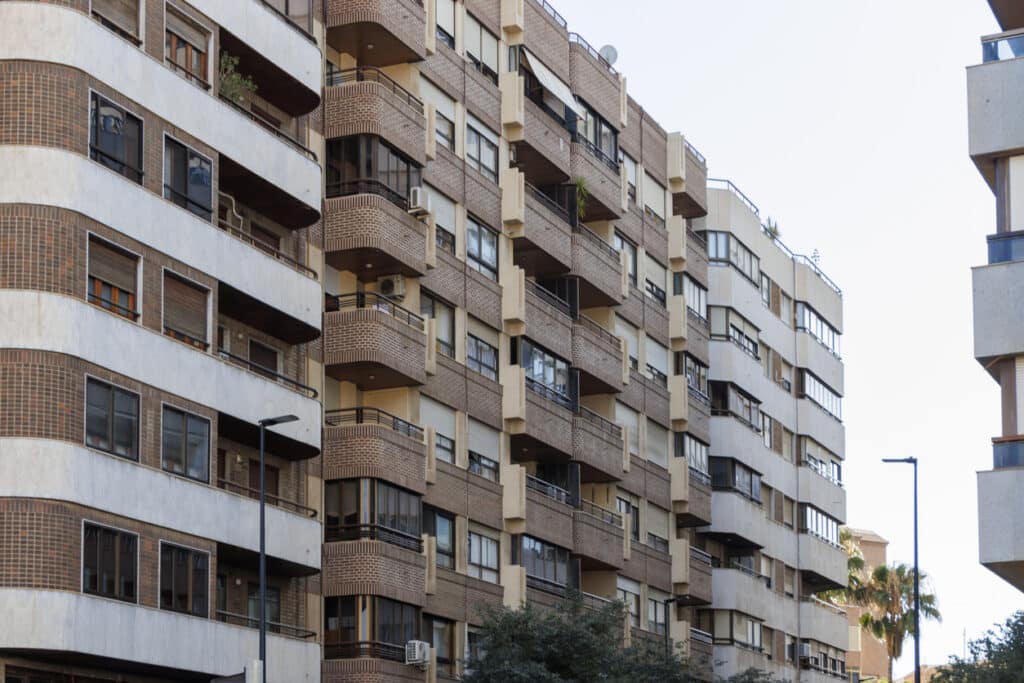
The Short Answer: Preventing mold in multi-housing properties begins with moisture control, routine inspections, and fast response to water damage if it occurs. RestoPros helps property managers stop mold growth before it spreads across units through assessment and remediation if necessary.
Multi-housing properties face a mold problem that single-family homes don’t. Shared walls, stacked bathrooms, central HVAC systems, and dozens of tenants create conditions where mold spores move quickly between units. A leak on the third floor can lead to mold growth two apartments below within days.
Property managers are responsible for protecting both residents and the building itself. Mold exposure can trigger health problems such as allergy symptoms and respiratory issues for tenants or turn into expensive repairs, lease disputes, and insurance claims. RestoPros supports property managers nationwide to catch moisture issues early, handle professional mold remediation when it’s needed, and keep buildings healthy long term.
Why Multi-Housing Properties Face Higher Mold Risk
Apartment buildings, condos, and townhome communities share a few traits that make them more vulnerable than standalone homes.
Shared Systems and Shared Walls
One HVAC system often serves many units, so moisture content and humidity level problems in one area can affect air quality across the whole floor. Shared plumbing stacks, common laundry rooms, and connected ductwork create pathways where mold spores travel between units. If a tenant reports a musty smell, the actual source may sit two apartments away.
High Tenant Turnover
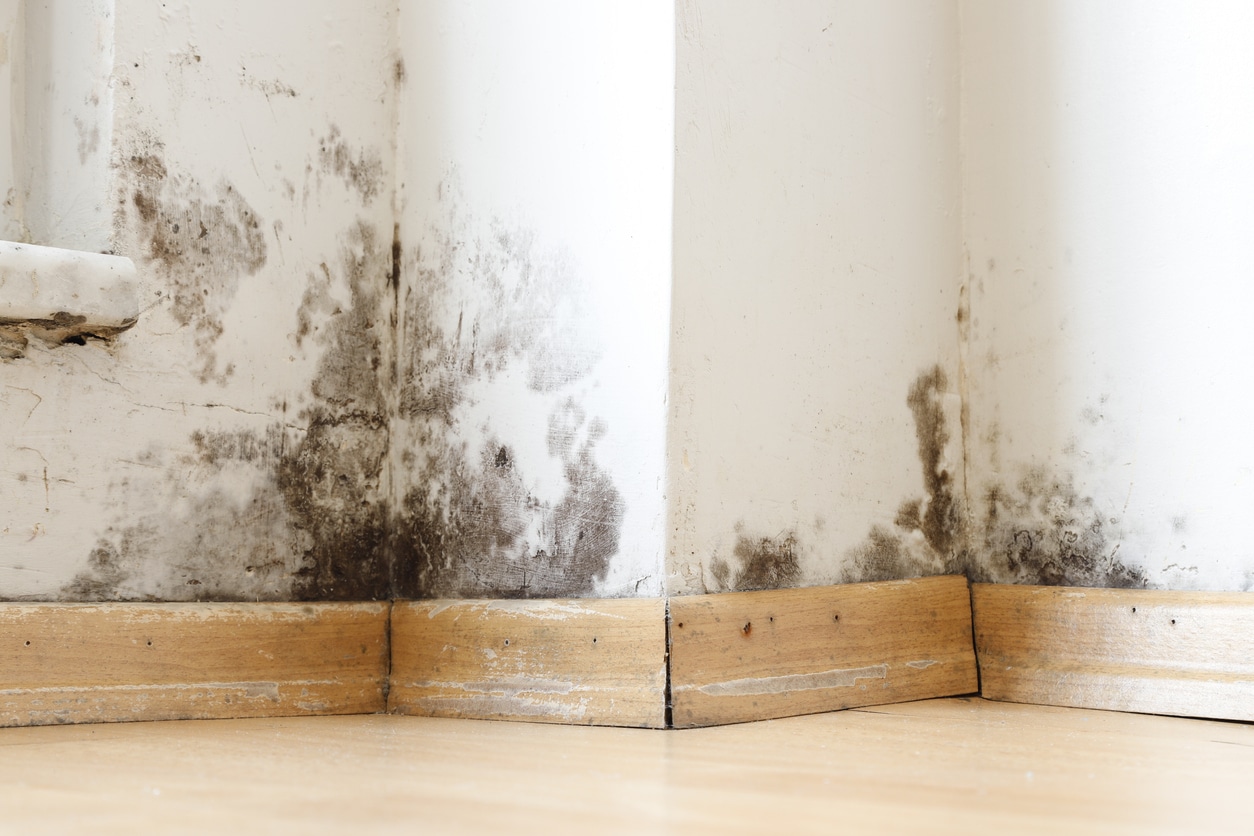
When vacant units sit with HVAC systems off or set too high, high indoor humidity can cause mold to form on ceiling tiles, baseboards, and behind appliances. Move-outs can reveal visible mold that’s been hidden behind furniture for months. Scheduling a professional inspection between tenants is always smart, but it is especially important in humid climates.
Delayed Reporting
Not every tenant reports a damp spot under the sink or a small leak behind the toilet right away. By the time maintenance hears about it, water damage may already be happening. Longer wait time makes it more likely for indoor mold growth to take root in materials that are hard to reach.
The RestoPros Mold Prevention Process
Prevention is different from reactive cleanup. RestoPros helps property managers with mold assessments and quick-response protocols that stop a small moisture issue from becoming a building-wide mold problem.
Property-Wide Moisture Assessment
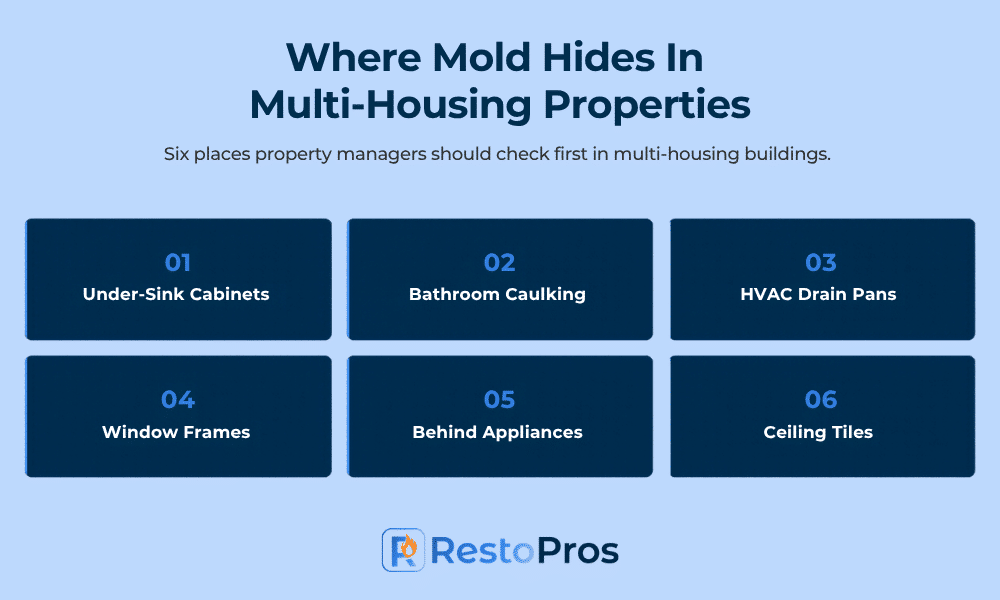
A visual inspection covers common problem areas like:
- Under-sink cabinets and dishwasher connections
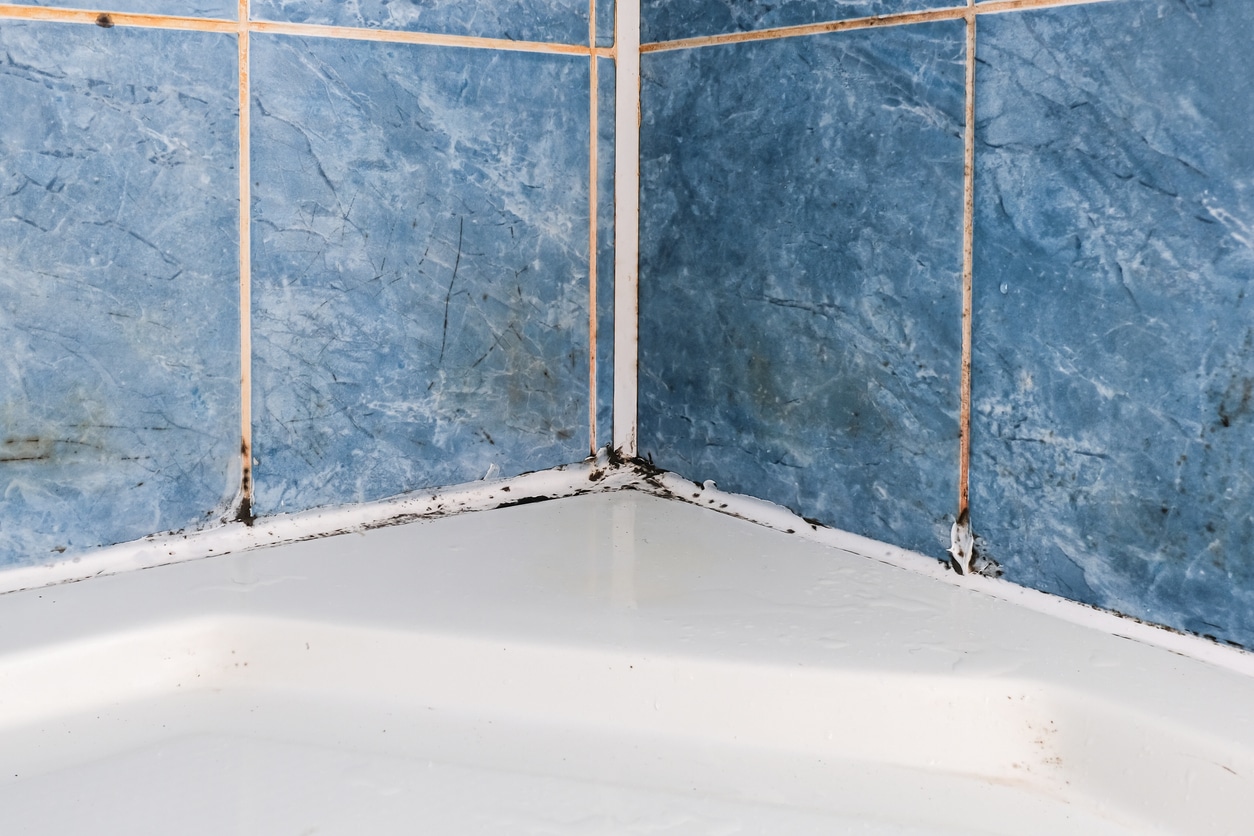
- Bathroom caulking, shower curtains, and tub surrounds
- HVAC closets, air conditioner drain pans, and condensate lines
- Window frames and exterior-wall penetrations
- Basement storage, laundry rooms, and mechanical spaces
Technicians then use thermal imaging and moisture meters to locate hidden water damage behind walls, under flooring, and above ceiling tiles. They document findings for the property manager, flag any damp spot that needs follow-up, and recommend repairs that reduce future mold growth risk.
Humidity and HVAC Review
Mold grows quickly when relative humidity sits above 50 percent for extended periods of time. That number can climb fast in summer, or in units where tenants rarely run the air conditioner. Our technicians inspect HVAC components for moisture issues and look for signs of mold contamination inside the system. Oversized AC units often cool quickly without pulling out enough moisture, which keeps indoor humidity high even when the thermostat reads cold.
Remediation When Mold Is Found
If our assessment turns up visible mold or hidden colonies, we move into mold remediation. The process depends on the affected square feet and the materials involved, but typically includes containment, HEPA filtration, removal of saturated drywall and ceiling tiles, antimicrobial treatment, and post-remediation verification. We handle paperwork for insurance claims and keep the property manager informed at each step.
Common Mold Triggers in Multi-Housing Buildings
Property managers who recognize mold’s usual hiding spots can route maintenance attention toward them. These are the sources our teams see most often during multi-housing inspections.
Plumbing and Appliance Leaks
Slow leaks under sinks, behind refrigerators, and around washing machines are very common mold environments in apartments. A tiny leak behind drywall can soak insulation for weeks before anyone notices a stain. Once the smell reaches the hallway, mold spores have already colonized the wall cavity. Fast response to water damage calls limits how far moisture travels.
Bathroom Moisture
Bathrooms generate heavy moisture every day. Steam settles on walls, ceilings, and grout when exhaust fans are missing, undersized, or not vented outside. Mildew growth around the shower curtain, caulking, and tile is often the first sign of a bigger problem forming behind the wall. Bathroom exhaust fan checks belong in any multi-housing prevention plan.
HVAC and Ductwork Issues
Air conditioner coils, drain pans, and ductwork collect dust and organic matter that feed mold. Backed-up condensate lines create pools of water, which turn into ideal conditions for colonies to form inside the system. Once that happens, mold spores spread into every room the HVAC system serves.
Roof and Window Leaks
Top-floor units and corner apartments see the most roof and window-related moisture issues. Stains on ceiling tiles or discoloration around window frames should trigger a professional check. A small roof leak, left alone, can feed mold growth across multiple units over the course of a single season.
What Property Managers Should Do When Mold Is Suspected
When a tenant reports a musty smell, visible mold, or allergy symptoms that get worse at home, property managers need a clear process. Here’s what RestoPros recommends for the first 24 hours:
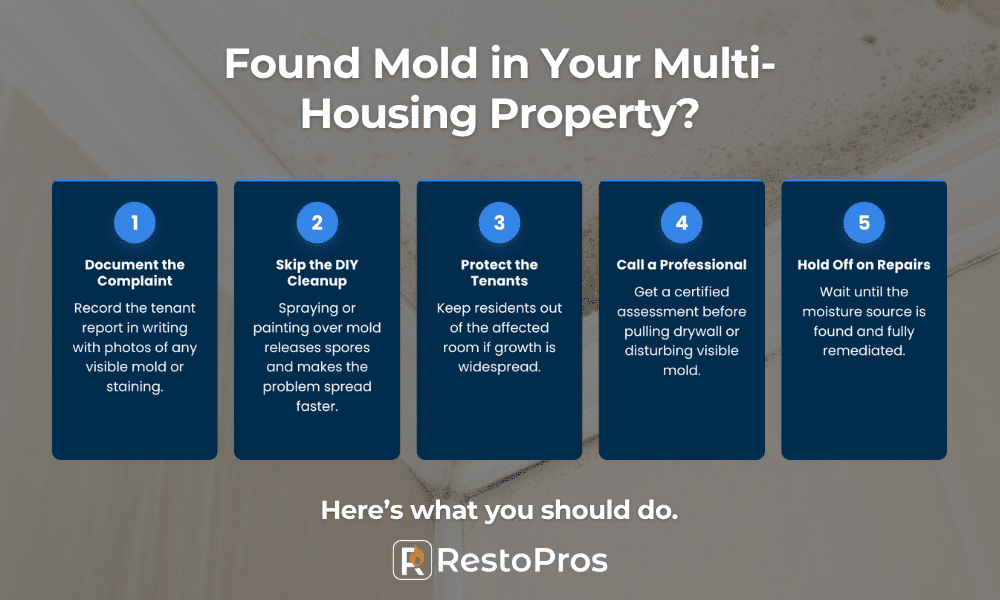
Hold off on repairs until our team identifies the moisture source
Document the tenant complaint in writing, with photos if possible
Avoid any DIY attempts to clean mold or paint over affected areas, since these actions can release mold spores and worsen the issue
Keep tenants out of the affected room if growth is widespread
Call RestoPros for a professional assessment before pulling drywall or disturbing visible mold
Health Effects of Mold in Rental Units
Health concerns are the top reason property managers take mold seriously. According to the Centers for Disease Control and Prevention, even brief mold exposure can affect residents with asthma, allergies, or weakened immune systems. Tenants commonly report:
- Runny nose and nasal congestion
- Coughing and throat irritation
- Itchy or watery eyes
- Skin rashes or an allergic reaction on contact
- Worsening asthma symptoms
Keeping indoor humidity between 30 and 50 percent is one of the most effective ways to limit mold growth and protect indoor environmental quality.
Why Professional Service Beats DIY Products
Some property managers try bleach, spray cleaners, or other DIY methods before calling a professional. Those products rarely reach the source of a mold problem. Surface treatments do nothing for colonies growing inside wall cavities, above ceiling tiles, or in HVAC ductwork. Painting over visible mold traps the growth and often makes future remediation more expensive.
RestoPros brings certified technicians, commercial-grade equipment, and documentation that holds up with insurance carriers. Our teams follow IICRC standards for mold remediation and work directly with insurance adjusters where coverage applies.
Protect Your Property and Your Tenants
Mold prevention in multi-housing properties is a year-round commitment. Catching excessive moisture early, keeping humidity in check, and responding fast to any water damage are important steps toward healthier buildings and safer tenants.
RestoPros supports property managers across the country with mold prevention, emergency remediation, and ongoing moisture management. We are available 24/7, so contact us to schedule a property assessment or visit our mold remediation services page to learn more about how we work with multi-housing properties.
Frequently Asked Questions
Twice a year works for most property managers, with extra checks after any major storm, plumbing event, or tenant turnover. Buildings in a humid climate or those with older HVAC systems may need quarterly reviews to stay ahead of indoor mold growth.
Responsibility depends on state law, local ordinances, and the lease agreement. The property owner typically handles remediation when mold results from building issues like roof leaks or HVAC failure. Tenants may share responsibility if growth stems from neglect, like refusing to open windows, open doors, or run the bathroom fan during showers. RestoPros documentation helps clarify the source for both parties.
Yes. New construction is actually a common source of mold problems because building materials can trap excessive moisture during the construction process. If drywall was installed before the building fully dried, or if HVAC systems ran with high humidity during finishing, mold can appear within the first year of occupancy.
Keep vacant units between 68 and 78 degrees with indoor humidity under 50 percent. Shutting the HVAC off completely during warm months is one of the fastest ways to create a mold problem, since high humidity builds up quickly in a closed unit.
Coverage depends on the policy and the cause of the mold. Sudden water damage events, like a burst pipe, are often covered. Gradual leaks or long-term maintenance issues typically are not. RestoPros works directly with insurance carriers and provides the documentation adjusters need to process claims.