
The Short Answer: Mitigation stops damage from getting worse, while restoration brings your property back to its pre-loss condition. Both steps are part of the same recovery process, and understanding the difference helps you know what to expect when disaster strikes.
When damage hits your property, the recovery process happens in two distinct phases. Understanding both and how they connect helps you make better decisions for your property, your insurance claim, and your peace of mind.
What Is Mitigation?
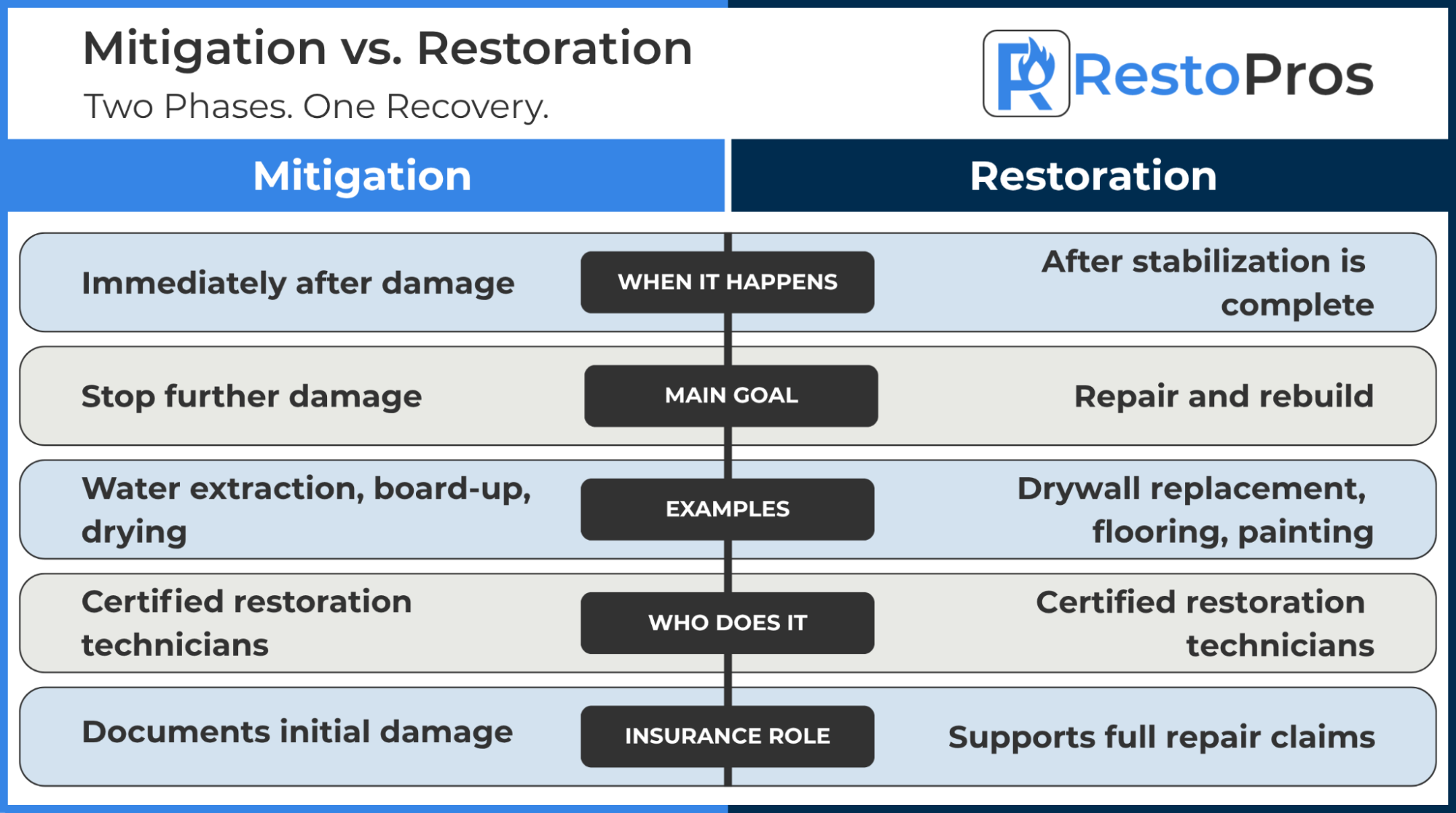
Mitigation is the immediate response phase. The goal is to prevent further damage to your property and protect whatever can still be saved.
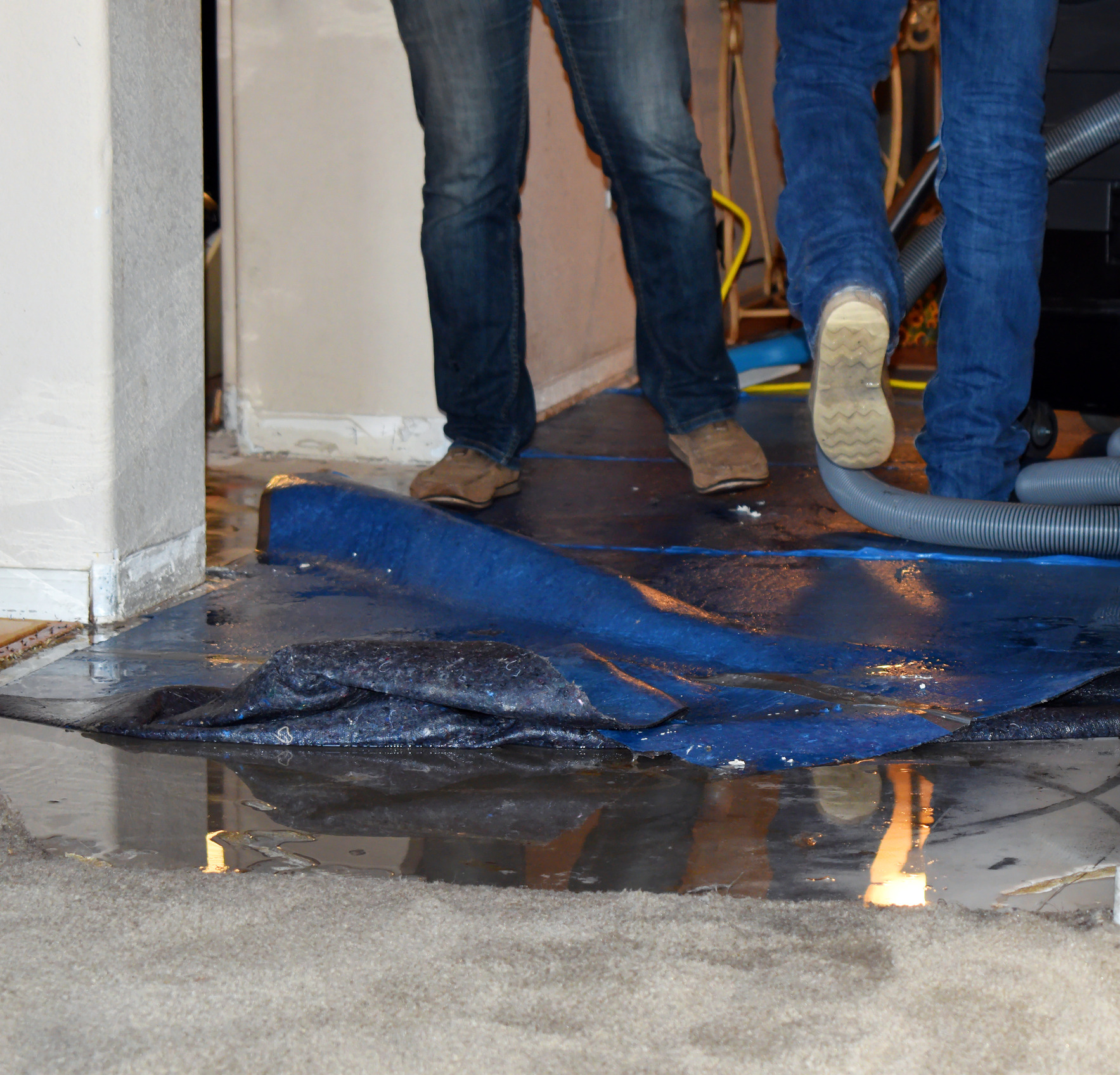
Think of it this way: if a pipe bursts and water is spreading across your floors, mitigation is the team that shows up fast, extracts the water, and sets up drying equipment before that water soaks into your walls and subfloor.
What the Mitigation Process Looks Like
- Emergency water extraction or board-up after structural damage
- Drying equipment is placed in the affected area to pull moisture from materials
- Removal of unsalvageable materials like soaked drywall or flooring
- Tarping, securing, or sealing the property against additional exposure
- Documentation of all damage for your insurance company
Mitigation services focus on stabilizing the situation. This phase does not fix everything, but it limits how bad things get. The faster a qualified restoration professional arrives, the less you will have to restore later.
What Is Restoration?
Restoration is the repair-and-rebuilding phase. Once the affected area is stabilized and dried out, restoration work brings your property back to its baseline condition.
This is where the real rebuilding happens. Floors get replaced. Walls go back up. Structures are repaired. The restoration project takes everything from “stable but damaged” to “livable again.”
What Restoration Actions Include
- Replacing drywall, flooring, and insulation removed during mitigation
- Repairing or rebuilding structural elements in the damaged property
- Painting, trim work, and finishing to match pre-loss conditions
- Full documentation at each stage for the insurance company
- A restoration plan is developed before any major work begins
Restoration activities are guided by what was documented during mitigation. That documentation matters, especially for insurance coverage.
Mitigation vs. Restoration: Side-by-Side
Why the Order Matters
Skipping or rushing mitigation leads to bigger restoration bills. Here is why:
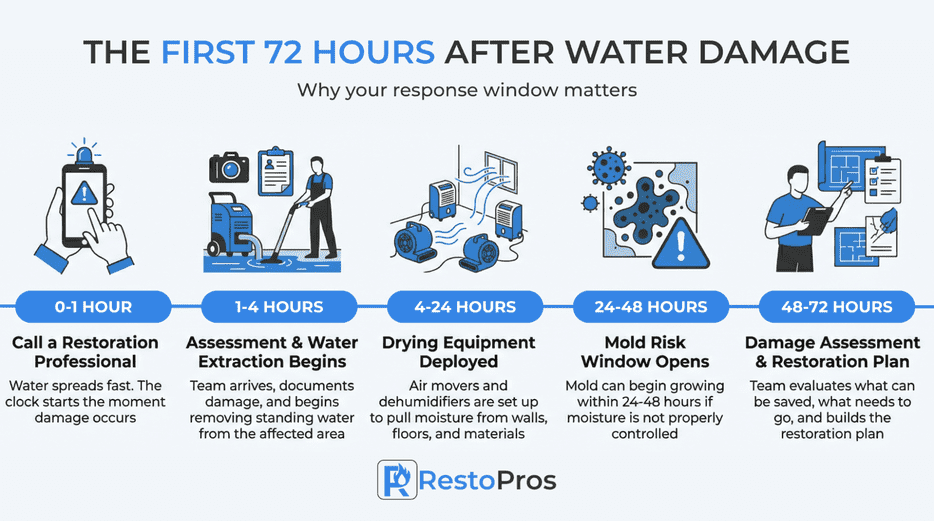
- Water left untreated can cause mold growth within 24 to 48 hours
- Structural materials that stay wet weaken faster, raising restoration costs
- Insurers may dispute claims if mitigation was not handled properly
- Without mitigation, the responsible party for restoration has a much larger scope to address
The mitigation process sets the foundation for every restoration action that follows. A solid restoration design starts with a clean, well-documented mitigation phase.
How a Restoration Professional Handles Both Phases
A certified restoration professional responds 24/7 because damage does not wait for business hours. From the first call, the team moves through both phases with a clear restoration plan.
The Restoration Process
Step 1: Rapid Assessment: A certified team arrives quickly to evaluate the full scope of damage to your property. They document everything, which becomes the backbone of your insurance company’s communication.
Step 2: Mitigation Services: Water is extracted from the affected area using professional-grade equipment. Unsalvageable materials are removed, and the property is secured against further damage.
Step 3: Restoration Design and Planning: Before restoration work begins, the team builds a restoration plan based on what was removed, what needs rebuilding, and what your insurance coverage allows.
Step 4: Restoration Project Execution: Restoration activities move forward room by room. Materials are matched as closely as possible to pre-loss conditions. Every step is documented.
Step 5: Final Walkthrough: Before the job is closed, the team confirms the property has been returned to baseline condition and that all restoration actions have been completed properly.
What About Insurance?
Your insurance company needs clear, detailed documentation from both phases. This is one area where working with a professional restoration service pays off.
A restoration professional works directly with your insurer, providing:
- Photos and reports from the mitigation process
- Itemized lists of damaged materials removed from the affected area
- Moisture readings and drying logs
- Scope of the restoration project before work begins
- Receipts and documentation of completed restoration work

A restoration company that handles both phases ensures your documentation stays consistent, which makes claims smoother.
Common Questions
Can different companies do mitigation and restoration?
Technically, yes, but it creates problems. Gaps in documentation, miscommunication about what was removed, and delays in starting restoration work can all hurt your claim and your timeline. Having one restoration service handle both phases keeps things consistent.
Does my insurance cover both?
Most homeowner policies cover sudden and accidental damage, which includes both mitigation services and restoration activities. What your policy covers depends on the cause of loss and your specific plan. A restoration professional can help you navigate this with your adjuster.
How long does the full process take?
Mitigation often wraps up within a few days. The restoration project timeline depends on how much needs to be rebuilt. Minor water damage restoration work may take a week. Major structural repairs can take several weeks. A restoration professional provides a timeline estimate once the scope is assessed.
Stop the Damage. Restore Your Property.
Mitigation stops things from getting worse. Restoration makes things right again. Both phases matter, and both require a professional team working from a documented plan.
When your property takes a hit from water, fire, mold, or storm damage, the steps you take in the first few hours shape everything that follows. RestoPros handles both mitigation and restoration under one roof, with certified technicians, 24/7 availability, and direct insurance coordination.
If your property has been damaged, do not wait to get help. Contact RestoPros today to start your recovery. You can also learn more about our water damage services, storm damage response, mold remediation, and rebuild services.