Blog
Restoration Equipment Glossary: Air Movers, Dehumidifiers, HEPA Filters, and More
At a Glance: Restoration equipment refers to the professional machines used to dry, clean, and monitor a property after water damage, fire, or mold. The main categories are air movers, dehumidifiers, HEPA air scrubbers, moisture meters, and water extraction units, and each one plays a specific role in returning your home to a safe condition.
When a flood, burst pipe, or natural disaster hits your home, the cleanup crew that shows up brings a truckload of unfamiliar machines. Knowing what each piece of equipment does helps you understand what is happening in your home, why the process takes as long as it does, and why professional-grade equipment gets results that rented units cannot match.
Drying Equipment
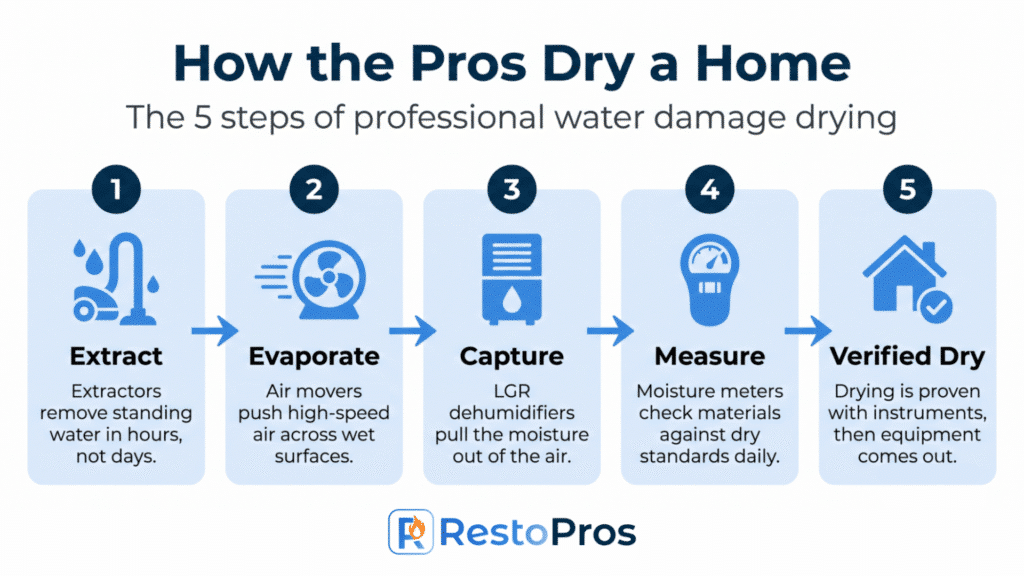
Drying is the heart of water restoration work. These machines remove excess moisture before it causes structural damage or mold growth, which can begin within 24 to 48 hours.
Air Mover
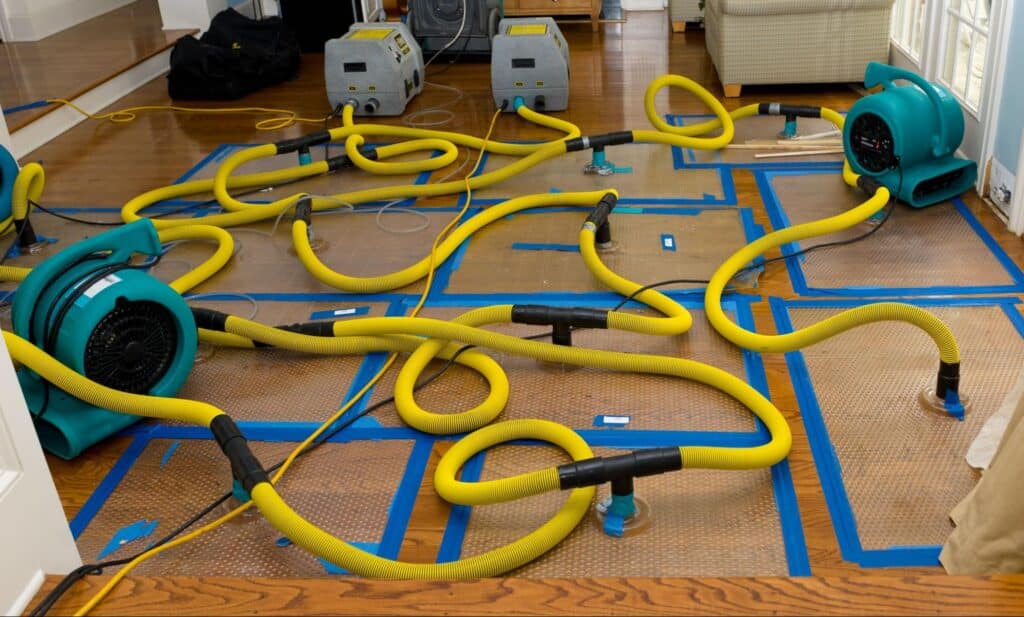
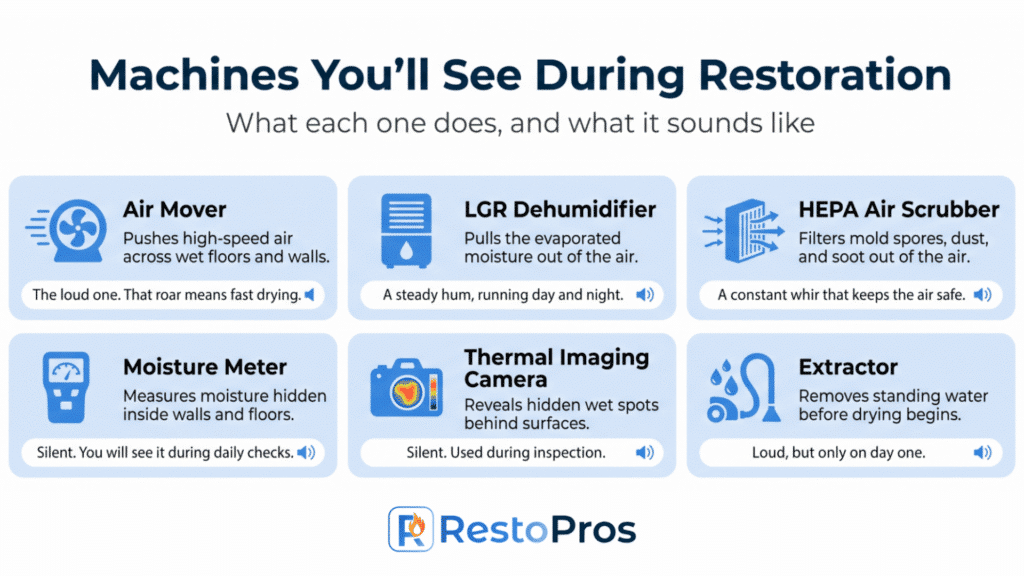
An air mover is a high-velocity fan that pushes air directly across wet floors, walls, and furniture. The fast airflow speeds up evaporation, pulling moisture out of surfaces and into the air where dehumidifiers can capture it. A single room may need several air movers running at once.
There are two main types:
- Axial air mover. Shaped like a large fan in a drum, it moves a high volume of air at lower pressure. Restoration professionals use axial units to dry large open areas, carpets, and walls.
- Centrifugal fan. A compact, snail-shaped unit that produces focused, high-pressure airflow. Its low profile directs air under cabinets, into corners, and along stairs where an axial unit cannot reach.
Dehumidifier
Air movers push moisture into the air, and dehumidifiers pull it back out. Without them, evaporated water would simply settle back into walls and floors.
- LGR dehumidifier. LGR stands for low-grain refrigerant. A grain is a unit for measuring moisture in the air, and LGR units can keep pulling water out of the air even after standard machines stop being effective. They are the workhorse of the restoration industry.
- Desiccant dehumidifier. Instead of refrigeration, these use a moisture-absorbing material. They perform well in cold conditions and help dry dense materials like hardwood and plaster.
Wall Cavity Drying System
This system uses hoses and vents to push warm, dry air inside wall cavities, under cabinets, and beneath hardwood floors. It gives technicians access to trapped moisture without tearing out materials that can be saved.
Air Quality Equipment
Water damage, sewage, fire, and mold all release particles and odors into the air. This equipment keeps the air safe during restoration work.
HEPA Air Scrubber
A HEPA air scrubber pulls room air through a series of filters, including a HEPA filter that captures 99.97 percent of particles as small as 0.3 microns. That includes mold spores, dust, and soot. Air scrubbers run continuously during mold remediation, sewage cleanup, and fire and smoke damage restoration.
Negative Air Machine
A negative air machine is an air scrubber connected to ducting that exhausts filtered air outside the work area. This creates negative pressure inside a sealed containment zone, so contaminated air gets pulled in and filtered rather than drifting into the rest of the house. It is standard practice on mold and sewage restoration projects.
HEPA Vacuum
Regular vacuums blow fine particles back into the room. A HEPA vacuum traps them, which is why restoration contractors use them to remove settled mold spores, soot, and debris from surfaces before cleaning.
Detection and Monitoring Equipment
You cannot dry what you cannot find. These tools locate hidden moisture and prove the structure is dry before equipment comes out of your home.
Moisture Meter
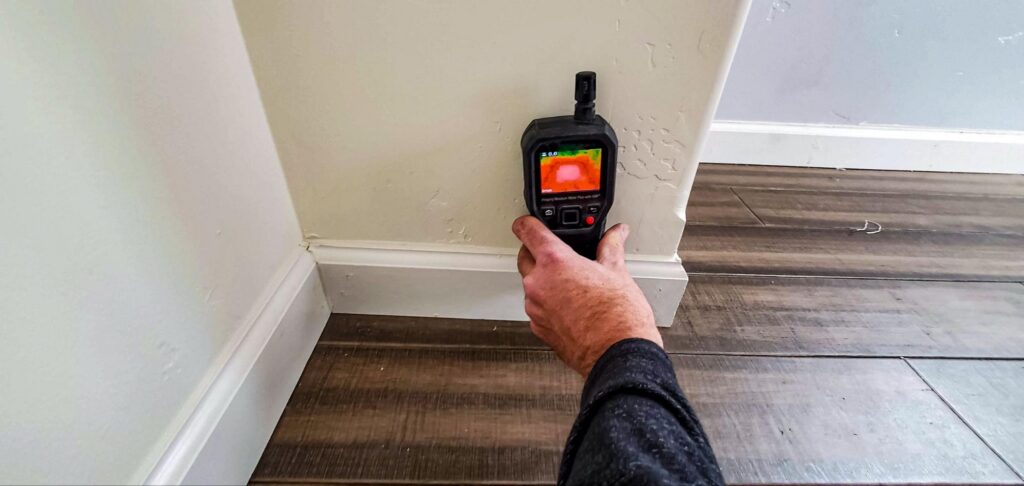
A moisture meter measures how much water is inside a material rather than only on its surface. Pin-type meters use small probes pushed into drywall or wood, while pinless meters scan surfaces without leaving marks. Technicians take readings throughout the drying process and compare them against dry standards for each material.
Thermal Imaging Camera
This camera shows temperature differences across walls, ceilings, and floors. Because damp materials are usually cooler, the camera reveals hidden water damage behind surfaces without opening them up. It points technicians to the spots where a moisture meter should confirm the reading.
Thermo-Hygrometer
This handheld tool measures air temperature and relative humidity. Readings taken inside and outside the affected area tell technicians whether the drying setup is working or needs adjustment.
Equipment Tracking and Remote Monitoring
Many restoration companies now use sensors and equipment tracking systems that log temperature, humidity, and moisture readings automatically. This produces a day-by-day drying record, which supports your insurance claim and confirms the job site reached its drying goals.
Water Removal and Heavy Equipment
Before drying starts, standing water has to go. Water extraction removes hundreds of gallons far faster than evaporation ever could.
Extractor
Extractors vacuum standing water out of carpets, pads, and hard floors.
- Truck-mounted extractors are the most powerful option, running off the vehicle outside your home.
- Portable extractors handle upper floors, basements, and rooms a hose cannot reach.
- Weighted extraction tools press water out of carpet and padding as they move across the floor.
Ride-On Floor Scraper
On large restoration projects, like a flooded commercial building or a construction site loss, a ride-on floor scraper strips out water-damaged flooring quickly so drying and rebuilding can start. It is a machine you will see more often in commercial restoration work than in homes.
Why Professional Grade Equipment Matters
A rented dehumidifier and a box fan cannot recreate what commercial water restoration equipment does. Here is the difference:
- Drying power. One LGR dehumidifier removes many times more water per day than a consumer unit, and pros run several at once, sized to the room using IICRC S500 calculations.
- Placement science. The right equipment in the wrong spot dries nothing. Restoration professionals position machines based on measured moisture, airflow patterns, and daily readings.
- Verification. High-performance drying is proven with instruments. Consumer restoration products offer no way to confirm a wall cavity or subfloor is actually dry, and moisture left behind leads to mold and rot.
- Documentation. Insurance carriers expect moisture logs and equipment records. A restoration business produces that paperwork as part of the job.
Quality equipment matters, but trained hands matter more. The machines only work when someone knows where the water went.
Get the Right Equipment Working in Your Home
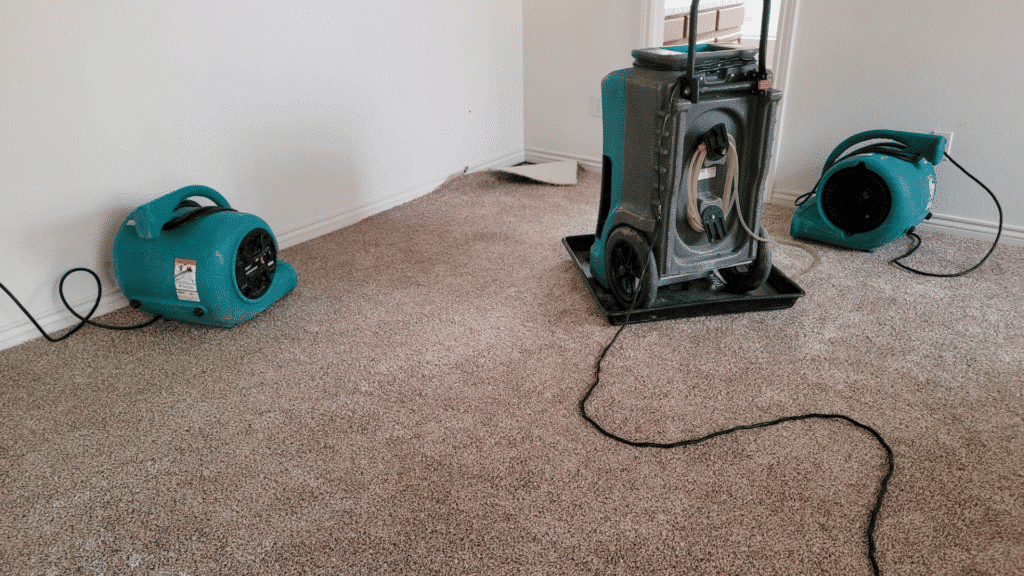
Restoration equipment breaks down into four jobs: removing water, drying materials, cleaning the air, and proving the structure is dry. Air movers and LGR dehumidifiers handle drying, HEPA air scrubbers and negative air machines protect air quality, and moisture meters confirm the work is done. Knowing these terms helps you follow what is happening in your home instead of guessing.
RestoPros brings professional-grade water damage restoration equipment and IICRC-certified technicians to every loss, along with mold remediation, storm damage cleanup, and full rebuild services. We monitor and document every step for your insurance claim. Every minute counts after water damage, so contact RestoPros now for 24/7 emergency restoration service in your area.