Blog
Can Hardwood Floors Be Saved After Water Damage?
The Short Answer: Yes, a water-damaged hardwood floor can often be saved when a professional restoration team responds quickly with proper drying and moisture monitoring equipment. RestoPros uses commercial-grade dehumidifiers, air movers, and precise moisture readings to pull hidden moisture from wood flooring before permanent damage sets in.
Water damage to a hardwood floor feels like a worst case scenario for any homeowner, property manager, or business owner. A burst pipe or a slow leak can leave hardwood planks swollen, cupped, or stained within hours. The good news is that quick action and professional help often save the original flooring.
Hardwood is organic material, and once water soaks into the wood, moisture starts changing the shape of each board. With fast action, professionals can pull that moisture out before the damage becomes permanent. Our teams combine certified training, industrial equipment, and detailed moisture readings so your wood floor has the best chance of being restored rather than replaced.
What Happens to a Hardwood Floor After Water Damage
Wood absorbs water quickly. Within hours of water exposure, hardwood flooring begins to react in several ways.
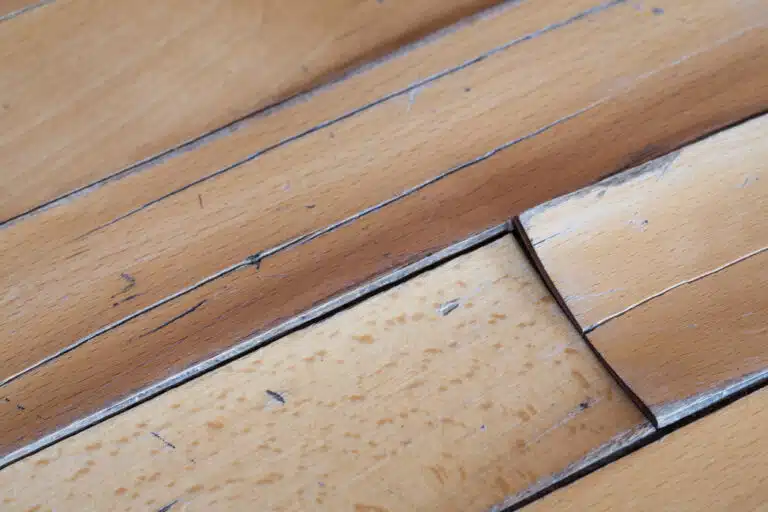
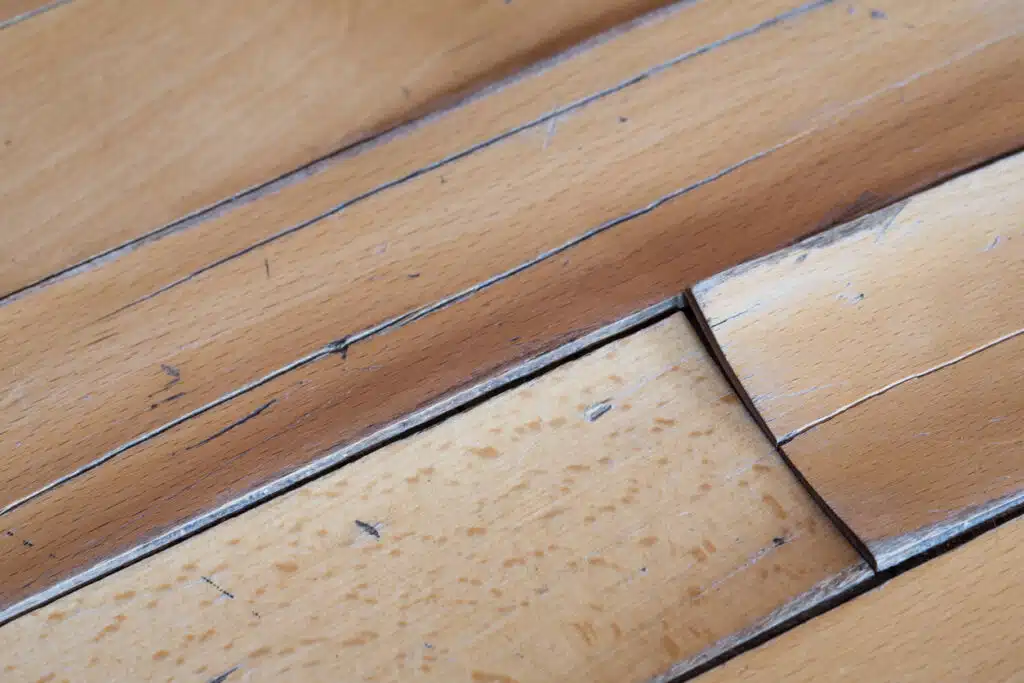
- Boards swell and press against each other, which causes cupping (edges rise higher than the center) or crowning (center rises higher than the edges)
- Finish layers may bubble or discolor
- Hidden moisture under the floor can push mold growth into the subfloor and framing within 24 to 48 hours
The amount of water, the length of exposure, and the type of hardwood all affect the outcome. Solid hardwood sometimes survives moderate soaking because sanding and refinishing can restore the surface. Engineered wood and laminate flooring are usually less forgiving because their layered construction separates once moisture breaks the glue bonds.
Visible damage is only part of the story. Hidden moisture under the planks and in surrounding areas often causes the real problem. Without proper drying, structural damage can spread into joists and subflooring.
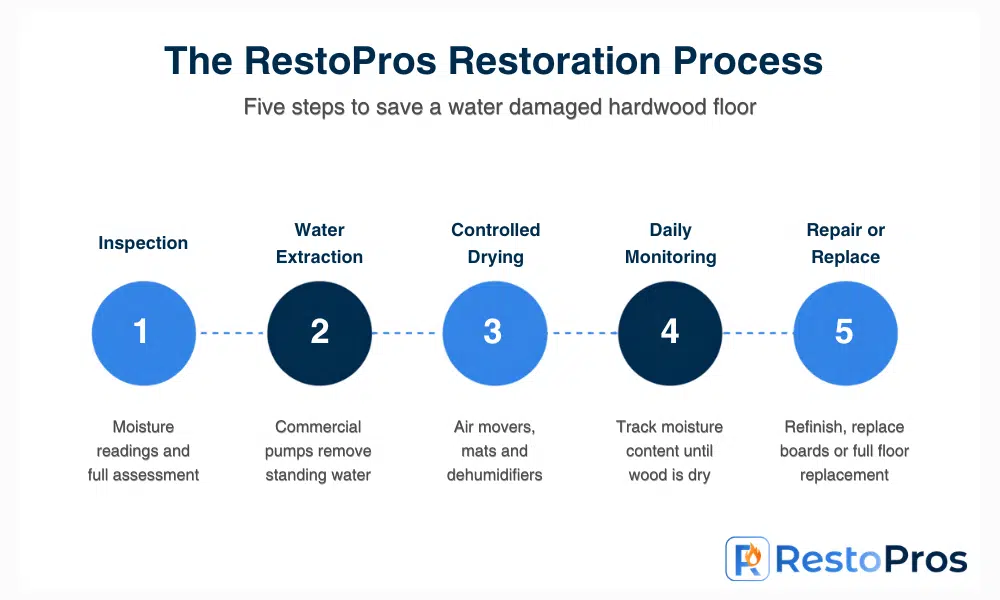
How RestoPros Restores a Water-Damaged Hardwood Floor
Our restoration process follows IICRC standards for water damage work. The goal is to remove water, dry the wood, and return the floor to pre-loss condition. Here is how each stage works:
Step 1: Inspection and Moisture Readings
A certified technician arrives on site and starts with a full assessment, using a professional moisture meter to check moisture content in the hardwood, subfloor, baseboards, and surrounding areas. These moisture readings tell us how far the water traveled and which boards are most saturated. We photograph the affected area for your insurance company and build a scope of work that lists which materials can be dried in place and which need removal.
Step 2: Water Extraction
Standing water comes up first. We use truck-mounted or portable extraction units pulled across the entire floor to remove excess moisture before drying starts. Pulling out as much water as possible in the first few hours shortens the overall drying process and lowers the risk of permanent damage.
Step 3: Controlled Drying
Hardwood floor drying moves slower than carpet drying because wood releases moisture gradually. Our technicians place industrial air movers, dehumidifiers, and specialty hardwood drying mats across the affected area to lift hidden moisture from under the boards. The mats create negative pressure that draws water up through the wood flooring instead of leaving it trapped below. We also control indoor humidity and relative humidity in the room so the floor dries evenly without new cupping or splitting.
Step 4: Daily Monitoring
Drying is not a one visit job. Our team returns daily to take new moisture readings on the hardwood, subfloor, and surrounding materials. The drying process continues until moisture content in the wood matches the normal range for your region, usually 6 to 9 percent. These daily logs also give the insurance company clear documentation of progress.
Step 5: Hardwood Floor Repair or Full Replacement
Once the floor is dry, we review the condition of each board. If the planks held their shape and the finish is intact, hardwood floor repair may be limited to sanding and refinishing. If certain affected boards are warped or split beyond repair, we remove and replace them while matching the existing flooring. In cases of heavy structural damage or long moisture exposure, full replacement of the entire floor may be the only safe choice. We walk you through the options and the cost before any work begins.
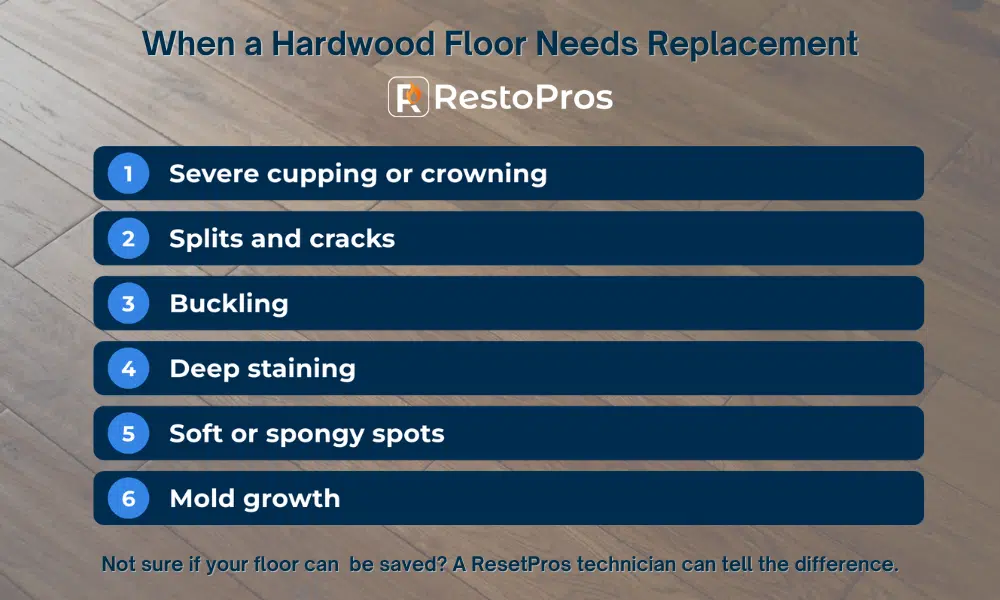
Signs a Water-Damaged Hardwood Floor Needs Full Replacement
Not every floor can be saved. Boards that sat underwater for days or faced repeated moisture damage often reach a point of no return. Common signs that point toward full replacement include:
- Severe cupping or crowning that does not flatten after drying
- Splits, cracks or splintering across multiple affected boards
- Buckling where boards lift off the subfloor
- Dark staining that penetrates deep into the damaged wood
- Soft or spongy spots that suggest subfloor damage
- Mold growth under the surface finish
Our technicians use a moisture meter and a visual inspection to tell the difference between minor damage that can be dried and permanent damage that calls for replacement.
Why Fast Response Matters for Water-Damaged Hardwood
Time is the single biggest factor in saving a water-damaged hardwood floor. Within the first 24 to 48 hours after water exposure, mold growth can begin in surrounding materials. After 72 hours, the wood often reaches a moisture imbalance that causes warping, cupping and permanent cell damage. Quick action protects:
- The original hardwood flooring and finish
- The subfloor and framing below
- Nearby drywall, baseboards and insulation
- Indoor air quality in the affected area
Documented moisture readings and a quick restoration timeline give adjusters clear evidence that you acted responsibly, which often strengthens your claim.
Trust RestoPros to Save Your Hardwood Floor After Water Damage
Water damage on a hardwood floor is stressful, but it is often fixable when the right team gets involved quickly. The difference between saving your original flooring and replacing the entire floor usually comes down to how fast the drying process starts and how carefully moisture content is tracked over the following days. RestoPros brings certified technicians, commercial drying equipment, and detailed moisture monitoring to every job, so your wood floor has the best possible chance of recovery.
If you are dealing with a burst pipe, an appliance leak, or storm water damaging your hardwood flooring, do not wait for it to spread. Our water damage restoration teams are available 24/7 and will begin the repair process the same day. Contact us today or find your closest location to schedule emergency hardwood floor drying and get your home back to normal.
Frequently Asked Questions
Pricing depends on the size of the affected area, the amount of water involved and the type of hardwood. Smaller jobs may run a few hundred dollars, while whole-room drying with board replacement can reach several thousand. RestoPros gives a written estimate before work begins and bills your insurance company directly when coverage applies.
Most jobs take 3 to 5 days of active drying, though heavier moisture damage can run longer. Our technicians monitor the drying process daily until moisture readings in the wood match normal levels for the surrounding materials.
If drying stops too early or indoor humidity is too high, wood flooring can shift again. That is one reason RestoPros tracks relative humidity in the repaired area for several days after the final reading. Proper climate control reduces the chance of future moisture imbalance.
No. Laminate flooring and engineered wood are built in layers, and the glue bonds break down once water gets in. These products often need full replacement after water exposure, while solid hardwood can often be dried and refinished successfully.
Our dispatch team collects the basics about the water source, the size of the affected area and the type of flooring involved. A certified crew is then sent to your property with the equipment needed to begin extraction and the drying process. Our teams are available 24/7 for emergencies.