Blog
Carpet Water Damage: Can Your Carpet Be Restored?
The Short Answer: Carpet water damage can often be reversed when the water is clean and professional drying starts within 24 to 48 hours. If the water is contaminated, the carpet padding is soaked, or the carpet stays wet for more than two days, replacement is usually the safer choice.
Wet carpet holds far more water than most homeowners expect. A single flooded room can trap dozens of gallons in the fibers and padding, and every hour it sits, the risk of mold growth and permanent damage grows. Quick action makes the difference between saving your carpet and tearing it out. Understanding how water ruins carpet, which water sources matter most, and what the professional drying process looks like can help you act quickly when it happens.
How Water Ruins Carpet
Carpet is built in layers, and water attacks every one of them:
● Carpet fibers soak up water along with dirt, bacteria, and odors
● Backing and adhesives delaminate, causing ripples, wrinkles, and seam separation
● Carpet padding acts like a sponge and holds water against the subfloor
Padding is the real problem. It sits trapped under the flooring with no airflow, creating a perfect breeding ground for mold and bacteria. According to the EPA, mold can begin growing within 24 to 48 hours of water exposure. Once that happens, drying alone is no longer enough, and mold remediation may be needed.
Left alone, excess moisture also wicks into baseboards, drywall, and wood subfloors, turning water-damaged carpet into structural damage to your home that costs far more to repair.
Water Categories
Restoration professionals classify water into three categories under IICRC standards:
| Category | Common Sources | Can the Carpet Be Saved? |
| Category 1: Clean water | Burst pipe, supply line water leak, rainwater | Usually, with fast extraction and drying |
| Category 2: Grey water | Washing machine or dishwasher overflow | Sometimes; wet padding is replaced |
| Category 3: Black water | Sewage backup, flood damage, natural disaster | No; carpet and padding are removed for safety |
Clean water gives you the best odds. A broken pipe upstairs may soak a whole room, but the water itself is sanitary. Clean water left standing for more than 48 hours picks up contamination, and it gets treated as Category 2 or worse.
Why a Wet-Dry Vacuum Cannot Fix It
A household wet-dry vacuum only removes surface water. It cannot pull water out of the padding or the subfloor, and a standard dry vacuum should never touch wet carpet at all because of shock risk. A rental carpet cleaner makes things worse by adding moisture instead of removing it. This job is deeper than regular carpet care.
Getting everything truly dry takes the right tools:
● Truck-mounted and weighted extractors that press excess water out of the padding
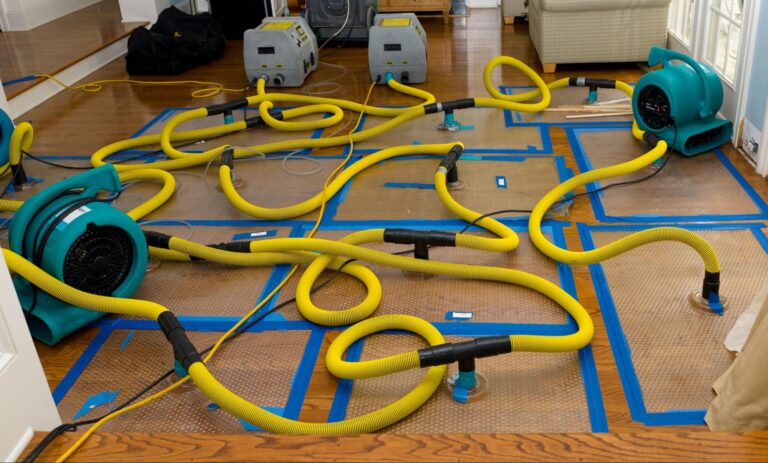
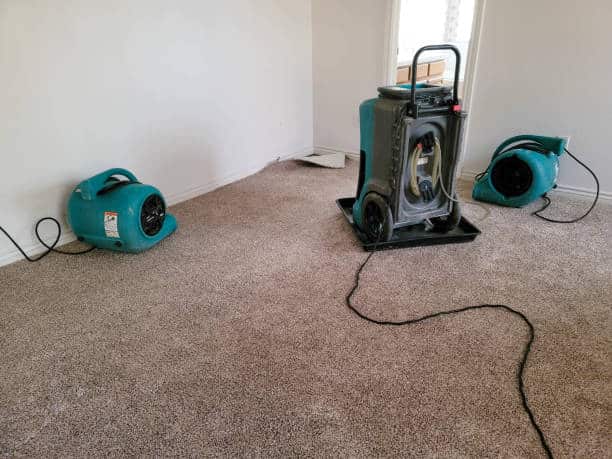
● Air movers positioned to push airflow across and underneath the carpet
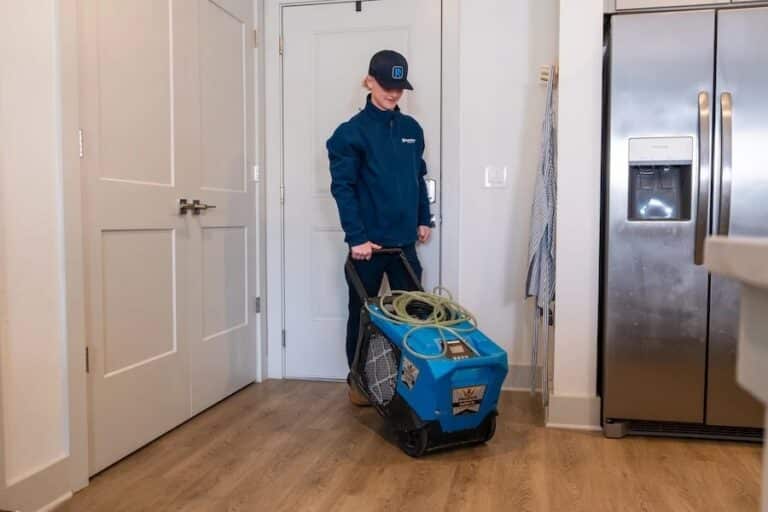
● Commercial dehumidifiers that pull water vapor out of the room
● Moisture meters that confirm the fibers, padding, and subfloor are actually dry
One fan in the corner will not do it. Under the IICRC S500 standard, technicians typically place one air mover for every 10 to 16 linear feet of wall, so a bedroom of only 150 square feet may need several air movers running alongside a dehumidifier for days.
The Professional Restoration Process
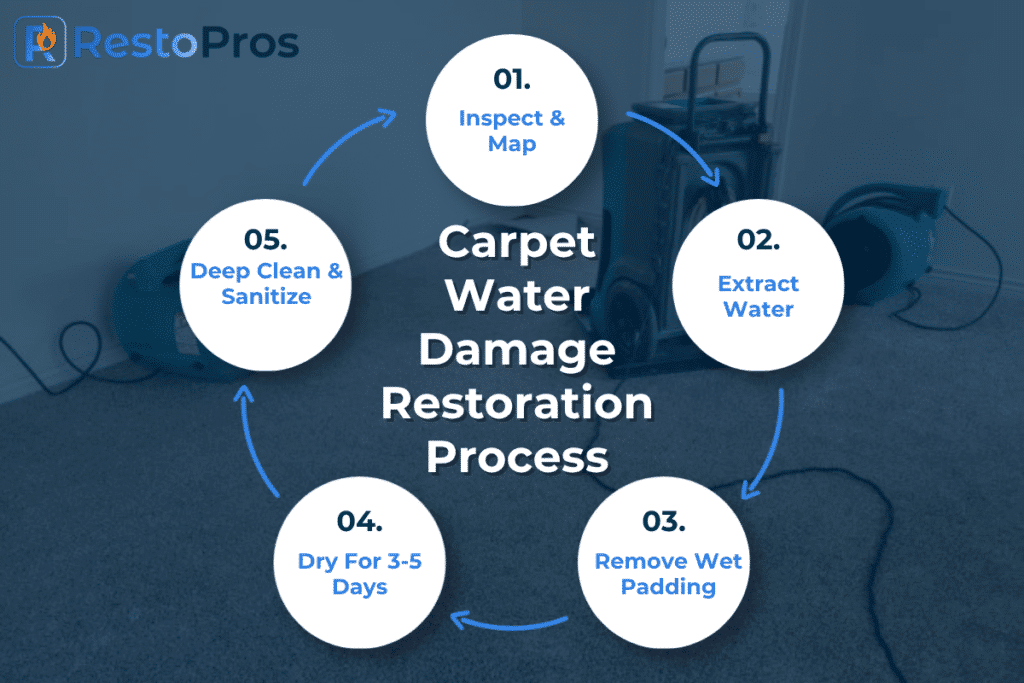
Our technicians hold restoration certification through the IICRC and follow its S500 standard for water damage restoration. Here is what happens when you call RestoPros:
1. Inspection and Water Mapping
Technicians identify the water category, measure the affected area, and use meters and infrared cameras to trace how far water traveled beneath the surface.
2. Water Extraction
Powerful extractors remove standing water before it can soak deeper. Every gallon extracted is a gallon that never has to evaporate, which shortens the drying process by days.
3. Padding Removal When Needed
Wet padding usually comes out. Padding is inexpensive to replace compared to the cost and risk of trying to dry it, and removing it eliminates the biggest mold hazard under your feet.
4. Structural Drying
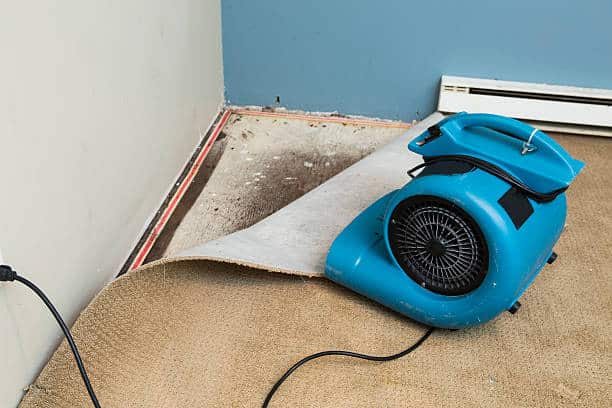
Air movers and dehumidifiers run around the clock, often for three to five days. Technicians may float the carpet, lifting one edge so an air mover can blow directly underneath it. Daily moisture readings track progress until everything reaches its dry standard.
5. Deep Cleaning and Sanitizing
Once dry, the carpet gets deep cleaning with hot water extraction and antimicrobial treatment. This goes beyond routine carpet cleaning. A retail carpet cleaner or rug cleaning service refreshes the surface, while professional carpet restoration sanitizes material that was soaked through.
Save It or Replace It?
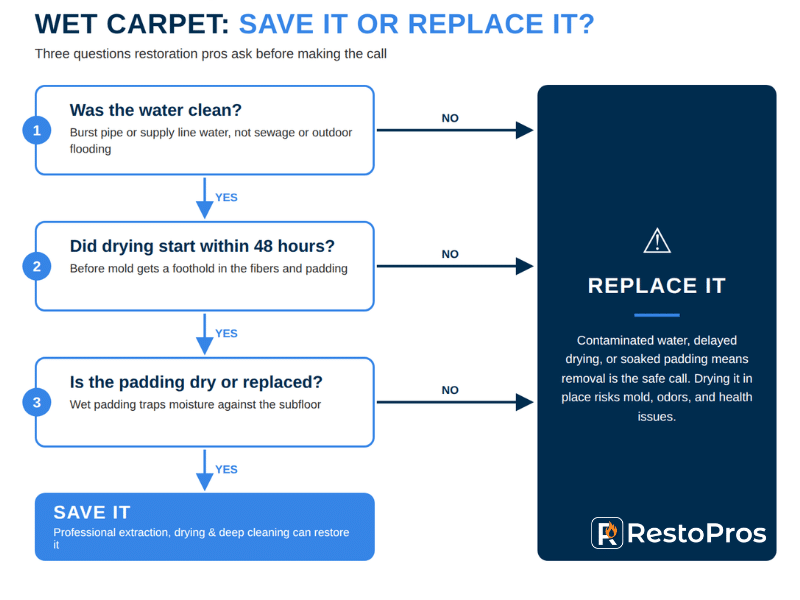
Water-damaged carpet can usually be saved when:
● The water was Category 1 clean water
● Drying started within 24 to 48 hours
● The padding was replaced or confirmed dry
It should be replaced when:
● The water was Category 3, including sewage or outdoor flooding
● The carpet stayed wet for more than 48 hours
● Mold or a musty odor is present
● Significant water damage caused delamination or seam failure
Guessing wrong about water damage is an expensive mistake. Reinstalling carpet over a damp subfloor leads to permanent damage, odors, and health concerns down the road, so professionals verify with meters before making the call. Acting fast also prevents more serious damage to the floor structure underneath.
What Homeowners Insurance Covers
Most homeowner’s insurance policies cover sudden and accidental carpet water damage, such as a burst pipe or an appliance failure. Policies generally exclude gradual leaks, neglected maintenance, and flood damage from rising water.
To protect your claim:
● Report the water damage emergency to your insurance company right away
● Photograph the wet carpet and every affected room before anything is moved
● Save receipts and keep a list of damaged belongings
The RestoPros team documents moisture readings and drying logs, then handles reporting to your insurance company. Since every homeowner’s insurance policy reads differently, that documentation often decides how much of the loss gets covered.
Every Hour Counts
Carpet water damage gets worse by the hour. Clean water and quick action usually mean your carpet can be saved, while contaminated water and soaked padding call for removal. Either way, the water damage hiding in the padding and subfloor is what turns a wet room into a long-term problem.
RestoPros answers calls 24/7 with emergency service for soaked carpet, flooded rooms, and everything water leaves behind. Our IICRC-certified technicians extract the water, set air movers and dehumidifiers the same day, and handle the documentation your insurance company asks for. Our restoration services cover water damage restoration, mold remediation, storm damage, and full rebuilds, so one team sees the job through. Do not wait on wet carpet. Contact RestoPros now, and we will be there every step of the way.
Frequently Asked Questions
With professional equipment, most carpet dries in three to five days. Without extraction and forced airflow, carpet and padding can stay damp for weeks, which is far past the window where mold becomes a problem. Humidity, padding thickness, and how much water soaked in all affect the timeline, so technicians rely on daily moisture readings rather than guesswork to decide when drying is complete.
Yes, especially once it has been damp for more than a day or two. Wet carpet traps bacteria and gives mold spores an ideal place to multiply, and those spores circulate through the air your family breathes. Symptoms like congestion, coughing, itchy eyes, and worsening asthma are common in homes with damp flooring. Contaminated water sources add pathogens on top of the mold risk, which is why Category 3 losses always call for removal.
Not right away, and that silence can be misleading. Fresh clean water has little odor, so a carpet can be soaked for a day or more before the familiar musty smell develops. Once that odor appears, it means bacteria and mold are already active in the fibers or padding. A carpet that smells fine today but got wet yesterday still needs proper drying, not just time to air out.
In most Category 1 losses that are dried quickly, yes. Fibers, color, and texture generally survive clean water exposure without lasting change, and hot water extraction afterward often leaves the carpet cleaner than before the loss. Visible changes like rippling, browning along seams, or a wrinkled appearance usually mean the backing was compromised, and those carpets are candidates for replacement rather than repair.
Generally no. Carpet is heavy when saturated, stretches out of shape when pulled incorrectly, and hides tack strips with sharp nails along every wall. Ripping it up can also void the chance of saving it. The most useful steps before technicians arrive are stopping the water source, moving furniture off the wet area, and keeping foot traffic away so water is not pressed deeper into the padding.