Blog
Restoration Contractor vs General Contractor: What Is the Difference?
The Short Answer: A restoration contractor responds to emergencies like water damage, fire, and storms, then handles cleanup, drying, and repairs while working directly with your insurance company. A general contractor manages planned construction projects like remodels and additions on a scheduled timeline, with no emergency response and little insurance claim experience.
Most homeowners only learn the difference the first time something goes wrong. A water main break floods the basement, and suddenly you need help fast, plus someone who can document everything for an insurance claim. Calling the wrong type of contractor at that moment costs you time, money, and coverage. This guide breaks down what each contractor actually does, how they handle insurance, and why a full-service contractor that covers both mitigation and rebuild is usually the smartest call after property damage.
What a Restoration Contractor Does
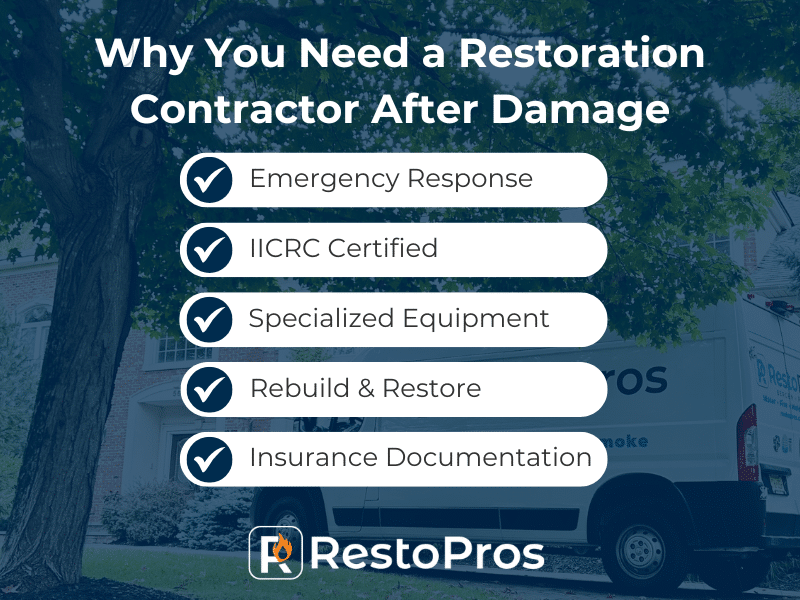
A restoration contractor specializes in returning a home or business to its pre-loss condition after sudden damage. That covers water, fire, smoke, storm, and mold events. The best restoration company operates as a one-stop shop for restoration services, handling everything on one contract:
- 24/7 emergency response, including nights, weekends, and holidays
- Water extraction, structural drying, and dehumidification
- Smoke and soot cleanup after a fire
- Mold remediation when growth is found
- Demolition of unsalvageable materials
- Full rebuild services to finish the job
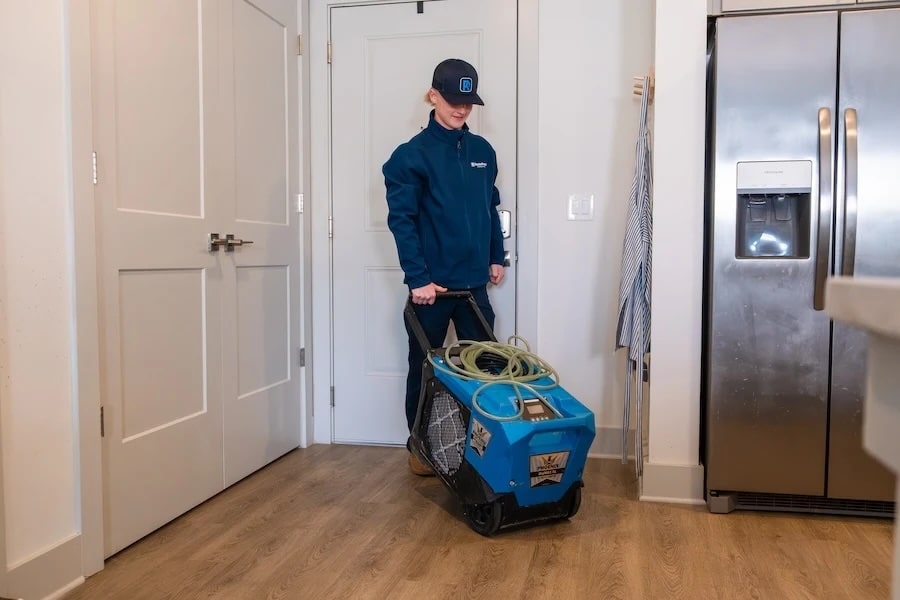
Technicians in the restoration industry carry certifications through the IICRC, the body that sets standards for water, fire, and mold work. They also bring specialized equipment that a typical builder does not own, such as truck-mounted extractors, air movers, commercial dehumidifiers, and moisture meters.
Just as important, water restoration contractors deal with insurance claims every day. They photograph the loss, log moisture readings, and hand your insurance company the documentation it needs.
What a General Contractor Does
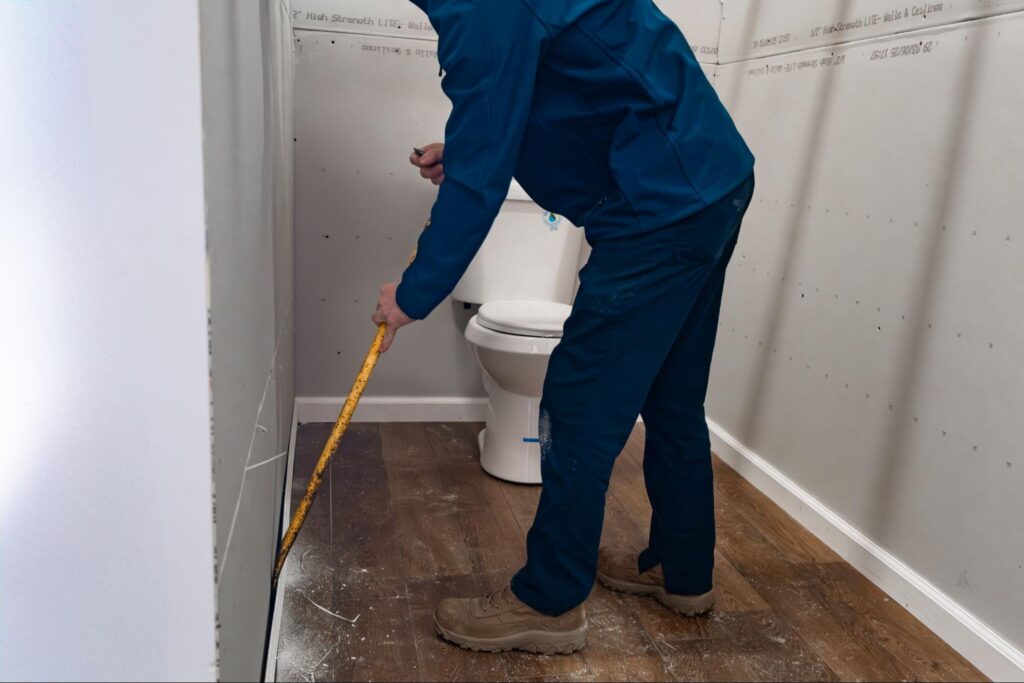
A general contractor manages planned construction projects. Think kitchen remodels, additions, new builds, and scheduled roof repair. Their strength is project management: hiring subcontractors, pulling permits, ordering materials, and keeping a job site on schedule.
What they typically do not offer:
- Emergency response at 2 a.m. when a main break floods your home
- Drying, mitigation, or contamination cleanup
- Insurance claim documentation like moisture logs and drying reports
- IICRC-certified restoration work
That makes them the right hire when you choose the timeline. When the damage chooses the timeline for you, you need a different kind of help.
Side-by-Side Comparison
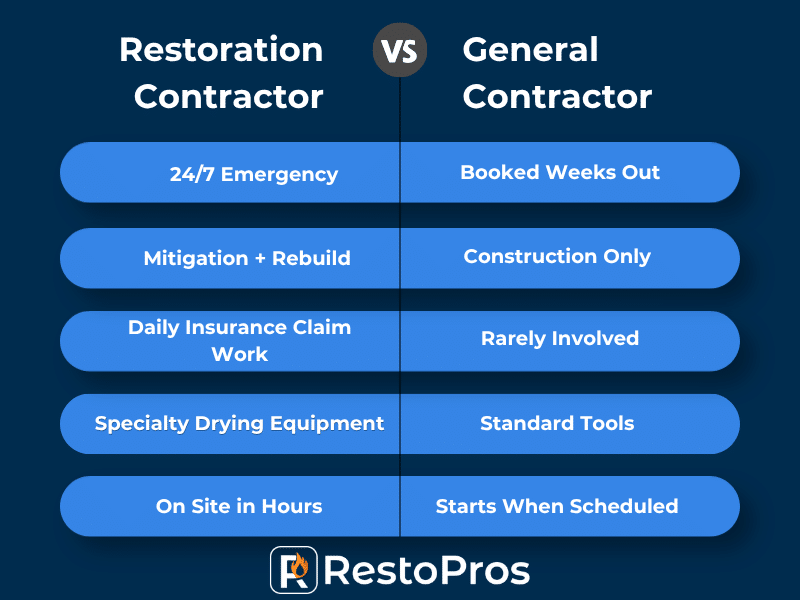
| Restoration Contractor | General Contractor | |
| Availability | 24/7 emergency response | Business hours, booked weeks out |
| Project type | Emergency project | Non-emergency project |
| Scope | Mitigation, cleanup, and rebuild | Construction and remodeling |
| Equipment | Extractors, air movers, dehumidifiers | Standard building tools |
| Insurance | Works with your insurance claim daily | Rarely involved in claims |
| Speed | On site within hours | Starts when scheduled |
Why the Difference Matters After a Loss
Emergencies Run on a Different Clock
An emergency project cannot wait for a bid process. After a main break or a burst supply line, mold can begin growing within 24 to 48 hours, according to the EPA. A restoration company answers the phone at any hour, gets a team member to your door fast, and starts drying before the damage spreads into framing and flooring.
A non-emergency project works the opposite way. You gather bids, compare options, and start when ready. That timeline fits a remodel, but it fails during a flood.
Insurance Claims Are Half the Battle
For many property owners, the insurance claim is more stressful than the damage itself. Restoration companies document everything your insurance company requires: photos, moisture maps, drying logs, and itemized estimates written in the format adjusters expect.
A few things worth knowing:
- You have the legal right to choose your own contractor. Your insurance company can recommend vendors but cannot force one on you.
- Never sign over your insurance check before work is scheduled and a written contract is in place.
- If a large claim gets disputed, a licensed public adjuster can be a valuable resource. A public adjuster represents you, the policyholder, in negotiations.
- Restoration companies document and estimate, but they cannot offer legal advice. For a denied claim, talk to a public adjuster or an attorney.
Insured losses are common. According to the Insurance Information Institute, water damage and freezing account for roughly one in four homeowner’s insurance claims in the United States.
One Team From Start to Finish
Hiring separately for cleanup and reconstruction means two contracts, two schedules, and two companies blaming each other when something slips. A full-service contractor removes that gap. The same restoration company that dries the structure also rebuilds it, so nothing gets lost in the handoff.
That one-stop shop model matters most after a natural disaster, when every builder in town is booked for months, and homeowners wait in line. A full-service contractor with an established emergency division moves straight through the restoration process without rebidding the reconstruction.
How to Choose the Right Contractor
Before you sign a restoration contract, ask these questions:
- Are you IICRC certified? — Certification confirms training in current restoration industry standards.
- How many years of experience do you have with insurance work? — An experienced team knows what adjusters need.
- Who manages my job site? — You want one point of contact and updates by phone or text message instead of silence.
- Can I see examples of your quality of work? — References and reviews reveal how past restoration projects finished.
- What does the contract cover? — The contract should spell out scope, timeline, payment terms, and how insurance billing works.
Also confirm licensing. Requirements vary by state, so verify the restoration entity you hire is licensed and insured where you live. Your state contractor licensing board is the fastest place to check.
The Right Call When Damage Strikes
A general contractor works on your schedule. A restoration contractor shows up when the schedule explodes and dries the structure, manages the insurance claim, and puts your home back together. For emergencies, the full-service contractor model is better suited because one team owns the entire restoration process.
RestoPros is that team. We answer 24/7, reach homeowners and commercial property managers within hours, and handle mitigation and rebuild under one roof, including water damage cleanup, fire and smoke restoration, mold remediation, and storm recovery. Our experts document every step for your insurance company, so you get answers instead of paperwork and the peace of mind that comes with it. Contact RestoPros now, and we will be there every step of the way.
Frequently Asked Questions
Yes, for the rebuild phase only. Most lack the certifications, drying gear, and insurance documentation experience that emergency losses demand. Hiring one for cleanup usually slows the claim and risks trapped moisture.
Usually not. A full-service restoration company handles mitigation and reconstruction under one contract, so there is no handoff between companies. You would only add a home repair contractor for upgrades outside the claim, like a remodel you bundle into the project.
No. Insurers keep preferred vendor lists, but the choice is yours in every state. Pick the restoration company you trust, then let them coordinate directly with your adjuster.
Scope of work, timeline, payment schedule, change order rules, and how the company bills your insurance. It should never require you to sign over the full insurance check before work begins.
Within hours, any day of the year, even when a natural disaster spikes demand. Water spreads by the minute, and mold follows within one to two days, so a restoration company with true 24/7 emergency response protects you from secondary problems that slower crews miss.