Blog
Filing an Insurance Claim for Water Damage: Photo and Video Best Practices

The Short Answer: Filing an insurance claim for water damage starts with reporting the loss to your insurance company right away and documenting the damage with clear photos and video before any cleanup begins. Strong visual proof gives your insurance adjuster what they need to approve fair coverage on your water damage claim.
A burst pipe, a failed water heater, or severe weather can leave you with standing water and thousands of dollars in property damage. Water damage and freezing ranks as the second most common homeowners insurance claim in the United States, according to the Insurance Information Institute. The gap between a full payout and a denied one often comes down to how well the damage was documented.
This guide covers the photo and video standards insurance companies look for, how flood insurance differs from a standard homeowners policy, and what to expect at each step of the claim process.
Why Photos and Video Decide Your Water Damage Claim
An insurance adjuster rarely sees your home in person until days after the loss. By then, water may have dried and damaged materials may have been pulled out, so the scene looks nothing like the moment the damage happened. The photos and video captured early become the record your insurance company relies on.
Good documentation carries a lot of weight in a homeowners insurance claim. It proves the damage existed and shows how far it spread. It captures the cause, which is what separates covered accidental water damage from an excluded gradual leak. And it records your personal belongings before anything gets thrown out, which supports the repair estimate your insurance provider uses to set your payment.
The clock works against you here. Mold can begin growing on wet materials within 24 to 48 hours, which is why documentation and drying need to happen quickly.
What Insurance Companies Expect You to Document
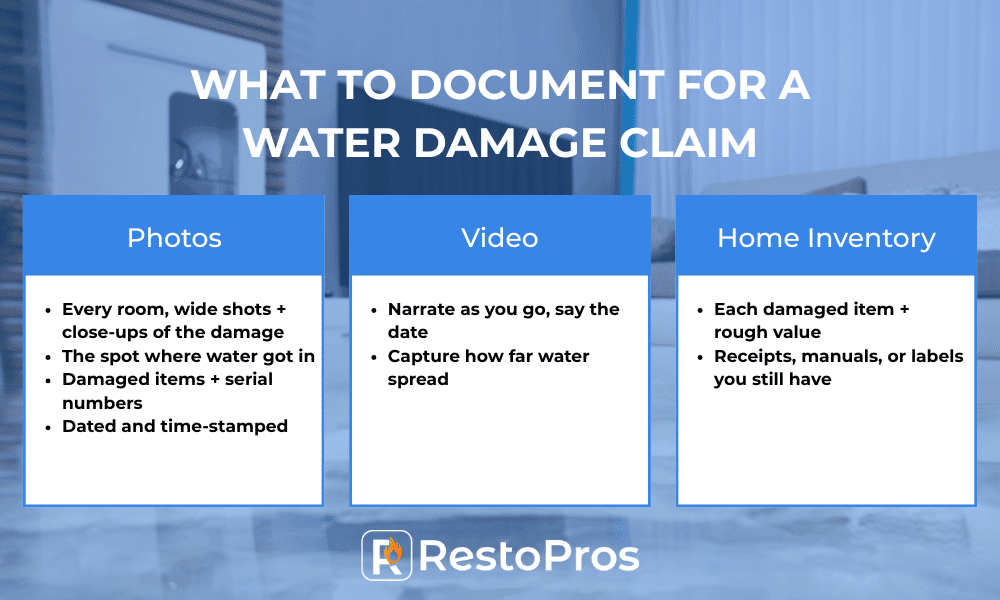
Insurance adjusters look for a clear, dated visual record of the loss. Solid documentation covers three areas.
Photos
- Wide shots of every affected room, taken from the doorway
- Close-ups of water lines on walls, warped flooring, stained ceilings, and any structural damage
- The point where water entered the home
- Damaged furniture, electronics, and other personal property, including model and serial numbers where visible
- Date and time stamps on every image
Video
- A slow walkthrough of each affected room with the date spoken out loud
- Footage that captures the scale of standing water and how far it reached
- Narration that names each room and points out visible damage
A Home Inventory of Personal Belongings
A written home inventory backs up your photos and speeds review. For each damaged item, note:
- What it is and roughly when it was bought
- Its estimated value or replacement cost
- Any receipts, manuals, or box labels you still have
Timing: When Documentation Has to Happen
Order matters. Documenting too late, or after cleanup starts, is one of the most common reasons a water damage claim gets reduced.
A professional restoration team captures the loss in the right order. Safety comes first, which means stopping the water from spreading before anything else. Next comes documentation, done in full before any extraction or drying starts. Only then do temporary repairs happen, the kind that prevent further damage, with every receipt saved for the insurance company. The one move to avoid is making permanent repairs before the damage is on record.
Insurance policies expect you to take reasonable steps to limit further damage, so there’s an important difference between the repairs you make now and the ones that wait for approval.
| Repair type | When it happens | Insurance handling |
| Temporary repairs | Right away, to prevent further damage | Usually reimbursed; save receipts and photos |
| Permanent repairs | After the adjuster reviews the claim | Covered once the scope and payment are approved |
Starting permanent repairs before the damage is documented and the claim is reviewed could affect reimbursement.
Homeowners Insurance vs. Flood Insurance
The type of water damage decides which policy applies, and that changes how the claim is filed.
What a Standard Homeowners Policy Covers
Most homeowners insurance policies cover sudden, accidental water damage from inside the home, such as:
- A burst pipe
- An overflowing washing machine or water heater
- A sump pump failure, if your policy includes that coverage
Standard home insurance does not cover flood damage from outside water sources.
When You Need Separate Flood Insurance
Flooding from storms, overflowing rivers, or heavy severe weather falls under a separate flood insurance policy. Homeowners get flood insurance coverage through the National Flood Insurance Program (NFIP) or a private flood insurance provider.
The details differ from a standard policy. If you have a federally backed mortgage in a high-risk zone, your mortgage lender may require flood insurance, and NFIP claims follow their own proof-of-loss rules and timelines. What doesn’t change is the documentation: photos and video matter just as much for flood damage as they do for a homeowners claim.
| Standard Homeowners Policy | Flood Insurance (NFIP or Private) | |
| Burst pipe or appliance leak | Covered | Not the right policy |
| Rising water from a storm | Not covered | Covered |
| Where to file | Your insurance company | NFIP or your separate flood insurer |
| Often required by | — | Mortgage company in flood zones |
How the Water Damage Claim Process Works
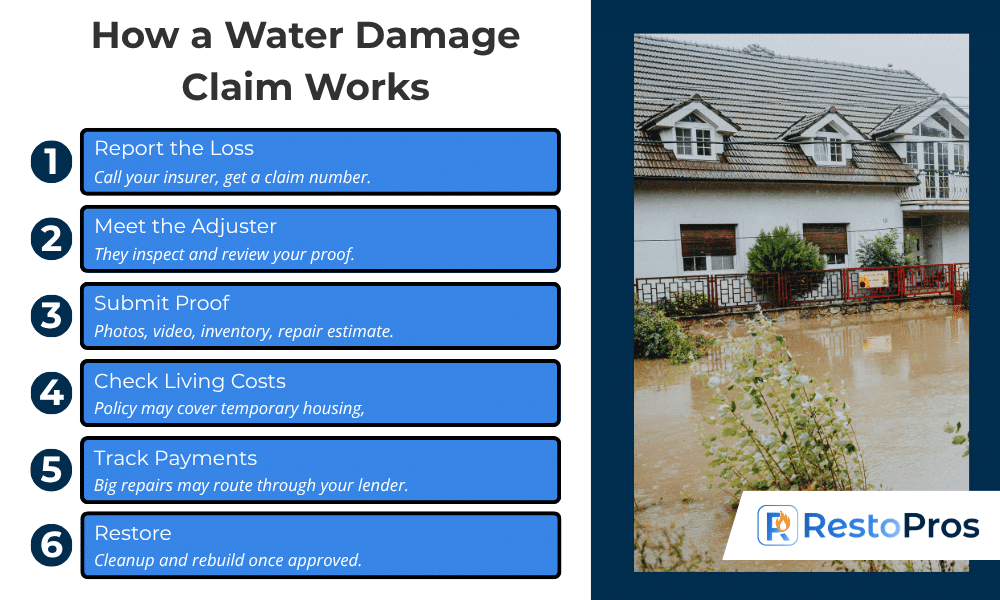
Once the damage is documented, the claim process moves through a few clear stages.
- Report the loss: Call your insurance company or insurance agent right away and get a claim number. Have your policy and contact information ready.
- Meet the adjuster: A claim adjuster inspects the damage and reviews your documentation. Some homeowners hire a public adjuster to represent them, though many claims are handled directly.
- Submit your proof: Hand over photos, video, the home inventory, and a detailed repair estimate.
- Check living costs: If the home is unlivable, many homeowners insurance policies include additional living expenses that help pay for temporary housing.
- Track the payments: For major structural damage, your insurance provider may route part of the payment through your mortgage lender.
- Move to restoration: Once coverage is approved, cleanup and rebuild begin.
Documentation Gaps That Cost Homeowners
Water damage claims are denied or trimmed more often than most people expect, and the reasons repeat:
- No “before” photos because cleanup started too fast
- No proof of the cause, so the insurer treats it as a gradual, excluded leak
- No moisture readings to show how far water traveled
- An incomplete list of damaged personal property
Each gap gives an insurance company a reason to pay less. A trained restoration team closes those gaps by documenting the loss the way adjusters expect from the first hour.
Move Fast and Protect Your Claim
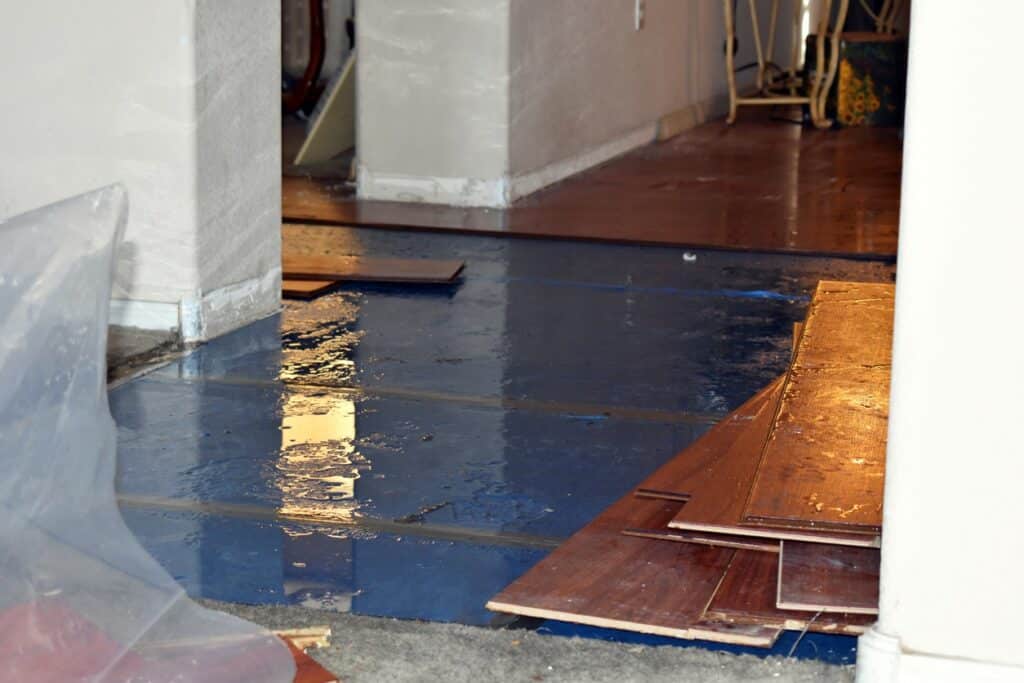
Water sitting in your home gets worse by the hour, and the record captured on day one shapes your entire water damage claim. Clear photos, video, and a full home inventory give your insurance company the proof it needs, while fast drying limits further damage and mold growth.
RestoPros responds 24/7 for water damage restoration, documenting the loss with photos and moisture readings, then working directly with your insurance adjuster so nothing slips through the cracks. The certified team handles extraction, drying, and full rebuild service from start to finish, so you can focus on your family instead of paperwork.
Don’t let a water emergency turn into a denied claim. Contact RestoPros now for a fast response and hands-on help through the entire claims process.
Frequently Asked Questions
Report it the moment it’s safe to. Most policies require prompt notice, though the hard deadline runs anywhere from a few days to a year depending on your policy and state. The real risk in waiting is that a gap between when the damage happened and when you reported it lets the insurer argue you let the problem sit and worsen, which is a common reason claims get trimmed. Your policy spells out the exact window.
Possibly. A claim on your record reads as higher risk to insurers, so your rate can climb at renewal. How much depends on your insurance provider, the size of the payout, and how many claims you’ve filed before. For most people the math still favors filing, since a serious loss costs far more than any premium bump.
No. The insurer will often steer you toward a preferred vendor, but you’re free to hire any licensed, insured water damage restoration company you trust. That choice matters more than it looks. An independent crew works for you, not the carrier, so its scope of work reflects what your home actually needs instead of what keeps the insurer’s costs down.
It comes down to the source. When mold grows out of a covered event like a sudden pipe burst, a standard homeowners policy will usually pay to remove it. When moisture sat for weeks, coverage gets thin, and plenty of policies cap mold payouts or leave them out altogether. Mold moves quickly, so drying the space fast is what keeps that coverage in play.
Your deductible comes out first, before the insurer pays a cent. If a covered repair costs more than your deductible, you pay the deductible and the insurance company covers the balance. Flood claims run differently: NFIP policies set separate deductibles for the building and its contents, so check both your homeowners policy and any flood policy for your exact amounts.
For most claims, no. A public adjuster is someone you hire to run the claim and negotiate with the insurer, usually for a cut of the payout. They earn their fee on large or contested losses. On a routine water damage claim, a restoration company that documents everything and deals with your adjuster directly tends to get you to the same place without the percentage.
A denial isn’t the end of the road. Get the reason in writing and hold it against your policy language. Most denials trace back to gradual damage, a missed reporting deadline, or documentation too thin to prove the loss. Solid photos, video, moisture readings, and a line-item repair estimate give you grounds to push back. If you believe a claim was improperly denied, you can review your appeal options and contact your state insurance department for additional guidance.