Blog
How to Repair a Water-Damaged Ceiling: Why Professional Restoration is Essential
The Short Answer: Repairing a water-damaged ceiling means locating the leak, drying the structure, cutting out the ruined ceiling panel, fitting a new panel, and matching the original texture and paint. It may look like a simple patch job, but most DIY fixes will miss the leak, leave a visible seam, or hide structural damage that keeps getting worse.
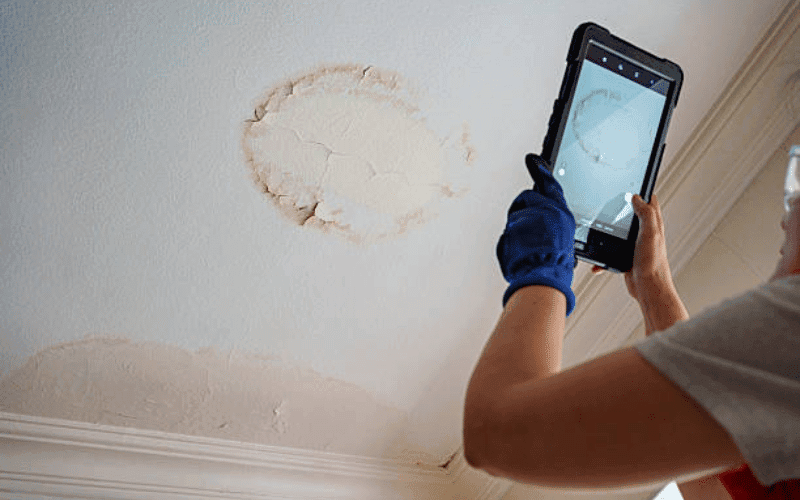
There is nothing like the sinking feeling of water stains spreading across your living room ceiling or loose paint dropping onto your furniture. A burst pipe or a leaky roof can cause a water-damaged ceiling that needs fast attention. You might think to grab a utility knife and try it yourself, but the work shows why professional restoration is the safer choice. RestoPros breaks down what the job involves, why it goes wrong for homeowners, and why a drywall ceiling repair belongs to our team, from fixing the original leak to the final coat of paint.
The Reality of Ceiling Repair
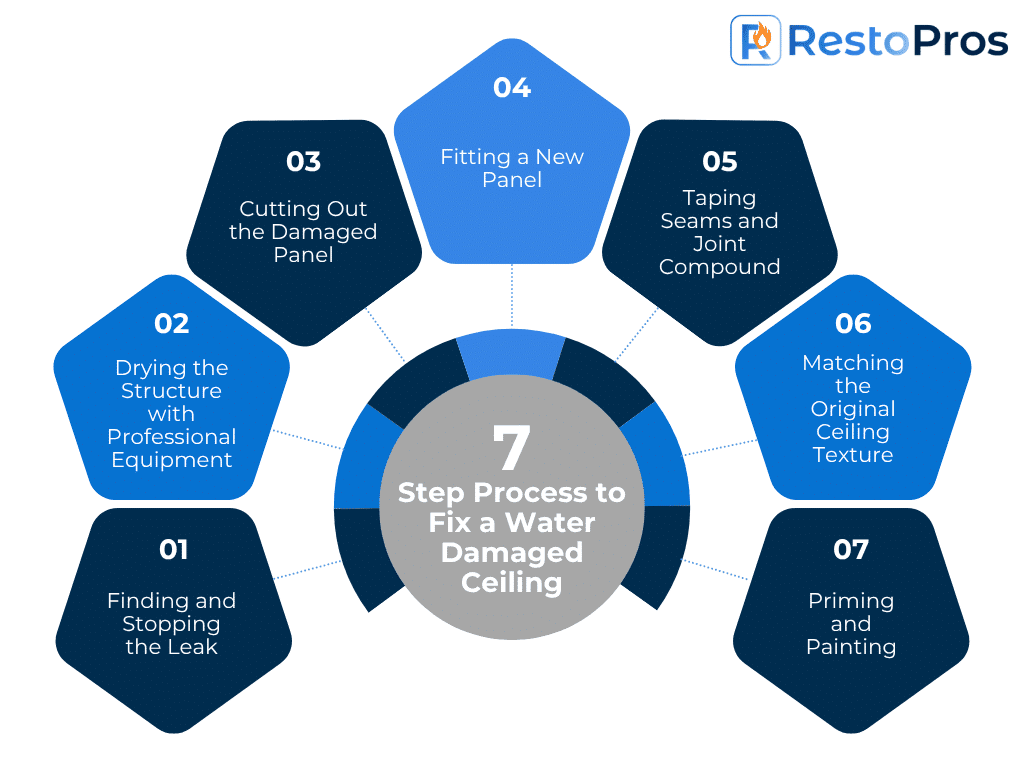
A patched ceiling may look simple, but it is a detailed repair process. Here are the real steps behind that clean finish.
- Find and stop the leak so the ceiling does not get wet again
- Dry the framing, insulation, and drywall completely with drying equipment
- Cut out the water-damaged ceiling panel back to solid material
- Fit a new panel to the opening and screw it to the ceiling joists
- Tape the seams and coat them with joint compound, then sand them smooth
- Match the textured ceiling so the ceiling patch disappears
- Prime and paint the repaired area to blend with the existing board
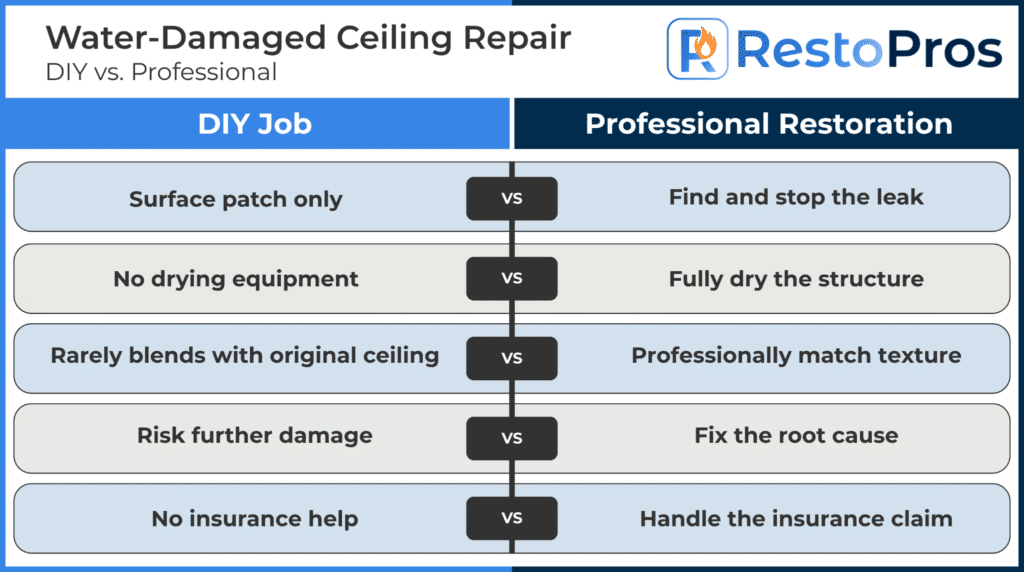
It may look straightforward on paper, but a water-damaged ceiling almost always hides complications a homeowner cannot see. A putty knife and a tube of joint compound from the hardware store cannot fix a leak or match a ceiling texture type on the first try, which is how a small job turns into rot and structural issues that cost far more than a proper repair.
Understanding the Hidden Complexity of Water Damage
Water damage rarely stays contained to the area you can see. Moisture travels through the ceiling and follows unexpected paths that create damage far from the original leak. What looks like a small problem on the surface can affect a much larger part of your ceiling and framing.
RestoPros uses moisture detection equipment that goes well beyond basic hardware store tools. Thermal imaging reveals moisture hiding inside the ceiling that is invisible to the naked eye, and that reading shows whether the damage has reached your home’s structure and where the true water source sits. Without it, a homeowner is left guessing at the size of the damaged area. There is no real way to measure moisture in the larger areas affected by water damage, judge structural issues without proper tools, or catch the secondary damage that leads to costly problems later. What looks like a minor repair often grows once the ceiling is opened, and an active leak keeps doing further damage until the source is fixed.
The Risks and Limitations of DIY Ceiling Repair
Even careful homeowners tend to make the same mistakes on a water-damaged ceiling, and each one costs more to undo later.
- Using the wrong tools: a putty knife or utility knife cannot dry framing or cut a clean, straight line in drywall
- Incomplete drying: leftover moisture feeds mold growth in the affected area within 24 to 48 hours
- Improper installation: the wrong drywall screw spacing leaves a weak, sagging repair
- Poor finish matching: a textured ceiling patched by hand rarely blends with the existing board
- Skipping safety gear: working overhead without protection near wiring is a real hazard
The risks are not only cosmetic. Cutting out damaged sections without containment can release mold spores into the air, and working near ceiling fixtures puts you close to wiring while water-heavy material hangs loose and unstable overhead. Handling wet, contaminated drywall and cleaning products adds another layer of risk that most homeowners are not equipped for. This is why the right tools matter so much. RestoPros does not rely on hardware store supplies. Our team uses drying equipment, professional moisture meters that confirm the ceiling is fully dry, and tools built for each ceiling texture type and repair, which is the difference between a temporary patch and a repaired area that lasts.
How RestoPros Professionally Handles Ceiling Repairs
RestoPros treats ceiling water damage as a single job. Our ceiling water damage repair covers the leak all the way to the last coat of paint, and professional restoration starts with water removal that DIY methods cannot match. Industrial extraction pulls water out of the affected area, while commercial dehumidifiers and air movers dry the ceiling and framing fully. We monitor moisture the whole way so nothing stays damp behind the new surface, and that same reading tells us whether the whole ceiling needs replacing or only a section.
From there, we follow strict steps so every ceiling repair is safe and clean. The damaged ceiling panel is removed without harming the surrounding structure, and all contaminated material is disposed of under health and safety guidelines. When it is time to rebuild, we fit a new panel, tape and coat the seams with joint compound, then match the finish to the existing board so there is no visible sign of the repair.
A patch does not fix what caused the damage, so we trace the problem to its source, whether that is a leaky roof that opens up during heavy rain, worn flashing, or a leak in the space above the ceiling, and coordinate the right fix so the water stops for good. Stopping the water is the first step, and it is the one DIY patches skip. We finish with quality repair work, including primer and careful paint matching, add moisture barriers where they help, and follow up to confirm the repaired ceiling holds.
Why Choose RestoPros for Your Water-Damaged Ceiling
Water damage does not wait for business hours, and neither do we.
- 24/7 emergency response for active leaks and ceiling damage
- IICRC-certified technicians trained in water damage repair
- One team for drying, drywall, texture, and paint
- Direct help documenting your insurance claim
Rather than juggling several contractors, we handle the whole job: damage assessment, water extraction and drying, moisture control, and full ceiling restoration, including drywall, texture, and paint, down to the final touch-ups. Our IICRC-certified technicians train in water damage restoration and work with standard drywall, textured finishes, and popcorn ceilings alike. We have a deep understanding of the insurance process, so your documentation and claim move smoothly from start to finish. A ceiling loss from a sudden leak is often covered by homeowners insurance, and we record the damage and work with your insurer so the claim moves without the usual back and forth.
Protect Your Ceiling With RestoPros
A water-damaged ceiling is never just a cosmetic patch. Behind the stain sits an active leak, wet framing, and the risk of hidden structural damage. A real drywall ceiling repair has to stop the water, dry the structure, rebuild the ceiling panel, and match the texture and paint, and every step is easy to get wrong. That is why this job belongs to trained professionals.
RestoPros knows the full process of repairing a water-damaged ceiling, from the first inspection to the final coat of paint. Our IICRC-certified team responds 24/7, uses professional equipment, and works directly with your insurance. Do not let a small ceiling stain grow into a much larger, structural issue. Contact RestoPros today for a professional assessment, or learn more about our water damage restoration services to get the job done right the first time.
Frequently Asked Questions
No. Paint hides the water stain for a short time, but it does not dry the ceiling or stop the leak. The stain returns, and the trapped water continues to cause damage. A proper repair fixes the leak first, then rebuilds the ceiling.
Look for water stains, loose paint, sagging drywall, or a damp smell in the room. A soft or discolored spot usually means water has soaked into the ceiling. RestoPros can confirm hidden moisture with professional tools during an inspection.
It depends on how far the water spread. What looks like a minor repair can grow once the ceiling is opened and the wet area and structural issues are visible. Our team measures the real damaged area before quoting the work.
A drywall ceiling repair has to match the existing board, blend a textured ceiling, and stop the leak above it, all while working overhead. Most DIY patches fail to match the texture or miss the leak, so the job has to be redone. Professionals get the repaired area right the first time.
It can. A damp ceiling can start to grow mold within 24 to 48 hours, which is why fast, professional drying matters. Getting the moisture out quickly keeps the problem from spreading.