Blog
Mold in the Bathroom: Humidity Control and Long-Term Prevention
The Short Answer: Mold in the bathroom grows when warm, damp air and poor ventilation give mold spores a perfect breeding ground on surfaces like shower tile, grout, and the bathroom ceiling. Controlling humidity slows new growth, but mold that is already present needs professional remediation to be removed safely and keep it from coming back.
Your bathroom is the most humid room in your home. Steam, water leaks, and soap scum feed mold on shower tile, shower curtains, and the bathroom ceiling. Left alone, that mold spreads into porous materials and can seriously affect your health. Scrubbing the surface rarely solves the mold problem, because it leaves the moisture behind. Learn why bathroom mold happens, the health risks it carries, and how RestoPros removes and prevents it from returning.
Why Mold Grows in Your Bathroom
Mold needs three things to grow: moisture, warmth, and something to feed on. A bathroom offers all three. Warm air from a hot shower holds moisture, and when it meets cooler bathroom tile or the ceiling, it condenses into water. Without proper airflow, that dampness lingers, and mold spores settle in. Soap scum and body oils give mold a food source, so even a clean-looking bathroom can host it.
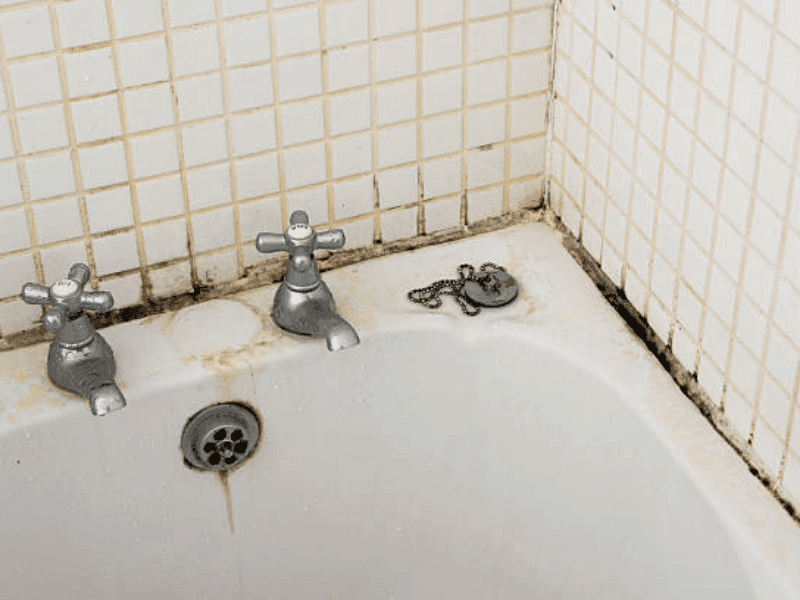
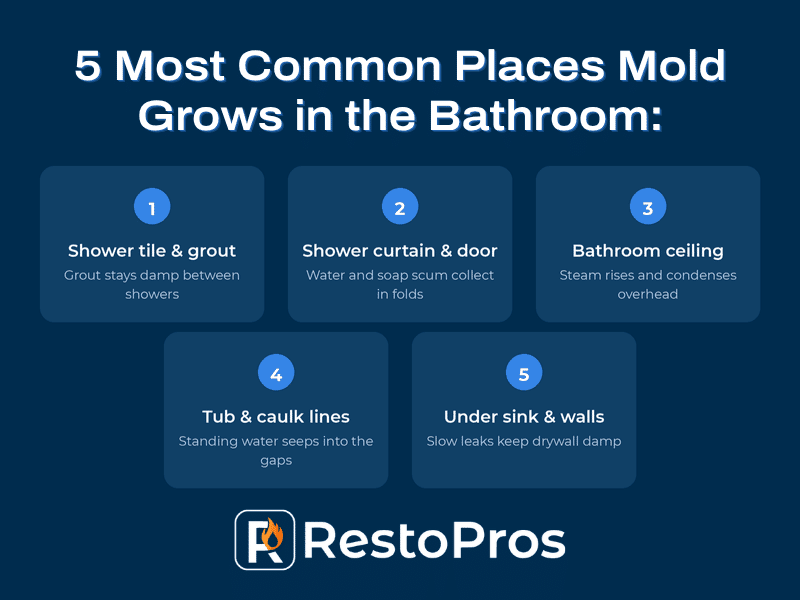
This makes the bathroom a high-humidity environment and perfect breeding ground for several types of mold. You will most often spot it where water sits longest: along shower tile and grout, on the shower curtain and shower door, across the bathroom ceiling, around tub caulk, and on bathroom walls near a leaky sink. Small water leaks behind shower walls or under the sink keep those materials consistently damp, which speeds up mold growth.
Mold on the Bathroom Ceiling
The bathroom ceiling is one of the first places mold appears. Steam rises during a shower, hits the cooler ceiling, and leaves a film of moisture that feeds mold spores. Small black or gray spots on the bathroom ceiling usually mean humidity is running high, and the exhaust fan is not clearing the air fast enough.
Ceiling mold can also point to a hidden leak from a pipe or roof above the bathroom. Because a bathroom ceiling is often drywall, mold growth roots into the material and spreads out of sight. A spreading patch overhead calls for professional remediation, not a DIY clean.
Is Bathroom Mold a Health Risk?
Mold in the bathroom is more than a cosmetic issue. Mold spores drift into the air you breathe, and for many people, they trigger allergic reactions. Mold exposure can cause several symptoms:
- Stuffy or runny nose and sneezing
- Coughing, wheezing, or a sore throat
- Burning, itchy, or watery eyes
- Skin irritation or a rash
- Worse asthma attacks for people who already have asthma
People with asthma, mold allergies, or weakened immune systems may be more sensitive to mold exposure. The color of mold does not reliably indicate how harmful it may be, so visible mold should be addressed regardless of whether it appears black, green, gray, or another color. Health problems get worse the longer mold sits, which is why quick mold removal is so important.
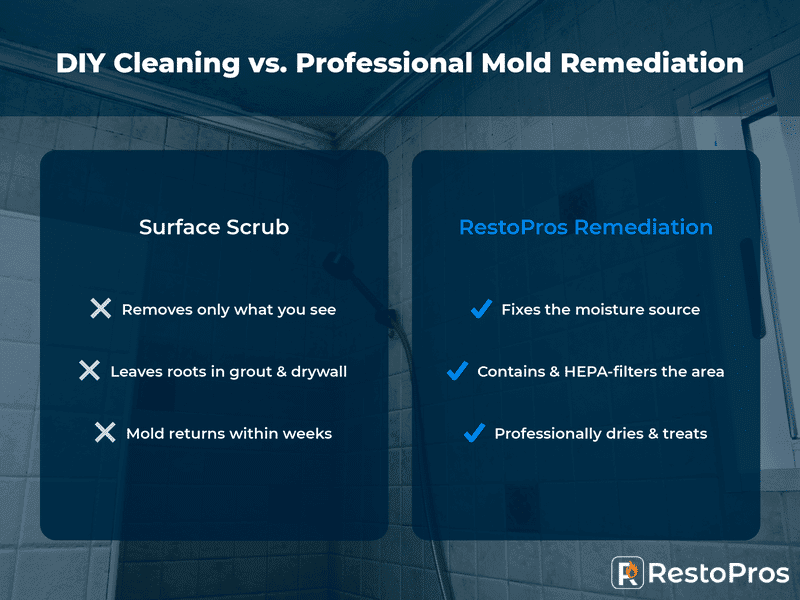
Why Bathroom Mold May Keep Coming Back After Cleaning
When mold shows up, our first instinct is to grab a cleaning solution and scrub. A spray bottle of white vinegar or hydrogen peroxide can lift mold off a hard surface, and a paper towel wipes the moldy area clean for a while. The problem is that these cleaning solutions only reach the surface, not the root of the issue.
In porous materials like grout, drywall, and the wood behind bathroom tile, the mold roots stay put, so the moldy area darkens again within weeks. Household products like laundry detergent, white vinegar, and hydrogen peroxide also do nothing about the moisture source, which is the real reason the mold keeps returning. Scrubbing can even push mold spores into the air and carry them to a new affected area.
The EPA advises that once mold covers more than about 10 square feet, you should bring in a professional instead of cleaning it yourself. A persistent mold problem in a damp bathroom usually meets that criteria, especially considering what is hidden behind the walls.
How RestoPros Removes Bathroom Mold
RestoPros treats bathroom mold as a professional remediation job, not a surface clean. Our IICRC-certified technicians wear protective gear, seal off the affected area, and use professional equipment to remove mold at the root and stop it from spreading. Here is how the process works:
- Inspect the bathroom and find the moisture source, from high humidity to hidden water leaks
- Contain the affected area so mold spores do not travel to the rest of your home
- Remove and treat moldy materials with HEPA filtration and antimicrobial products
- Dry the space fully and confirm it is dry with meter readings
- Repair or restore any water damage that fed the mold
This clears the current mold infestation and addresses the root cause, so you are not back to scrubbing the same spot next month. Have visible mold or a musty smell you cannot place? RestoPros mold remediation gives you professional help that lasts. You can read more about how mold spreads if you are worried it has moved beyond the bathroom.
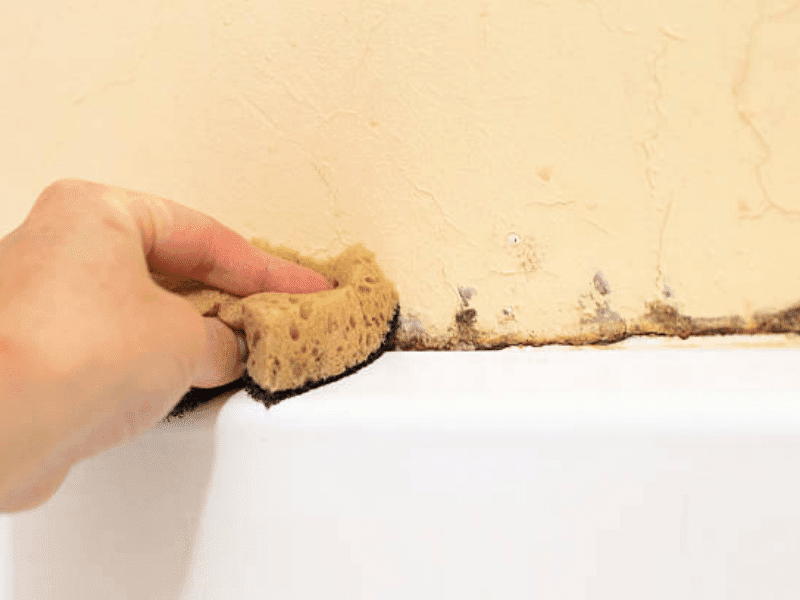
Long-Term Prevention: Control the Humidity
Once the mold is gone, keeping your bathroom dry stops it from returning. Mold needs moisture, so lowering humidity and improving airflow takes away its perfect breeding ground.
- Run the exhaust fan during every shower and for 20 to 30 minutes after
- Improve proper ventilation with a window or a stronger exhaust fan so warm, damp air clears out
- Keep humidity in check; between 30% and 60% is the EPA-recommended range
- Report water leaks fast so RestoPros can address the moisture and any water damage before mold starts
- Call for professional remediation at the first sign of mold instead of waiting for it to spread
Proper airflow and quick action keep a small spot from becoming a full mold infestation.
Don’t Let Bathroom Mold Take Hold
Mold in the bathroom starts with moisture. Warm shower air, poor ventilation, and water leaks turn tile, grout, and the bathroom ceiling into a home for mold spores. Running the exhaust fan and controlling humidity slow it down, but DIY cleaning cannot reach mold that has rooted into porous materials.
When mold keeps returning, it is time for professional help. RestoPros removes bathroom mold at the source with certified technicians, protective gear, and professional equipment, then dries the space so the mold does not come back.
Do not let a moldy area spread through your bathroom and into your indoor air. Contact RestoPros or find your local team today for expert mold remediation that lasts.
Frequently Asked Questions
Black mold can cause symptoms such as coughing, a sore throat, and worsened asthma, especially for people with allergies or weakened immune systems. The EPA says “black mold” is more than just one species, and any bathroom mold should be removed quickly by professionals.
Home solutions like white vinegar, hydrogen peroxide, or bleach in a spray bottle may wipe away surface mold, but they leave the roots behind, so the mold returns. Professional remediation is the most reliable fix for anything past a tiny spot.
Recurring mold on the bathroom ceiling usually means the bathroom stays too humid or a hidden leak is keeping the drywall damp. Until that water source is fixed, simply cleaning the surface will not remove the mold.
A musty smell, peeling paint, warped drywall, and mold that returns after cleaning all point to hidden growth inside bathroom walls. RestoPros can inspect the affected area and confirm how far the mold has spread.
Call for professional help when mold covers more than 10 square feet, keeps coming back, or spreads across the bathroom ceiling. RestoPros handles the source of the issue and the mold removal.