Blog
Signs of Water Damage in Your Home: Why Early Detection Saves You Thousands
Water damage affects millions of homes across the United States every year, and most of it starts small. Recognizing the early signs is what keeps a minor problem from turning into a major repair bill.
The most common signs of water damage are water stains on ceilings and walls, a persistent musty smell, bubbling paint, warped flooring, and an unexplained spike in your water bill. Spotting these warning signs early and calling a professional restoration team prevents mold growth, structural damage to your home, and costly repairs.
A slow water leak behind a wall can run for months before you see a single drop. The difference between a small affected area and extensive water damage usually comes down to how fast the problem is found. Below are the visible signs, the hidden ones, and what RestoPros does when you call.
Visible Signs of Water Damage
Water Stains and Discoloration
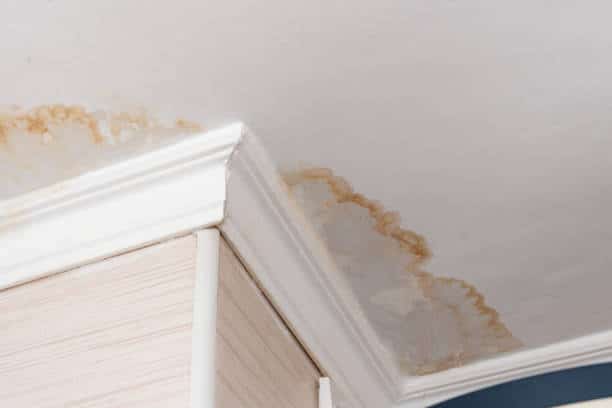
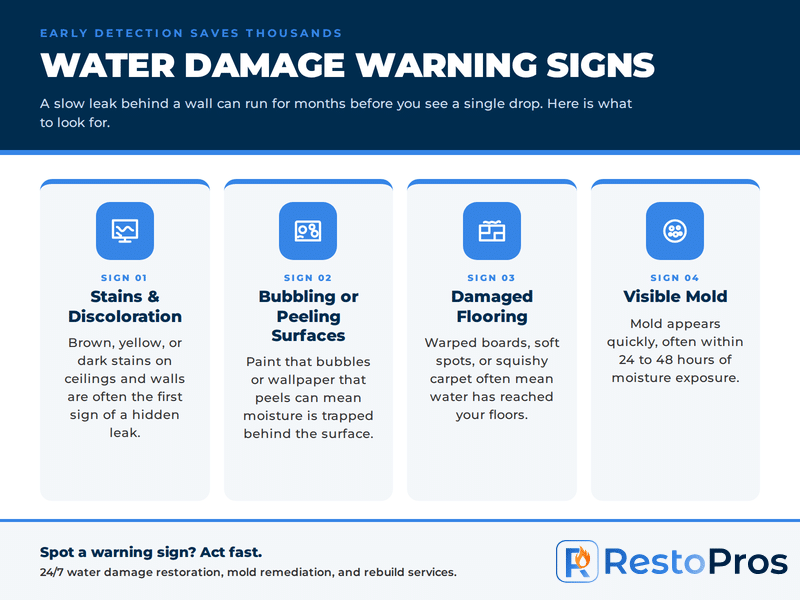
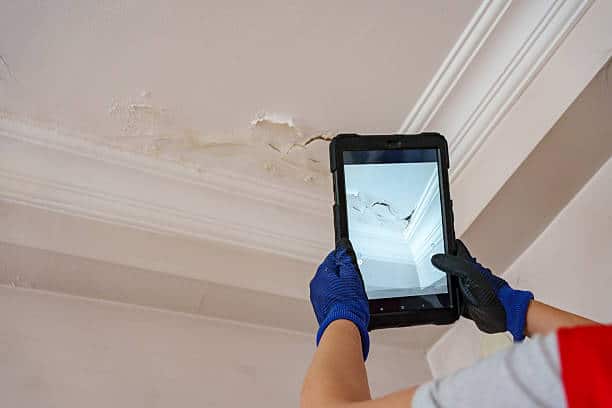
Water stains are usually the first clue homeowners notice. These brown or yellow patches appear on ceilings and walls where moisture has soaked through from behind. Even a small stain can point to a water leak that has been active for weeks.
Check around windows, doors, and bathroom fixtures first. Stains that grow or darken mean the leak is still active and the affected area is spreading.
Bubbling Paint and Soft Spots
Excess moisture breaks down paint, wallpaper, and drywall. Watch for:
- Bubbling or peeling paint and wallpaper
- Soft spots in drywall that give under light pressure
- Crumbling baseboards or swollen trim
Damage like this rarely stops at the surface. It usually means there is more water behind the wall.
Warped or Buckled Flooring
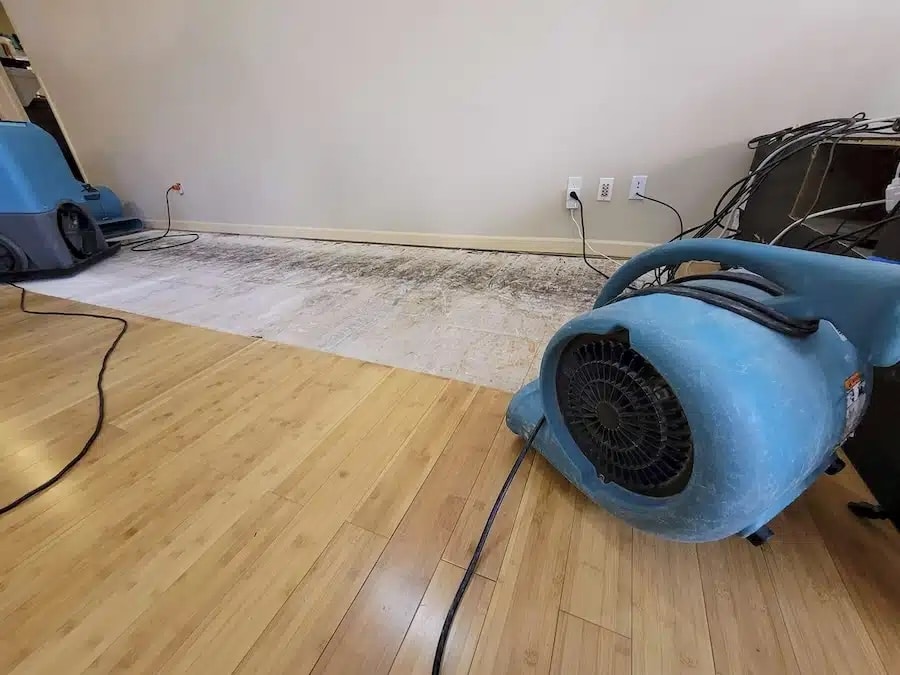
Flooring reacts fast to moisture. Hardwood cups and buckles, laminate swells and separates, and carpet stays damp or feels spongy underfoot. Flooring damage often traces back to a burst pipe, a washing machine overflow, or moisture rising through the slab, and it needs attention before the subfloor begins to rot.
Visible Mold
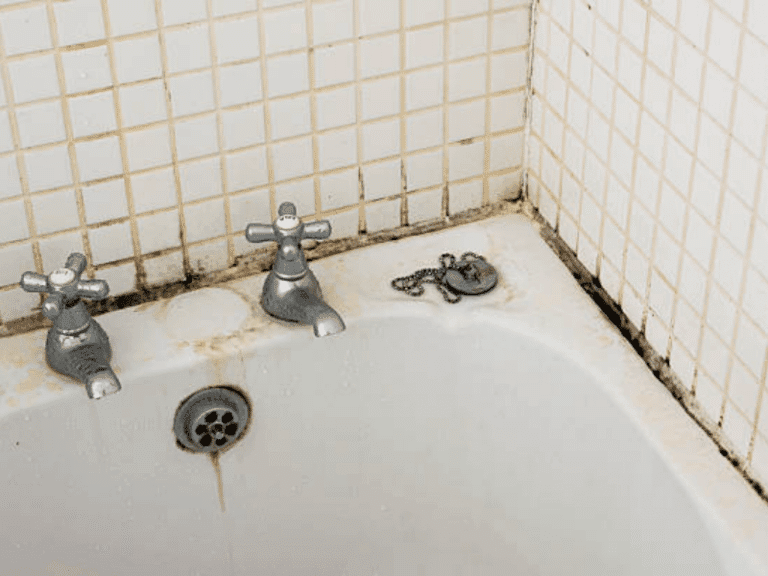
Mold can begin growing within 24 to 48 hours of water exposure. Look for fuzzy black, green, or white patches in bathrooms, basements, crawl spaces, and around windows. Even a small patch means moisture is feeding it somewhere, and mold spreads quickly once it takes hold.
Warning Signs You Can Smell and Hear
A Musty Smell That Never Clears
A musty odor is often the earliest sign of hidden water damage, and it usually shows up before any stain does. That earthy scent comes from mold and mildew breaking down organic materials inside damp walls or under floors. If the smell gets stronger in humid weather or keeps coming back after you clean, moisture is trapped somewhere out of sight.
A Rising Water Bill
An unexplained jump in your water bill usually means a hidden water leak. Household leaks waste nearly 900 billion gallons of water every year in the United States. If your usage climbs while your habits stay the same, water is going somewhere it should not.
Sounds of Running Water
Dripping inside walls, gurgling drains, or hissing pipes when no fixtures are running all point to an active water leak. These sounds often show up before there is anything to see, so it is worth trusting your ears.
Where Water Damage Usually Starts
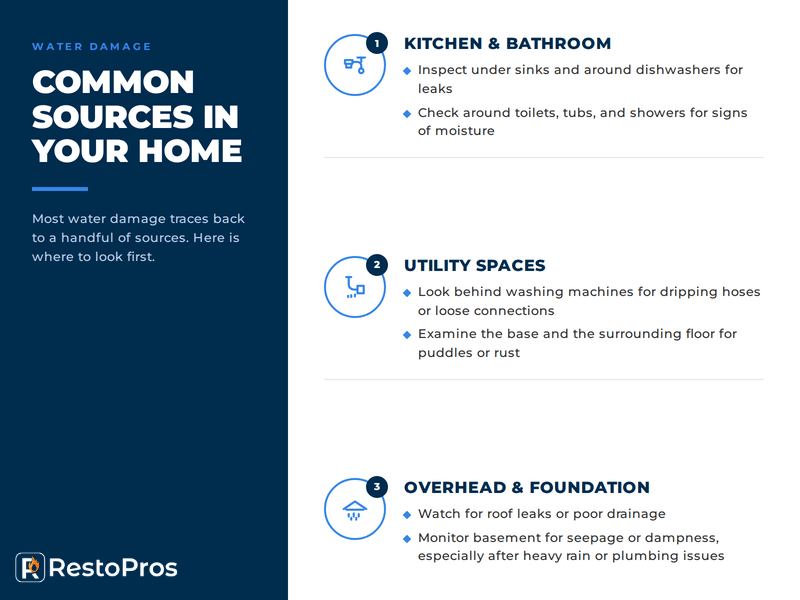
Most water damage traces back to a handful of sources:
- A burst pipe or failing supply line, which can cause severe damage in minutes
- Aging hoses behind the washing machine and dishwasher
- Water heaters past their service life
- Roof leaks and clogged gutters
- Poor drainage and foundation cracks around the basement
- High humidity in basements and crawl spaces
Indoor humidity deserves its own mention. When relative humidity stays above 60 percent, it creates the damp conditions mold needs to grow. The EPA recommends keeping indoor levels between 30 and 50 percent. Handling these sources early is what spares you the repair bill later.
Health Effects of Untreated Moisture
Damp homes cause real health problems. Airborne mold spores trigger allergic reactions such as sneezing, itchy eyes, and skin irritation, and they can cause respiratory problems in children, older adults, and anyone with a weakened immune system. Long exposure can also worsen asthma.
This is one more reason to act quickly if you suspect water damage in your home. The longer mold spores circulate through your HVAC system, the more everyone in the house is exposed to them.
Structural Damage Risks
Water weakens a home from the inside out. Porous materials like drywall, subflooring, and wood framing absorb water and slowly lose strength, and a slow leak can do a great deal of damage before anything looks wrong. Given enough time, moisture reaches the parts of the house that hold it up and leads to:
- Sagging floors and weakened joists
- Compromised wall framing
- Foundation settling and cracking
- Roof deck rot
What starts as a coin-sized stain can turn into costly structural repair. Mold growth and trapped moisture need professional attention right away, before your home’s structural integrity is compromised.
How RestoPros Finds and Fixes Water Damage
RestoPros does not guess when it comes to water damage. Our IICRC-trained technicians follow a documented process:
Inspection and mapping: we use a moisture meter and thermal imaging to trace the full affected area, including hidden water damage inside walls and under floors.
Water extraction: standing water and saturated materials are removed before mold takes hold.
Drying and dehumidification: commercial air movers and dehumidifiers run until moisture levels and relative humidity return to normal, with daily monitoring using a moisture meter.
Mold remediation: if mold is present, we contain and remove it according to industry standards.
Rebuild: our team repairs drywall, flooring, and finishes so your home looks like the damage never happened.
Catch It Early, Call RestoPros
Water damage rarely gives you much warning. It starts as a faint musty odor, a small stain, or a water bill that creeps higher every month. Finding it early is what keeps a minor water leak from becoming an expensive repair.
If you notice any of these signs, do not wait for visible flooding to confirm the problem. RestoPros provides 24/7 water damage restoration, mold remediation, and rebuild services with local teams nationwide. Our technicians find every wet spot, dry the structure completely, and restore the damage so mold never gets a hold. Contact RestoPros today, and we will be there every step of the way.
Frequently Asked Questions
It depends on the source. A burst pipe makes itself known within minutes, but a slow leak inside a wall can take weeks or even months to produce a visible stain. By the time discoloration appears on drywall, moisture has usually been present long enough to saturate the materials behind it, which is why any new stain deserves a professional inspection rather than a coat of paint.
Most policies cover sudden and accidental water damage, such as a burst pipe or an appliance failure. Damage caused by gradual leaks, deferred maintenance, or outside flooding is often excluded. Documentation is what carries a claim, so photograph the damage as soon as you find it and call a restoration company that can provide moisture readings and reports your insurance adjuster will accept.
Household fans and portable dehumidifiers can handle a small, fresh spill on a hard surface, but they cannot pull moisture out of wall cavities, subfloors, or insulation. Surfaces often feel dry while the materials underneath stay wet, and that trapped moisture is what feeds mold. Professional drying equipment paired with moisture meter readings is the only way to confirm a structure is actually dry.
Costs vary based on the size of the affected area, the water category, and how long the moisture sat before treatment. Clean water caught within hours costs far less to address than contaminated water that has soaked into flooring for days. Early detection is the single biggest factor in keeping costs down, and RestoPros provides an inspection and assessment before any work begins.
Shut off the water source if you can locate it, then cut power to the affected area if outlets or appliances are wet. Move furniture, rugs, and valuables away from the water, but avoid walking on saturated carpet more than necessary. Then call a restoration team. Mold can start growing within 24 to 48 hours, so the sooner extraction and drying begin, the less damage your home sustains.