Blog
Toilet Overflow Cleanup: Step-by-Step Recovery Guide
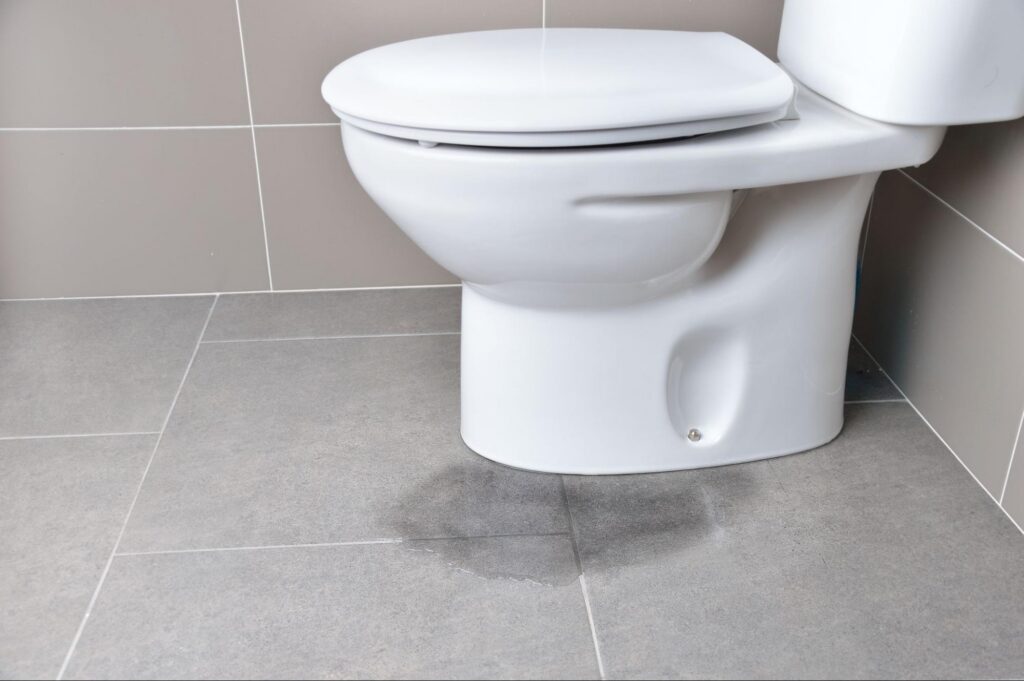
At a Glance: If you are wondering what to do if your toilet overflows, act fast. Stop the water flow at the shut-off valve behind the toilet, keep family members away from the spill, and call for professional help before contaminated water soaks into your bathroom floor.
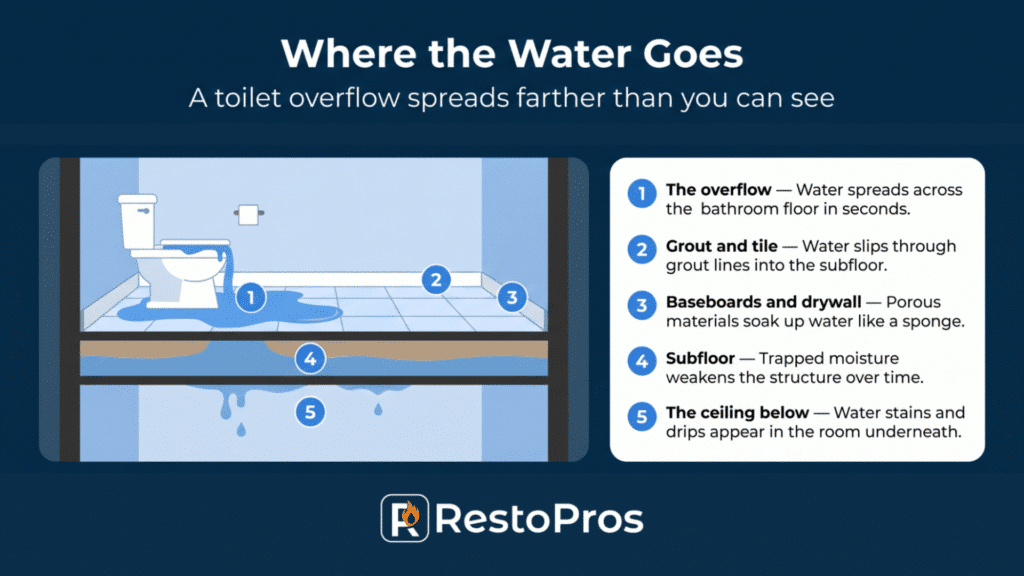
An overflowing toilet is more than a mess. The water finds gaps you did not know were there: the seam under a baseboard, a grout line, the light fixture in the ceiling below. Toilet water often carries bacteria even when it looks clean. And mold needs only a damp surface and 24 to 48 hours to get started, so the cost of waiting climbs by the day.
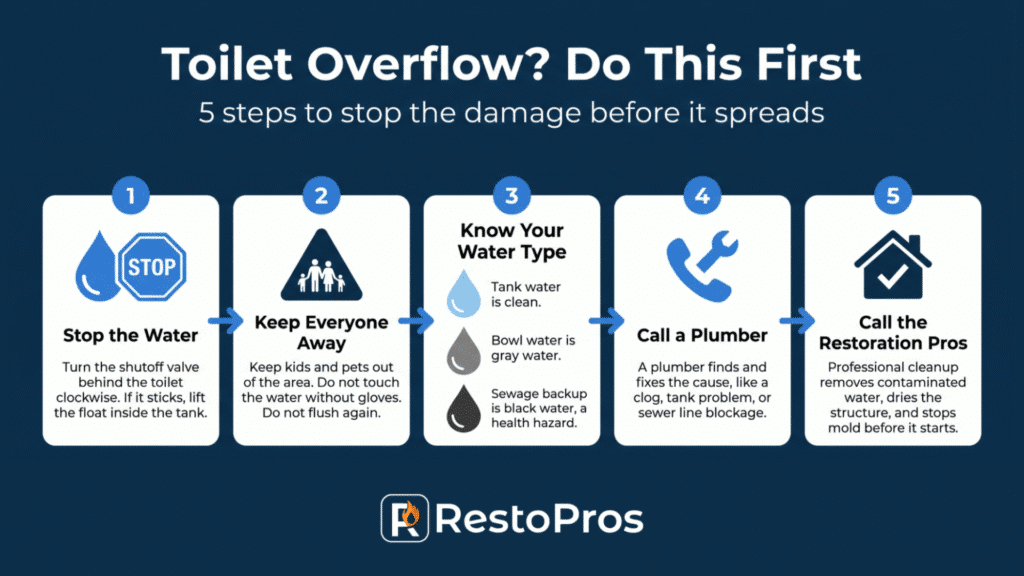
Step 1: Stop the Water Flow
Cut off the water supply before anything else. Every minute of water flow puts more excess water on the bathroom floor, and the floor is not where it stays.
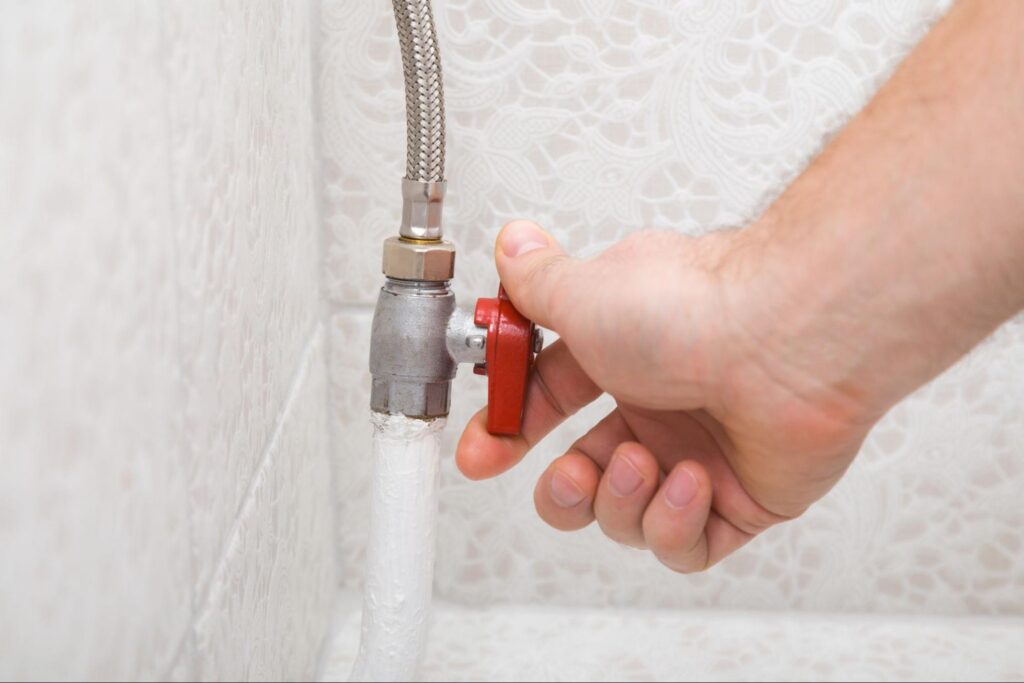
Three ways to stop it, in order:
- The shutoff valve. Behind the toilet, near the floor, there is an oval or football-shaped valve. Clockwise closes it.
- The float. If the valve is stuck or painted over, lift the toilet tank lid and raise the float ball or float cup by hand. The flush valve reads a raised float as a full tank and stops the incoming water.
- The flapper. If water is still moving into the toilet bowl, press the rubber flapper valve down over the opening at the bottom of the tank until the flow quits.
These simple steps stop the flooding. They do not fix the cause, and the water already on the floor still needs proper cleanup.
Step 2: Protect People and Belongings
Once the water level stops rising, turn your attention to safety.
- Keep children, pets, and other family members out of the affected area.
- Gloves before anyone touches the water. Clear is not the same as clean.
- Move rugs, towels, and anything else within safe reach out of the spill’s path.
- Water headed toward an electrical outlet or dripping into the room below means shutting off power to that area at the breaker first.
Do Not Flush Again
It sounds obvious, but many overflows get worse because someone flushes a clogged toilet a second time. If the blockage is still in the drain or sewer line, another flush sends more toilet water over the rim.
Step 3: Understand What Kind of Water You Are Dealing With
Not all overflow water carries the same risk. Restoration professionals classify water into three categories, and the category determines how cleanup must be handled.
| Water Category | Source | Risk Level |
| Category 1 (clean water) | Toilet tank or water supply line | Low, but can degrade quickly |
| Category 2 (gray water) | Toilet bowl overflow with urine, no solid waste | Moderate contamination |
| Category 3 (black water) | Toilet backup containing raw sewage | Serious health hazard |
The logic runs like this. Water from the toilet tank never touched the bowl, so it counts as clean water. Whatever spills out of the toilet bowl is gray water at minimum. Waste in the water, or a backup arriving through the sewer line, makes it black water.
Black water is the serious one. Bacteria, viruses, parasites. Handling it safely takes containment, protective equipment, and antimicrobial treatment, which is why raw sewage spills are never a mop-and-bucket job. This guide on grey water vs. black water covers the differences in more depth.
Why Even Small Overflows Cause Big Problems
Bathroom floors absorb water faster than they appear to. The porous materials at risk:
- Grout lines and the subfloor sitting under the tile
- Baseboards and drywall
- Particle-board vanity cabinets
- Carpet or padding in the hallway next door
Surface cleaning does little once contaminated water has soaked in. The moisture trapped inside feeds mold growth and, over time, weakens the structure itself. The EPA notes that damp building materials should be dried or removed quickly to prevent mold. Professionals carry moisture meters for exactly this reason, because the water you cannot see is the expensive part.
Step 4: Figure Out Why the Toilet Overflowed
Every toilet overflow has a cause. Finding it decides whether the overflow repeats. The usual ones:
- A clogged toilet. Too much toilet paper, a wipe, a foreign object lodged in the trap.
- A sewer line blockage. Tree roots are the classic offender, along with grease buildup and collapsed pipe sections. A blocked main line can send water from other fixtures, the washing machine or the shower, back up through the toilet.
- A blocked vent pipe. The plumbing system needs airflow to drain. Lose it, and water flow slows enough to back up.
- Tank problems. A stuck float ball, a worn flush valve, an overflow pipe set too high. Small parts cause big spills.
- A full septic or black tank. Septic systems push wastewater back toward the lowest fixtures in the house when the tank fills.
RestoPros does not handle toilet repair or other plumbing needs. Diagnosis and repair belong to a professional plumber, particularly for repeat overflows or anything involving the sewer line. Cleanup and repair are separate jobs. Both have to happen.
Warning Signs a Plumbing Professional Should Check
Call a plumber promptly if you notice:
- Gurgling from other drains when the toilet flushes
- Water backing up into the tub or shower
- Several slow drains at once, in different rooms
- Sewage odors near floor drains
Taken together, these point toward the main line, and a main line problem means the next overflow could be far worse than the last.
Step 5: Bring In Professional Cleanup
With the water stopped and the cause identified, restoration can start. On a toilet overflow it runs in six stages:
- Assessment and moisture mapping. Technicians trace how far the water traveled, under flooring and inside walls included.
- Water extraction. Commercial-grade equipment pulls out standing water, then draws moisture from porous materials.
- Removal of unsalvageable materials. Carpet padding or drywall saturated with black water comes out, per IICRC standards.
- Cleaning and sanitizing. Antimicrobial treatments kill what contaminated water leaves behind.
- Structural drying and monitoring. Air movers and dehumidifiers run until moisture readings say dry. Feeling dry does not count.
- Repairs and rebuild. Flooring, drywall, and trim go back in, and the bathroom looks like nothing happened.
Sewage raises the stakes on all of this. The CDC warns that contact with sewage can cause gastrointestinal illness and skin infections, so protective equipment and disinfection protocols are requirements, not options.
Filing an Insurance Claim for Toilet Overflow Damage
Water damage from a sudden toilet overflow is often covered by homeowners insurance. The details decide the outcome.
- Sudden and accidental overflows: typically covered under standard policies.
- Sewer or drain backups: usually need a separate water backup endorsement, a detail many homeowners learn about one backup too late.
- Gradual leaks or neglected plumbing issues: commonly denied.
Give the insurance claim its best chance:
- Photograph the overflow, the water damage, and any ruined belongings before cleanup starts.
- Keep every receipt for emergency services and repairs.
- Ask the restoration company for its moisture readings and documentation.
A restoration company that documents thoroughly can also deal with your adjuster directly, and that alone removes a lot of stress from the claims process.
How to Prevent the Next Overflow
A few habits go a long way toward keeping toilet overflows from happening again:
- Flush waste and toilet paper, nothing else. Wipes and paper towel sheets clog lines no matter what the packaging says about being flushable.
- Watch the water level in the bowl. Running high or low usually means a clog is forming somewhere.
- Homes with mature trees should get periodic sewer line inspections, since tree roots lead the list of main line backup causes.
- Fix running toilets and tank problems early, while the repair is still a small one.
Get Professional Toilet Overflow Cleanup
A toilet overflow puts contaminated water in direct contact with your home, and speed separates a one-day fix and weeks of costly repairs. Stop the water at the shutoff valve. Keep family members clear of the spill. For anything beyond a few cups of clean tank water, bring in professional help.
RestoPros provides 24/7 emergency water damage restoration, including sewage cleanup, structural drying, mold remediation, and full rebuild services. Our IICRC-certified technicians handle everything after the plumber leaves, including insurance claim documentation, so your bathroom comes back clean, dry, and safe. Every minute counts with water damage. Contact RestoPros now for fast, professional toilet overflow cleanup in your area.