




You don’t have to handle it alone. Call us any time, day or night, and let’s figure out next steps together.
Blog
What to Do If a Tree Falls on Your House
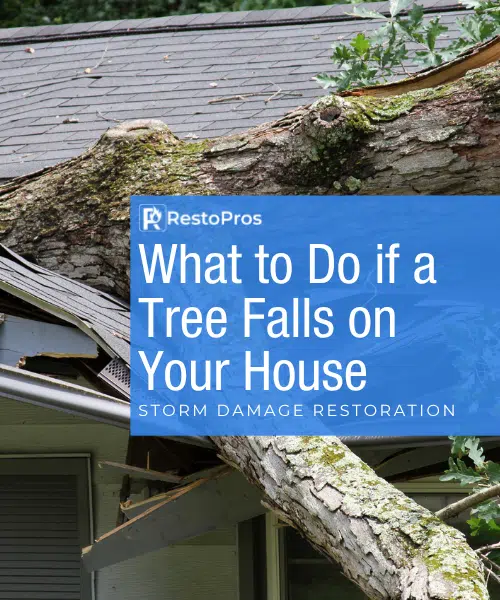
The Short Answer: When a tree falls on your house, get everyone to safety, call 911 if there are injuries or downed power lines, then contact your insurance company and a professional restoration team to handle damage assessment, debris removal, and repairs. Your homeowners insurance policy usually covers the damage to the structure, even if the tree came from a neighbor’s property.
A fallen tree can crush a roof, break windows, and expose your home to rain and wind in seconds. The hours that follow are stressful, and the right next steps protect both your safety and your insurance claim.
Immediate Steps After a Tree Falls on Your House
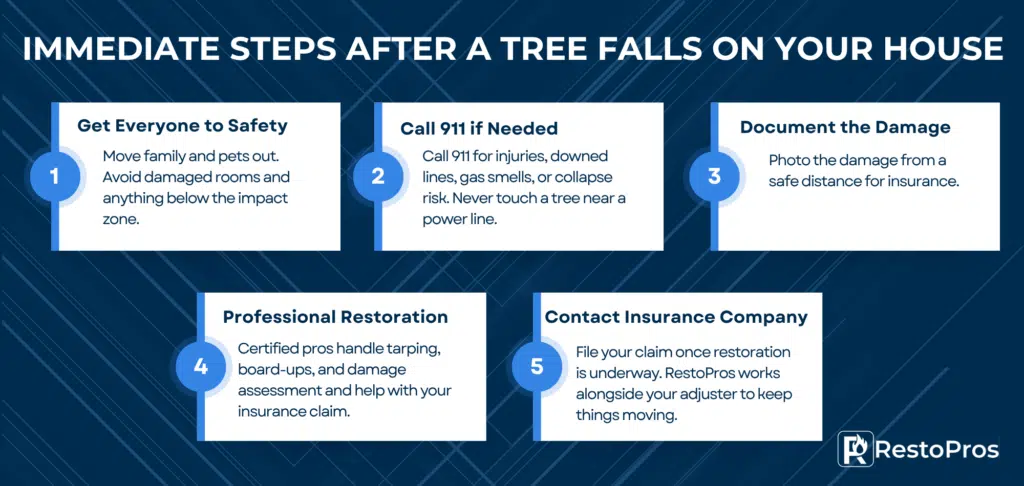
The first hour matters most. Take these steps in order.
1. Get Everyone to Safety
Move family and pets out of the home and stay clear of damaged rooms, sagging ceilings, and any area below the impact zone.
2. Call 911 if Needed
Call emergency services for injuries, downed power lines, gas smells, or risk of collapse. Never touch a tree near a power line.
3. Document the Damage
From a safe distance, take photos and videos of the tree, broken windows, roof damage, and tree debris to support your insurance claim.
Here’s a tightened version:
4. Call a Professional Restoration Team
A certified restoration team should be your first call after the area is safe. They handle what you shouldn’t, including emergency tarping, boarding up broken windows, water damage from rain, and full damage assessment. They can also walk you through the insurance claims process and coordinate with your adjuster.
5. Contact Your Insurance Company
Once your restoration team is engaged, contact your insurance company to file your claim. Most carriers have a 24/7 claims line. Report the incident, share your documentation, and ask what your policy requires next. Your RestoPros team can work alongside your adjuster to keep the process moving.
Who Pays When a Tree Falls on Your House?
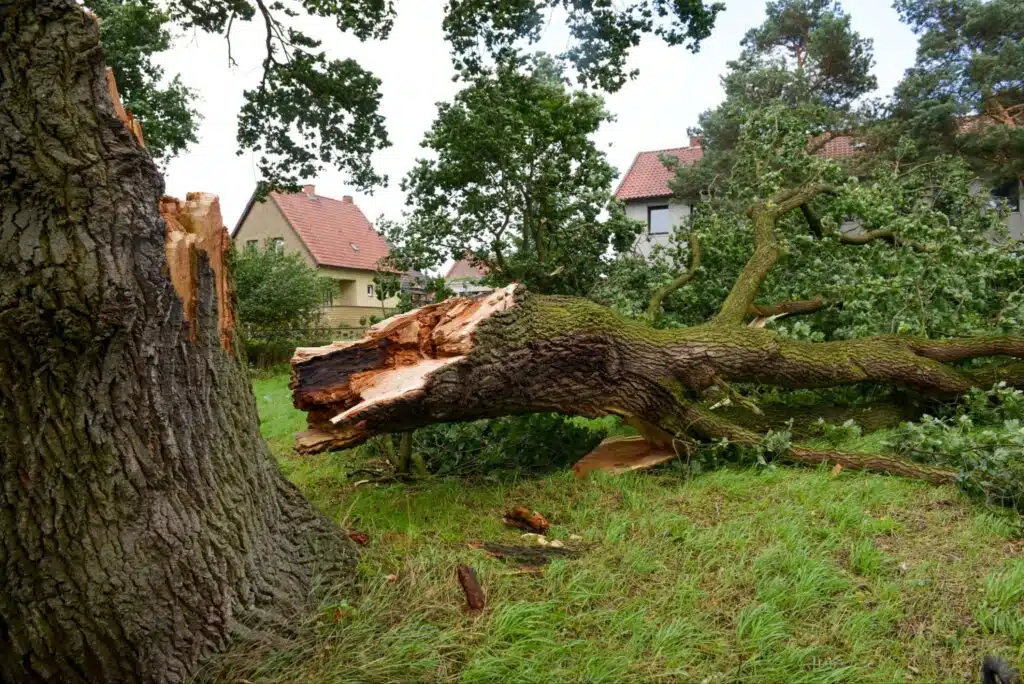
This is the most common question after tree damage, and the answer surprises many homeowners.
When Your Tree Falls on Your House
Your homeowners insurance policy covers damage to your home and any insured structure on your property. The deductible applies. Tree removal from the structure is usually included in the claim.
When a Neighbor’s Tree Falls on Your House
Even if the tree came from a neighbor’s property, your homeowners insurance is still the policy that pays. The Insurance Information Institute confirms that the homeowner whose property is damaged files the claim, regardless of where the tree originated.
Your insurance company may try to recover the deductible from the neighbor’s insurance company through subrogation, but only in cases where the tree owner was clearly negligent (for example, if the tree was a known dead tree that they refused to remove).
When a Tree Falls on a Detached Garage or Shed
Most homeowner policies extend coverage to a detached garage, shed, or fence on your property. Coverage limits for these structures are usually a percentage of the main home coverage.
When a Tree Falls on Public Property or a Neighbor’s Property
If your tree falls on a neighbor’s property, their insurance handles it. If it falls on public property, like a street tree area, the local government usually handles cleanup.
Quick Coverage Reference
| Where the tree fell | Whose insurance pays |
| Your house (your tree) | Your homeowners insurance |
| Your house (neighbor’s tree) | Your homeowners insurance |
| Detached garage on your property | Your homeowners insurance |
| Neighbor’s house (your tree) | Their homeowners insurance |
| Public property | Local government |
| Yard with no structural damage | Often not covered unless tree blocks driveway |
Coverage can vary by carrier and state, so always confirm with your insurance agent.
What Homeowners Insurance Usually Covers
A standard homeowners insurance policy covers tree damage from sudden events caused by extreme weather, including:
- Strong winds
- Hail and lightning
- Snow and ice weight
- Tornadoes and hurricanes (subject to wind deductibles in some areas)
What Is Usually Covered
- Damage to the home and roof
- Damage to a detached garage or other insured structure
- Tree removal from the structure (often capped at $500 to $1,000)
- Damaged personal property inside the home
- Additional living expenses if the home is uninhabitable
- Emergency tarping and board up
What Is Usually Not Covered
- Damage from a dead tree the homeowner knew about and ignored
- Tree removal when the tree fell in the yard with no structural damage
- Routine tree maintenance or pruning of dead branches
- Damage from gradual decay rather than a sudden event
A specific policy can vary, so review your homeowner policy or talk with an independent agent to confirm what is covered in your situation.
The Professional Restoration Process After Tree Damage
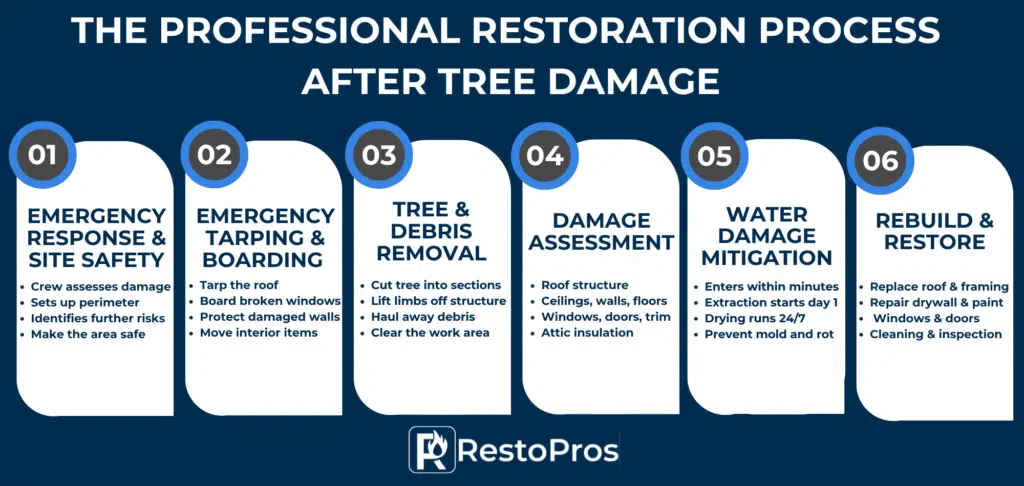
Once your insurance claim is open, a restoration team takes over to stabilize the home and start repairs.
Step 1: Emergency Response and Site Safety
A trained crew arrives quickly to assess the damage and make the area safe. This often includes setting up a perimeter and identifying further damage risks.
Step 2: Emergency Tarping and Board Up
To prevent further damage from rain and wind:
- Roof tarps cover open sections
- Plywood boards seal broken windows
- Damaged walls are temporarily protected
- Interior items are covered or moved if at risk
Step 3: Tree Removal and Debris Removal
Removing the tree from the home takes specialized equipment and training. The work covers:
- Cutting the tree into manageable sections
- Lifting heavy limbs off the structure without causing more damage
- Hauling away tree debris
- Clearing the work area for repairs
Step 4: Damage Assessment
With the tree removed, the team documents every area of property damage:
- Roof structure and decking
- Attic insulation and framing
- Interior ceilings, walls, and flooring
- Windows, doors, and trim
- Any water damage from rain entering during the event
Step 5: Water Damage Mitigation
If rain entered the home, water extraction and drying happen right away. Mold can begin growing within 24 to 48 hours of water exposure, so this step cannot wait.
Step 6: Rebuild and Restoration
The rebuild phase brings the home back to pre-loss condition:
- Roof repair or replacement
- Framing and structural repairs
- Drywall, insulation, and paint
- Window and door replacement
- Flooring and trim work
- Final cleaning and inspection
A full-service restoration team handles every step, so you do not have to coordinate multiple contractors.
How to Reduce the Risk of Future Tree Damage
While no homeowner can control extreme weather, regular tree care lowers the risk:
- Have large trees inspected by a certified arborist every few years
- Remove dead trees and dead branches before they fall
- Trim limbs that hang over the roof or near the home
- Watch for leaning trees, especially after heavy storms
- Address any privately owned tree showing signs of disease
Property owners in rural areas or wooded neighborhoods face higher exposure and benefit from regular professional tree assessments.
Don’t Face Tree Damage Alone
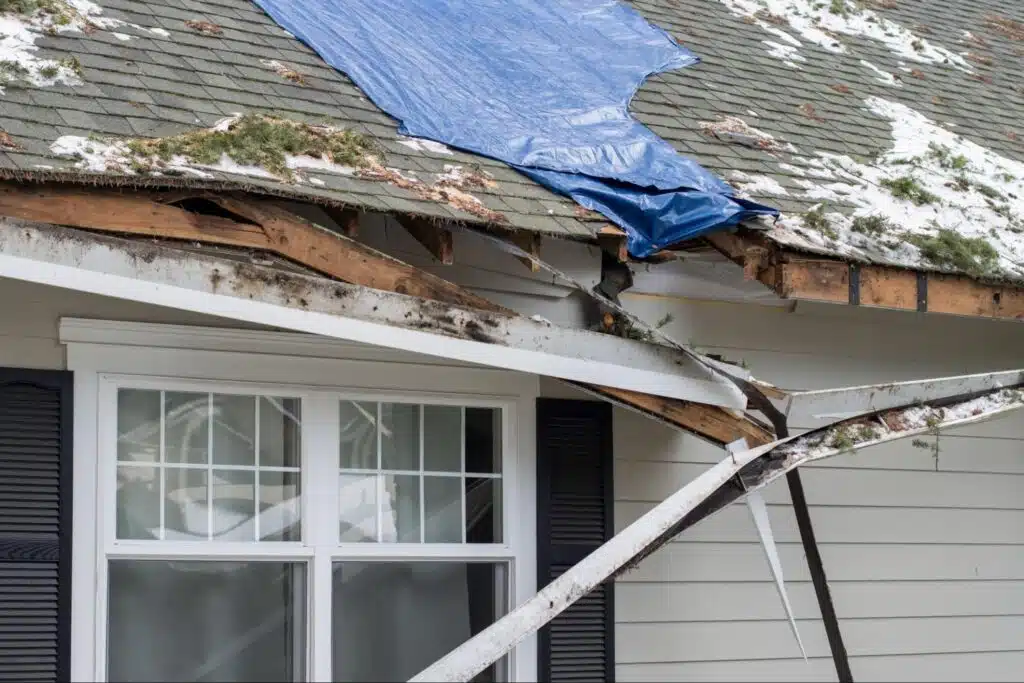
When a tree falls on your house, the damage rarely stops at what you can see. Hidden roof damage, water intrusion, and structural issues all need professional attention. Acting fast keeps a single event from becoming a long list of repairs and rejected insurance claims.
Working with a full-service restoration company makes the recovery far less stressful. RestoPros’ certified technicians handle the full process, from emergency tarping and tree removal coordination through complete rebuild, while working directly with your insurance company at every step.
Don’t let a fallen tree leave your home exposed. RestoPros is available 24/7 for emergency storm damage response and full rebuild services. Contact us now for a fast assessment and a clear path back to a safe, restored home.