
The Short Answer: An encapsulated crawl space is a sealed area beneath your home that uses a vapor barrier and other materials to block moisture from entering. It protects your home from mold growth, wood rot, pest infestation, and rising energy bills.
Your crawl space sits directly below your living space, exposed to ground moisture, outdoor air, and the elements year-round. Without proper sealing, that exposure leads to mold spores, structural damage, and poor indoor air quality that can work its way up into the rest of your home.
Here is what crawl space encapsulation involves, why it matters, and what happens when it is left unprotected.
What Is an Encapsulated Crawl Space?
A crawl space becomes encapsulated when a contractor seals it off from ground moisture and outside air. The goal is to turn an open, damp area into a controlled environment, sometimes called a conditioned crawl space, that no longer takes on excess moisture or outdoor humidity.
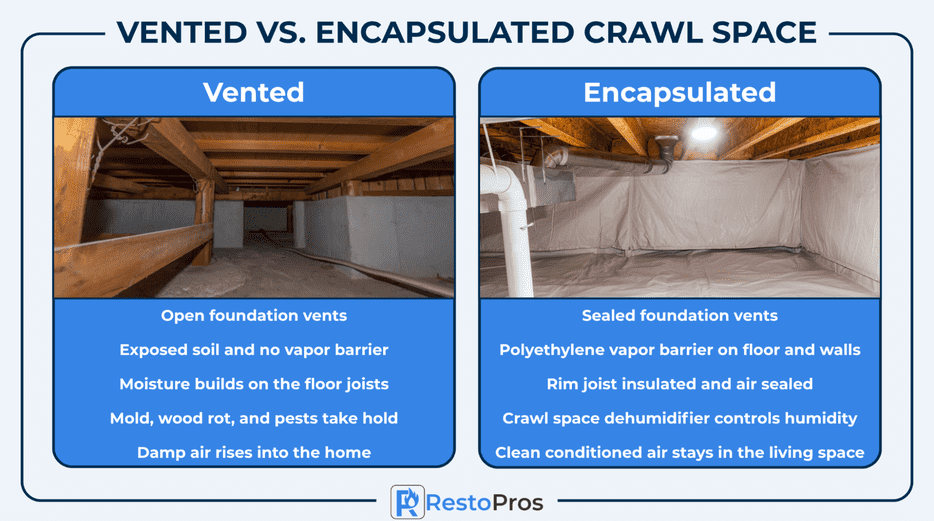
This is different from a vented crawl space, where foundation vents allow outdoor air to circulate freely. While venting was once considered standard, it can introduce high humidity and water vapor directly beneath your home.
What Goes Into an Encapsulation System
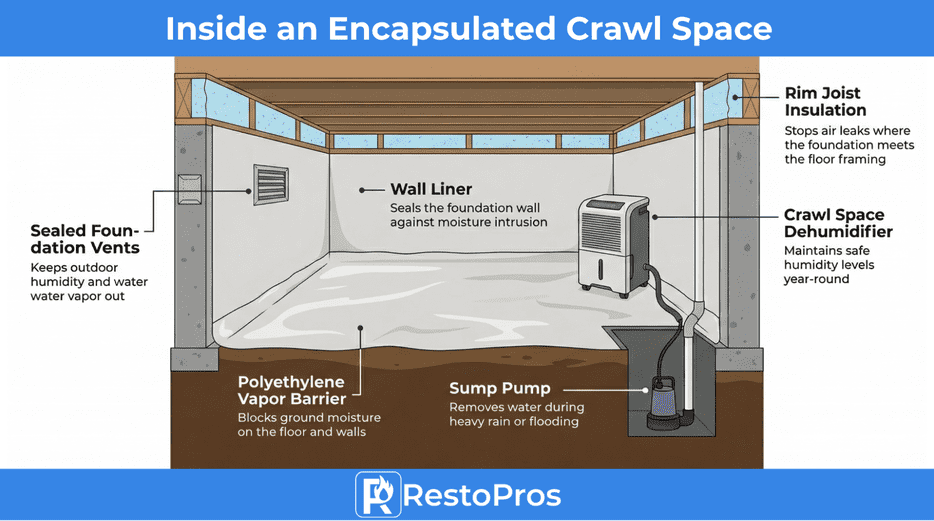
A full encapsulation install typically includes:
- A polyethylene vapor barrier is laid across the crawl space floor and up the crawl space wall
- A wall liner on the foundation wall to block moisture intrusion
- Spray foam or rigid foam insulation on the rim joist and walls for crawl space insulation
- Foundation vent sealing to close off uncontrolled air exchange
- A crawl space dehumidifier to manage relative humidity
- A sump pump or a French drain if water intrusion is present or likely during heavy rain
- Drainage system components to direct water away from the crawl space foundation
Why Moisture Is the Problem
Ground moisture naturally evaporates upward. In an open or vented crawl space, that water vapor moves into your floor joists, subfloor, and eventually your living space above.
According to the EPA, keeping indoor relative humidity between 30% and 50% is recommended to prevent mold growth. Crawl spaces without encapsulation routinely exceed those levels, and because air naturally rises through a home from its lowest point, what happens in the crawl space does not stay there.
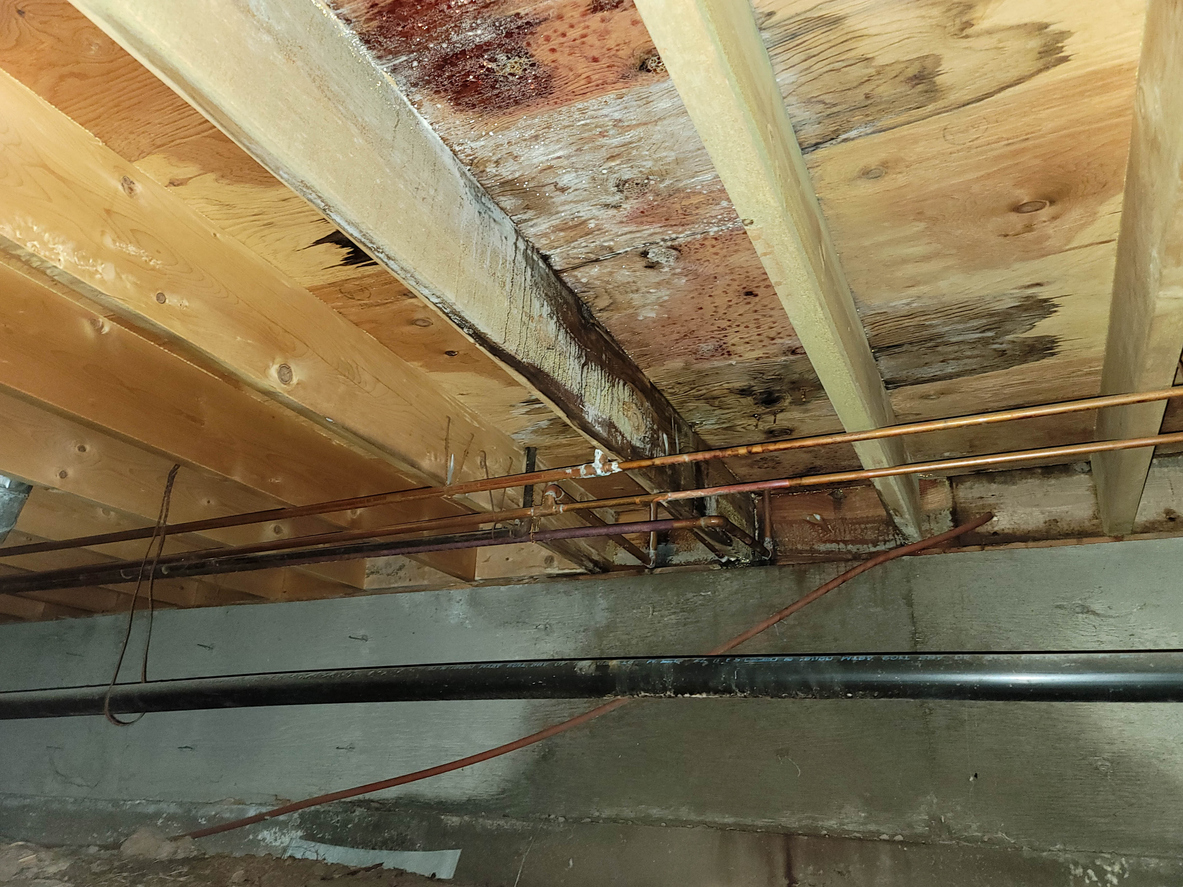
What Uncontrolled Moisture Causes
- Mold growth: Humidity above 60% relative humidity creates conditions where mold spores can take hold within 24 to 48 hours
- Wood rot: Prolonged dampness breaks down floor joists and structural wood
- Pest infestation: Damp crawl spaces attract termites, rodents, and other pests
- Cold floors: Unconditioned crawl space air drops floor temperatures in the living space above
- Higher energy bills: Your HVAC system works harder to compensate for uncontrolled air exchange
- Poor indoor air quality: Crawl space air rises into the home, carrying mold spores and contaminants
- Structural damage: Long-term wood rot compromises the crawl space foundation over time
The Benefits of Encapsulation
Moisture Control
A properly installed vapor barrier and dehumidifier maintain stable moisture levels beneath the home, stopping the cycle of moisture intrusion before mold growth and wood rot can begin.
Better Indoor Air Quality
When crawl space air is no longer damp and uncontrolled, fewer mold spores and contaminants circulate through your HVAC system and into your living space.
Improved Energy Efficiency
ENERGY STAR identifies the crawl space as one of the highest-opportunity areas for energy savings in a home. Sealing the rim joist, closing foundation vents, and insulating the crawl space walls reduces the load on your HVAC system. A conditioned crawl space stabilizes temperatures and can lower energy bills noticeably.
Structural Protection
Keeping moisture out of the floor joists and crawl space foundation preserves your home’s structural integrity. Wood rot and pest infestation from excess moisture can cause serious long-term damage.
Pest Deterrent
Dry environments are less attractive to termites, rodents, and other pests. Removing the damp conditions takes away one of the main reasons pests seek out crawl spaces in the first place.
Signs Your Crawl Space Already Has a Moisture Problem
You do not need to physically inspect your crawl space to notice warning signs. The effects often show up elsewhere in the home first.
Watch for:
- Musty odors in the living space or coming from vents
- Cold or soft floors over the crawl space area
- Visible mold growth on walls, baseboards, or subfloor areas
- Increased allergy symptoms or worsening air quality indoors
- Higher-than-normal energy bills without an obvious cause
- Signs of pest activity, like droppings or damaged wood
The longer a moisture problem goes unaddressed, the more likely mold growth and structural damage have already begun.
Encapsulation vs. a Basic Vapor Barrier
These two terms get used interchangeably, but they are not the same thing.
A basic polyethylene vapor barrier placed on the crawl space floor reduces ground moisture coming up from the soil. That helps, but it leaves the foundation wall, foundation vents, and rim joist exposed. Water vapor can still enter through all of those points, keeping humidity levels high even with a ground-level moisture barrier in place.
Full encapsulation closes all of those entry points together. The vapor barrier covers the floor and runs up the crawl space wall. The rim joist gets sealed. Foundation vents are closed off. A crawl space dehumidifier actively manages relative humidity. The result is a genuinely conditioned crawl space.
If you already have a basic vapor barrier and are still seeing signs of high humidity or moisture intrusion, the barrier alone likely is not doing enough.
When Encapsulation Is Not Enough on Its Own
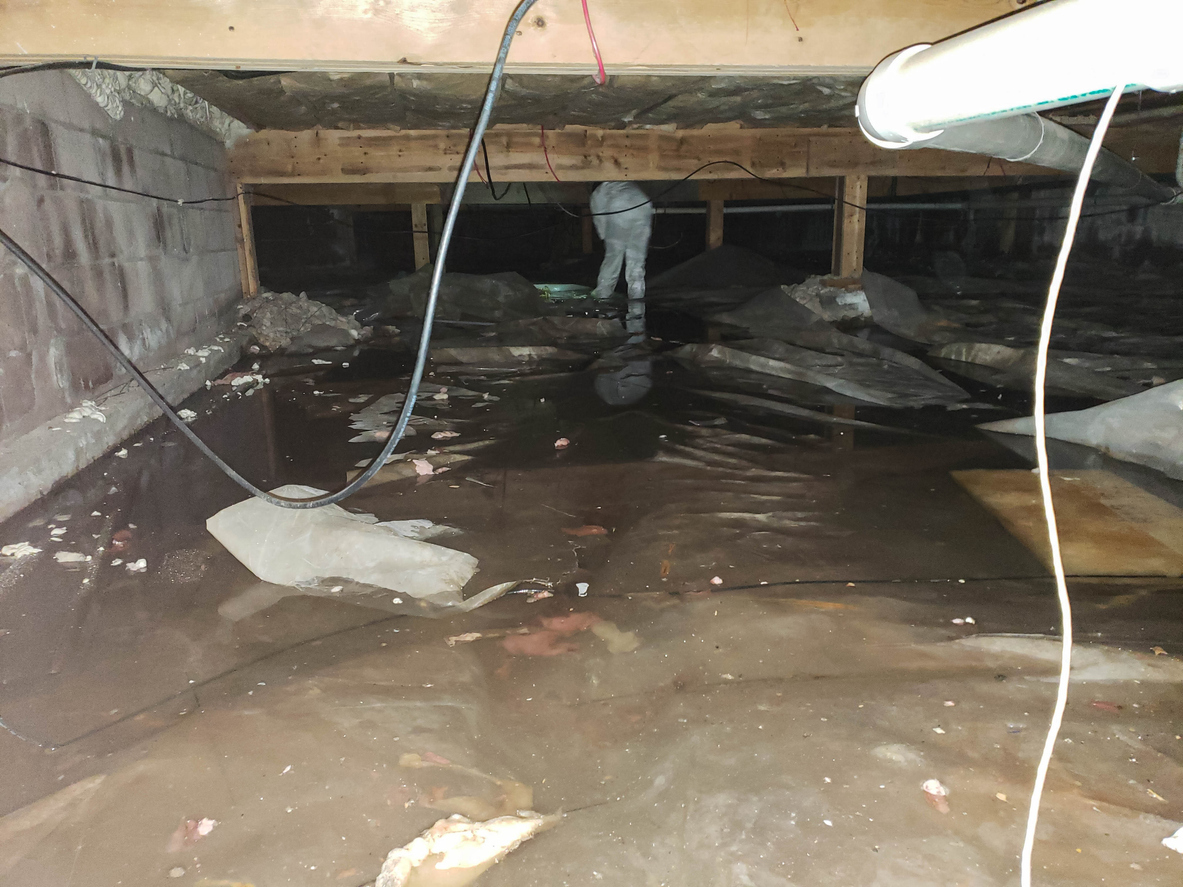
Crawl space encapsulation prevents future moisture problems, but it does not reverse damage that has already occurred. If your crawl space already has active mold growth, significant wood rot, or standing water, those issues need professional attention before any sealing work begins.
If water damage from heavy rain or flooding has reached the crawl space, the water needs to be removed and the space dried out first. Similarly, if mold is already present, it must be remediated before the space is sealed. Encapsulating over existing mold growth or water damage traps the problem inside rather than solving it.
Encapsulation installed after proper remediation acts as the long-term protection layer going forward.
Protecting Your Home Starts Below It
An encapsulated crawl space controls humidity levels, improves indoor air quality, stabilizes temperatures, and removes the conditions that allow mold growth, wood rot, and pest infestation to take hold. But if your crawl space already shows signs of damage, remediation comes first.
RestoPros specializes in mold remediation and water damage restoration to address what is already there before the next layer of protection goes in. If you have noticed warning signs beneath or around your home, contact RestoPros today to get a professional assessment before the damage spreads.