
The Short Answer: Mold in walls is a serious moisture problem that can damage your home’s structure and cause significant health effects. If you notice a musty odor, staining, or symptoms like nasal congestion and respiratory issues, it’s time to call a professional.
Mold inside your walls is one of the trickier problems a homeowner can face because it’s often invisible until it becomes a bigger issue. By the time you see or smell something wrong, mold growth may have already been spreading for weeks or months. Knowing the warning signs early can make a major difference in cost, health, and how much structural damage you end up dealing with.
What Causes Mold to Grow Inside Walls?
Mold needs three things to grow: moisture, a food source like drywall or wood, and warmth. Walls create a perfect hidden environment when any source of excess moisture is present.
Common causes include:
- Water damage from burst pipes, slow leaks, or flooding
- A roof leak that allows water to travel down into the wall cavities
- Poor ventilation in bathrooms, kitchens, or laundry areas
- High humidity or excessive moisture from an air conditioner that isn’t draining properly
- Condensation on interior wall surfaces in poorly insulated spaces
According to the EPA, water-damaged areas should be dried within 24 to 48 hours to prevent mold growth. Once moisture is trapped inside a wall, mold spores that are always present in the air land on damp surfaces and start to spread. For a deeper look at how mold behaves indoors, see our mold facts guide.
Warning Signs You Have Mold in Your Walls
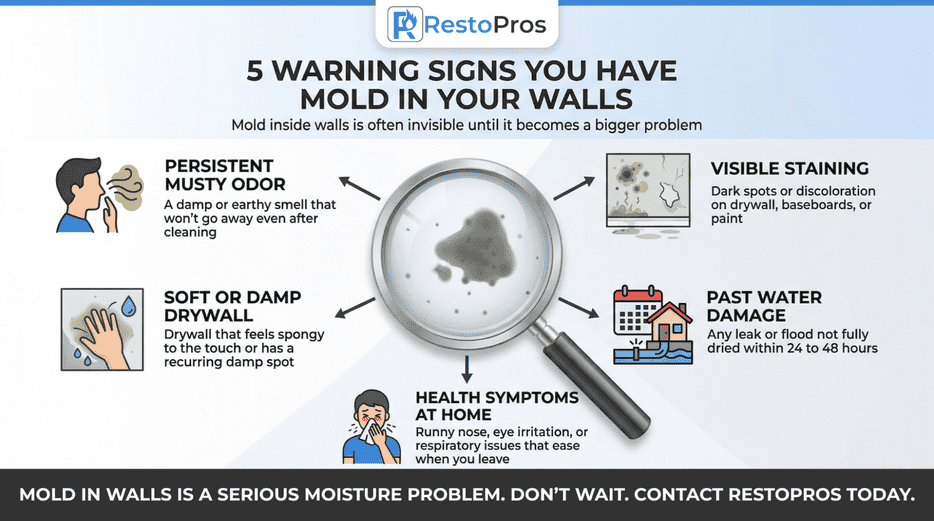
A Persistent Musty Odor
A musty odor that doesn’t go away, even after cleaning, is one of the most reliable early indicators of hidden mold growth. If a room consistently smells damp or earthy and you can’t locate the source, the problem is likely inside the wall.
Visible Staining or Discoloration
Look for dark spots, streaks, or circular markings on walls or baseboards, and paint that is bubbling, peeling, or warping without an obvious cause. Yellow, green, black, or brown discoloration on drywall is a sign that moisture and mold are active beneath the surface.
A Damp Spot or Soft Wall
If you press on a section of drywall and it feels soft or spongy, water has likely been sitting there. A recurring damp spot, even a small one, should be investigated right away.
Recent Water Damage That Wasn’t Fully Dried
If your home had a flood, leak, or plumbing issue and you’re not certain it was fully dried within 24 to 48 hours, mold inside the walls is a real possibility. Water damage that isn’t addressed quickly creates the conditions mold needs to take hold.
Health Symptoms That Improve When You Leave Home
If family members are regularly experiencing a runny nose, nasal congestion, eye irritation, or respiratory symptoms, and those symptoms ease when they spend time away from home, mold exposure inside your living space could be the cause. According to the CDC, mold can irritate the eyes, nose, throat, and lungs, even in people who are not allergic to mold, and those with asthma or allergies face the highest risk. Learn more about the long-term effects of breathing in mold and what prolonged exposure can mean for your health.
Health Effects of Mold Exposure
Mold inside a home is more than a cosmetic problem. The health effects of prolonged mold exposure range from mild irritation to serious respiratory issues, depending on the type of mold present, the amount, and the individual’s sensitivity.

Common symptoms include:
- Runny nose and nasal congestion, especially in those with allergies
- Eye irritation from prolonged exposure
- Respiratory symptoms like coughing or wheezing, particularly in people with asthma or lung conditions
- Allergic reactions in those sensitive to mold
- Long-term respiratory issues in infants, the elderly, and immunocompromised individuals
Wondering how quickly mold exposure can affect you? Read our guide on how long it takes mold to make you sick.
Why DIY Mold Removal in Walls Doesn’t Work
It’s tempting to reach for a bleach or cleaning solution from the hardware store. Mold inside walls isn’t like surface mold on a tile, though. Here’s why that approach falls short:
- Chlorine bleach doesn’t penetrate porous materials. A bleach solution can clean mold from hard surfaces and non-porous surfaces like glass or tile, but it won’t reach the roots inside porous materials like drywall or wood framing, meaning the mold problem returns.
- You can’t address mold you can’t see. Without knowing how far mold has spread inside a wall cavity, surface-level treatment only covers part of the problem.
- Mold spreads when it’s disturbed. Opening walls without proper containment releases mold spores into the air throughout your home, expanding the affected area.
- Without fixing the moisture problem, mold comes back. Treating mold without correcting the source of excess moisture is a short-term fix that won’t hold.
Even surface mold on painted walls is more complicated than it looks. Here’s what that process actually involves.
When to Call a Professional
Call a mold remediation company immediately if:
- You can see mold covering more than 10 square feet, which is the EPA’s general guidance for when professional help is warranted
- You suspect mold is growing inside the walls or behind the insulation
- Anyone in the home has ongoing health concerns tied to the space
- Your home has had recent water damage, a roof leak, or flooding
- A musty odor persists after surface cleaning
- You’ve had a mold problem before that has returned
Mold growth spreads to adjacent materials quickly, moving from one wall cavity into flooring, ceiling joists, or HVAC systems if left unchecked. The longer it goes unaddressed, the more it costs to fix.
What Professional Mold Remediation Involves
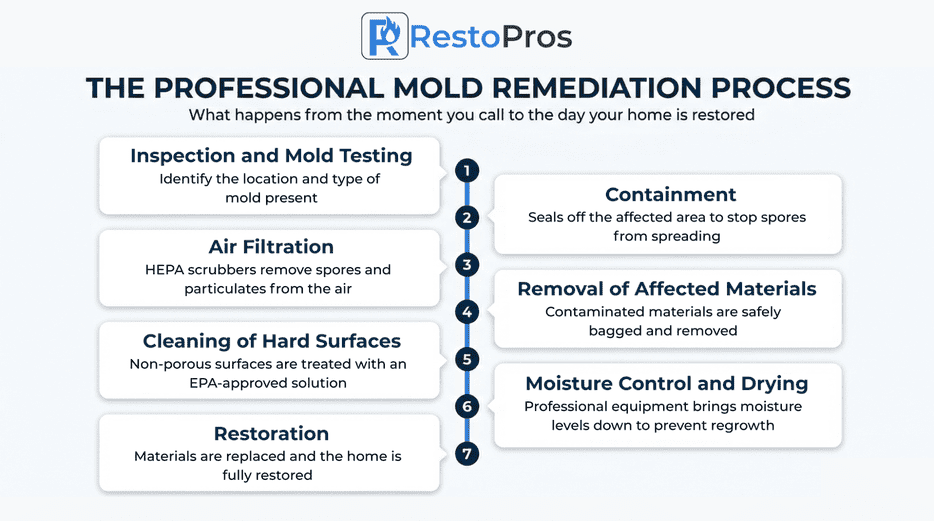
Professional mold remediation follows a structured process built around IICRC standards:
Inspection and mold testing — A certified technician assesses the home, locates visible and hidden mold, and may use mold testing to identify the type and concentration of mold spores present.
Containment — The moldy area is sealed off before any work begins to keep mold spores from traveling to clean areas through air movement or the HVAC system.
Air filtration — HEPA air scrubbers run throughout the process to pull spores and particulates out of the air, protecting the rest of the home from cross-contamination.
Removal of affected materials — Porous surfaces like drywall, insulation, and wood that are heavily contaminated often cannot be saved. Moldy items are safely bagged and removed following EPA guidelines.
Cleaning of hard surfaces — Non-porous surfaces in the affected area are treated with an EPA-approved cleaning solution to address remaining mold and inhibit regrowth.
Moisture control and drying — The source of excess moisture is addressed, and professional drying equipment brings structural moisture levels down, which is what prevents mold from coming back.
Restoration — Once the space is clean and dry, materials are replaced, and the home is returned to its pre-damage condition. Learn more at RestoPros Rebuild Services.
How to Prevent Mold in Walls
Prevention comes down to controlling moisture before it has a chance to get trapped:
- Address any water damage within 24 to 48 hours
- Make sure bathrooms, kitchens, and laundry rooms have proper ventilation
- Keep indoor humidity below 60 percent, with the EPA recommending between 30 and 50 percent ideally
- Inspect your roof and gutters regularly so a roof leak doesn’t go unnoticed
- Have water damage professionally dried, not just wiped up
Don’t Wait on the Mold
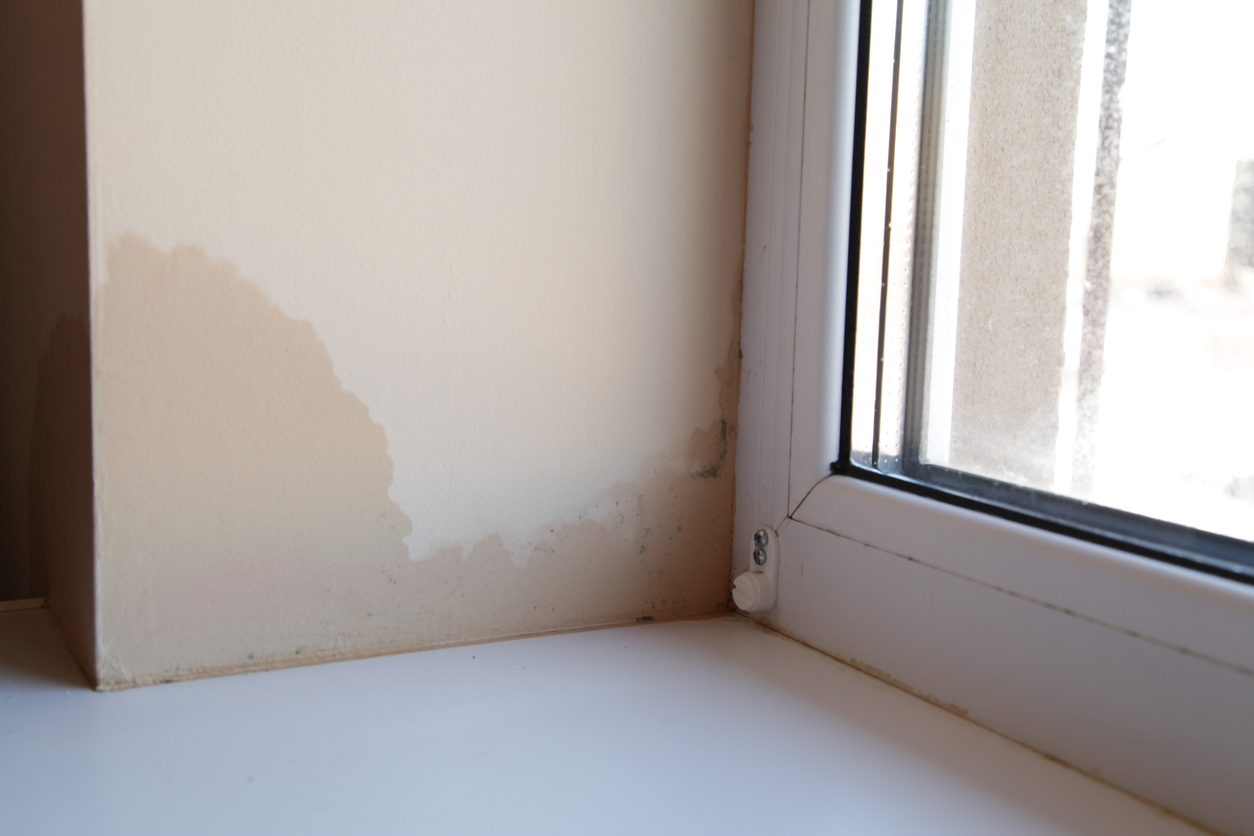
Mold in walls is a moisture problem that rarely resolves on its own. A musty odor, visible staining, recurring damp spots, and health symptoms that improve when you leave home are all signs that something is wrong inside a wall cavity. The health effects are real, and the longer a mold problem goes unaddressed, the more it spreads and the more it costs to fix.
When mold is suspected inside walls, professional mold remediation is the right call. RestoPros provides certified mold remediation services from inspection and mold testing through full structural restoration, backed by 24/7 emergency response. If you’re seeing the signs, don’t wait. Contact RestoPros today to have a professional assess your home and get the problem handled correctly.