Blog
Warning Signs of Mold Toxicity in Your Home and How to Get Rid of It
The Short Answer: Warning signs of mold toxicity include a musty odor, visible mold, water damage stains, high humidity, and allergy-like symptoms that get worse indoors. These signs point to a moisture issue that needs a professional mold inspection, since mold growth spreads inside walls long before most people see it.
Your home should never compromise your health. But many households face a hidden danger: exposure to mold. When moisture meets the right conditions, mold can grow behind walls, under carpets, and in other damp areas, releasing mold spores into your indoor air. Those spores can damage porous materials in your home and cause allergic reactions or respiratory problems for the people living there. Early detection of warning signs protects both your property and your family.
Spotting Mold’s Sneaky Warning Signs
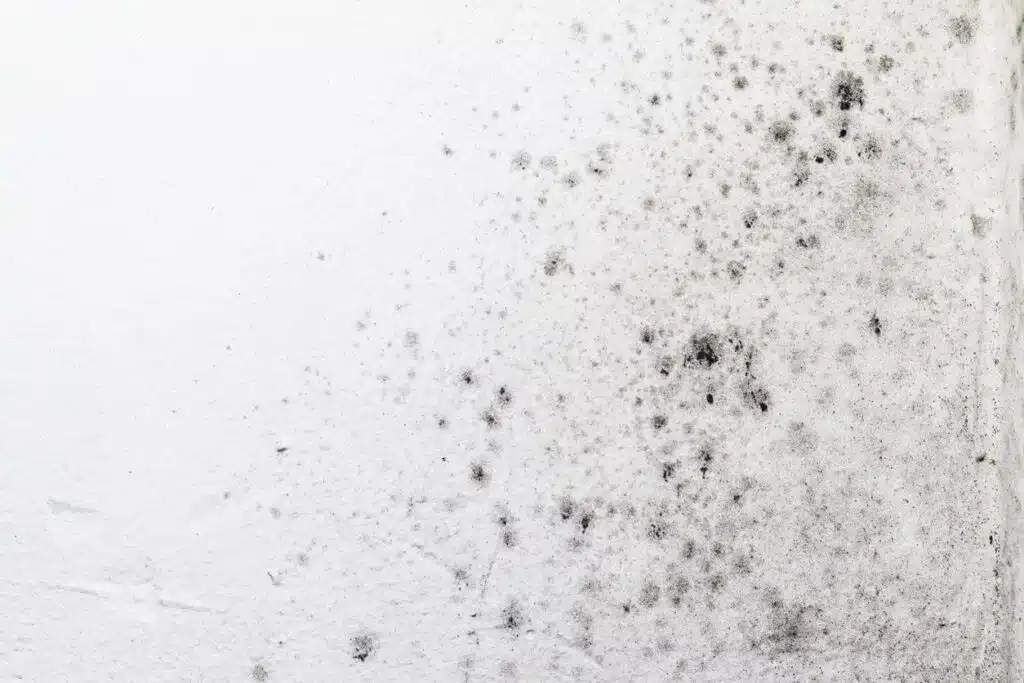
Mold growth often begins silently, hiding in damp places you might not think to check. Learning to recognize both the obvious and the subtle warning signs helps you catch mold issues before they spread.
Visible Red Flags
Visible mold often provides the first indication of a mold problem in your home. Here is what to look out for:
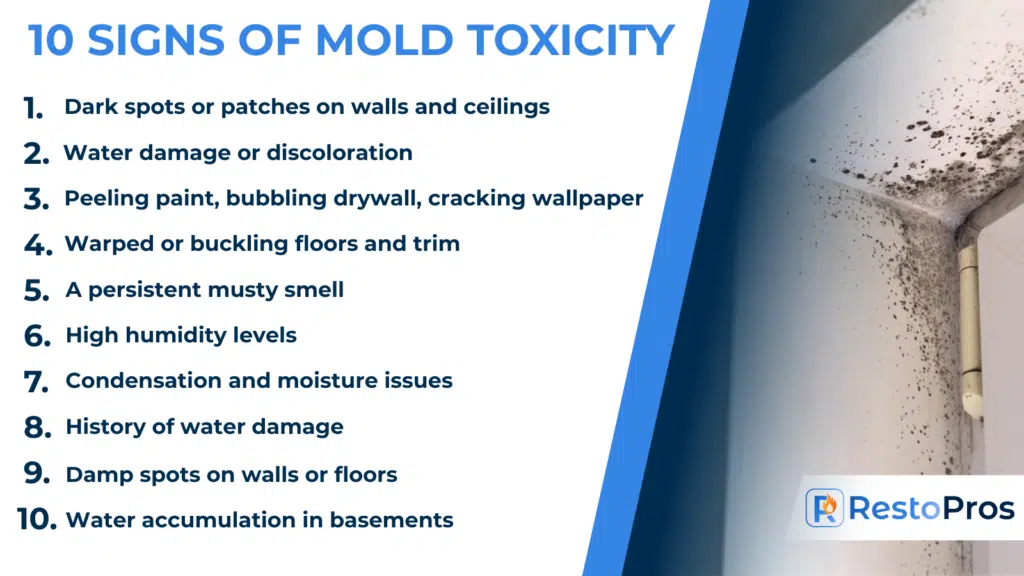
- Dark spots or patches on walls and ceilings: Growth can come in many colors. Seeing green, gray, or brown? Any type of mold on a surface points to moisture nearby.
- Water damage or discoloration: Yellowish or brownish marks on drywall and ceiling tiles usually mean water got in at some point.
- Peeling paint, bubbling drywall, or cracking wallpaper: These surface changes can indicate moisture behind the wall.
- Warped or buckling floors and trim. Porous material holds water and swells, so warping may point to current or previous moisture damage.
Environmental Clues
Many homes harbor hidden mold toxicity problems that are not immediately visible to the naked eye. However, several environmental indicators can alert you to potential mold growth:
- Persistent musty smell: When you smell rotting leaves or wet cardboard in your home, it could be from microbial volatile organic compounds, or mVOCs, released as mold grows. If it lingers, it is better to be safe than sorry.
- Indoor humidity levels consistently above 60%: Above that line, mold has everything it needs. EPA recommends staying between 30 and 50 percent when possible.
- Frequent condensation on windows and pipes: Repeated condensation means more moisture is in the air than the space can handle.
- History of water damage from plumbing issues or flooding: Materials can stay wet inside long after the surface looks dry.
- Active leaks from roofing problems: Water enters the attic and runs down inside the walls, often surfacing in a room far from the leak.
- Damp spots on walls or floors: Wet areas that keep returning point to a source nobody has fixed.
- Visible water accumulation in basements: Standing water keeps basement humidity high year round.
Not all mold problems are visible. Bathrooms, basements, and areas around windows are worth watching, and a professional mold inspection can find what a walkthrough cannot.
Your Body’s Warning Signs: Symptoms Linked to Mold Exposure
When mold moves into your home, your immune system is often the first to respond. These symptoms alone do not indicate a mold problem, as dust, pets and poor ventilation can cause similar complaints. What they can do is let you know that it is time to investigate the building.
Respiratory Red Alerts
Respiratory problems are the health effects most consistently associated with damp indoor spaces. CDC links damp buildings to coughing, wheezing, upper respiratory symptoms, and worsening asthma symptoms.
Breathing changes that follow you home. Pay attention if you are experiencing:
- Persistent coughing that worsens indoors and eases when you leave
- Wheezing, chest tightness, or shortness of breath during normal activity
- Sinus congestion that does not respond to typical allergy medication
- More frequent asthma symptoms or higher inhaler use
In susceptible people, repeated exposure to certain fungi can contribute to hypersensitivity pneumonitis, a rare lung condition. Seek immediate medical care for severe shortness of breath or symptoms that worsen quickly.
Hidden Health Battles
Allergy-like symptoms and other complaints that improve away from the house. Beyond respiratory problems, mold exposure can show up in less obvious ways:
- Itchy eyes and eye irritation: Redness, watering, and itching can occur in people sensitive to mold spores.
- Runny nose and stuffy nose: Often mistaken for a seasonal allergy, though a mold allergy tends to track with the building rather than the season.
- Skin rashes or irritation that come and go without a clear cause.
- Headaches and fatigue: These are nonspecific symptoms with many possible causes. Some people in damp buildings report they worsen indoors, but the symptoms alone do not confirm mold exposure.
- Trouble concentrating: Reported by some occupants of damp buildings, though not proof of a mold problem by itself.
Symptoms that consistently improve when you are away from home and return when you come back suggest an indoor trigger worth investigating. Talk with a healthcare professional about ongoing health problems, and call a restoration team to find out what is in the building.
What Feeds Mold Growth in Your Home
Mold spores are common in indoor and outdoor environments. They only become a mold problem when moisture gives them what they need.
The moisture sources RestoPros traces most often:
| Source | Why it leads to mold |
| Roof and gutter failures | Water enters the attic and travels down interior walls |
| Foundation cracks and poor drainage | Moisture wicks into basement walls and framing |
| Poor ventilation in bathrooms and kitchens | Excess moisture stays in the air and settles on cool surfaces |
| Supply line and appliance leaks | Slow leaks soak porous material behind cabinets and walls |
| High humidity in crawl spaces and basements | Damp areas stay above 60 percent humidity year round |
Speed matters. Industry standards recommend drying water-damaged materials within 24 to 48 hours to help prevent mold growth. And with RestoPros, our technicians identify the water source, dry the structure, and tell you what a licensed plumber, if needed, should fix before restoration is finished.
Professional Mold Remediation: Your Safest Path to a Healthy Home
Why Professional Assessment Matters
Mold remediation professionals use detection tools that find mold growth beyond what is visible. Moisture meters and thermal imaging trace the water source and map how far the mold has spread inside walls, under flooring, and above ceiling tiles.
Professional Mold Remediation Process
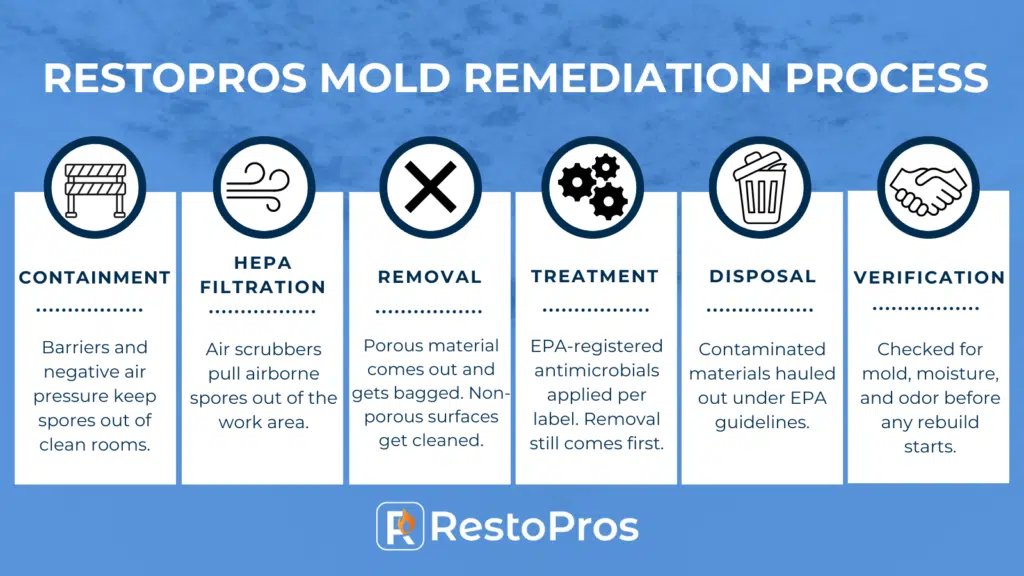
The remediation process follows industry protocols designed to contain and remove mold safely:
- Containment: Technicians establish containment suited to the size of the job. Negative air pressure may be used to limit the movement of mold spores into clean rooms.
- HEPA filtration: Air filtration devices capture airborne spores during the work.
- Removal: Contaminated porous material is removed and bagged. Non-porous surfaces can often be cleaned and salvaged.
- Treatment: EPA-registered antimicrobial products may be applied per label directions. Treatment does not replace physical removal, since dead mold can still cause an allergic reaction.
- Disposal: Contaminated materials are disposed of following EPA guidelines.
- Verification: The finished work is inspected for remaining visible mold, moisture, and musty odor before rebuild begins.
Advanced Equipment and Techniques
Commercial dehumidification systems and air scrubbers with HEPA filtration work together to dry the structure and clean the air. Technicians use moisture meters and humidity monitoring devices to track progress and confirm the space is dry.
Long-term Protection Measures
Professionals do not just remove existing mold. Fixing the source of moisture, improving proper ventilation and cleaning the HVAC system all reduce the chance of mold growth returning. After the source is corrected, lowering moisture levels to the correct level will protect indoor air quality in the future.
Why Choose Professional Services
RestoPros services are built to meet insurance company documentation requirements, which makes the claims process easier on you. Our team handles mold remediation, water damage restoration, and more so the mold and the moisture that caused it are both addressed.
Find Out What’s Behind Your Walls
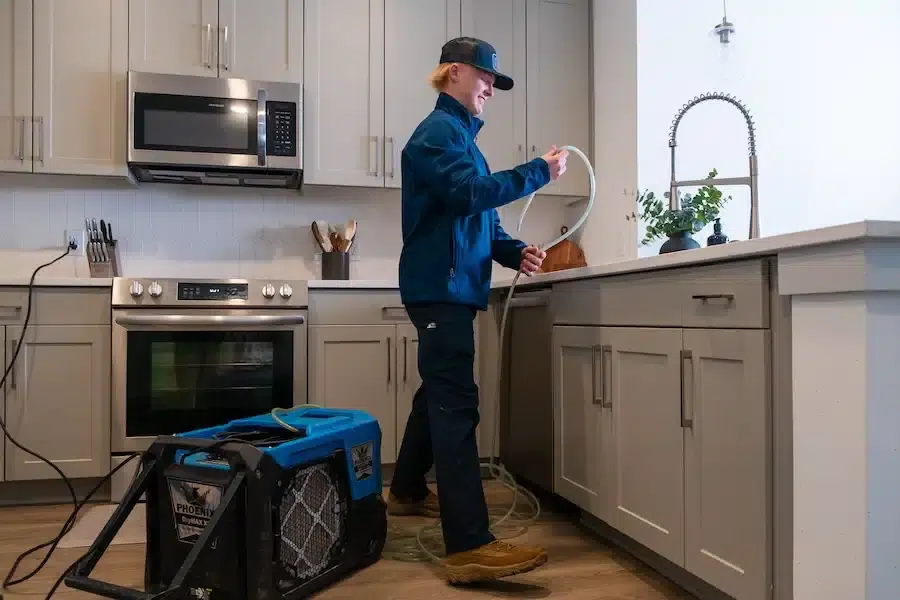
When mold threatens your home and health, RestoPros is there to help. Our experts provide rapid emergency response and thorough mold remediation using professional equipment and proven techniques. We address the mold head on without any shortcuts and slipups.
If you recognize several of these warning signs, reach out to your nearest RestoPros location today for professional mold remediation. We’ve got you covered.
Frequently Asked Questions
Faster than most people expect. EPA says to get wet materials dried within 24 to 48 hours, and that window exists for a reason. The exact timing depends on what got wet, how warm the room is, and how much humidity is sitting in the air. Drywall and carpet padding hold water far longer than a tile floor does, so two rooms hit by the same leak will not be on the same clock.
Yes, and that is the usual case. Mold grows inside wall cavities, under flooring, and above ceiling tiles, which is to say all the places nobody looks. A musty smell, dampness that keeps coming back, or a water stain you cannot explain are enough on their own to justify an inspection.
No, and it is often a waste of money. The EPA’s position is that when you can already see mold, testing is usually unnecessary, because the mold is coming out regardless of what species it turns out to be. Where testing does earn its keep is when nobody knows where the water came from or how far it went, or when an insurance claim needs documentation. It is also worth knowing there are no federal limits defining a safe indoor spore count, so a lab number by itself does not tell you much.
Sometimes, and the cause is what decides it. Mold that results from a sudden covered event, like a pipe bursting, is often covered up to a stated limit. Mold that grew slowly behind a leak nobody fixed usually is not, and plenty of policies restrict or exclude mold outright. Read your policy and call your insurer before you assume either way. RestoPros documents every step of the work so you have what the adjuster asks for.
Below 60 percent, with 30 to 50 percent as the target the EPA recommends. A dehumidifier is a good habit, but it will not save you from an active leak. Wet material still has to be dried or removed.
Not always. It comes down to how big the work area is, where it sits in the house, and how much of the HVAC system got involved. Anyone with asthma, a mold allergy, or a weakened immune system should stay clear of the work area no matter the size. Your project manager will walk you through what makes sense for your situation before anything starts.